Paul Geremia
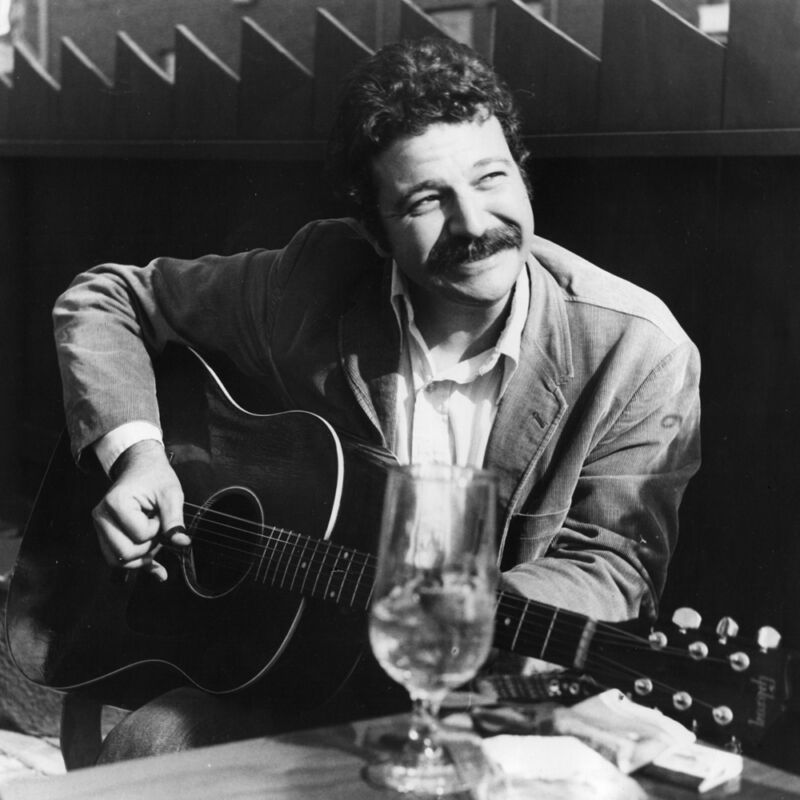
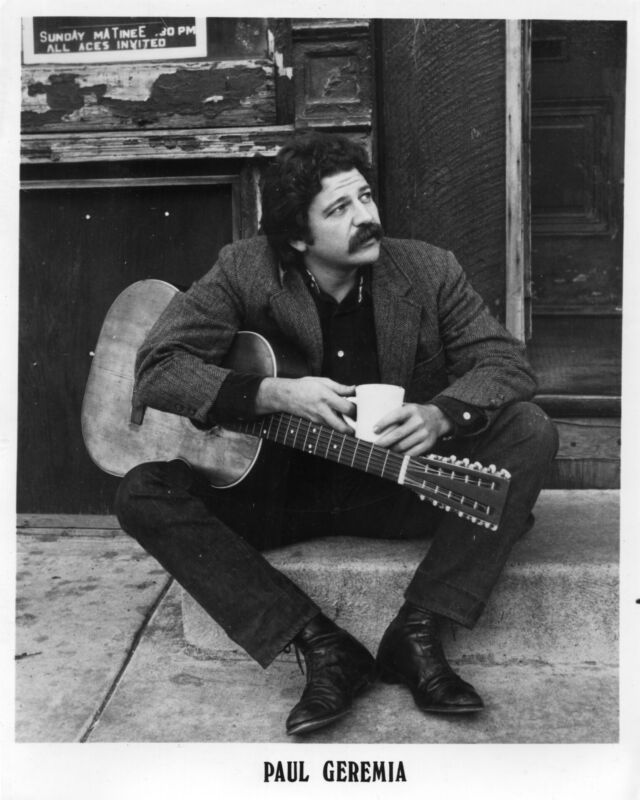
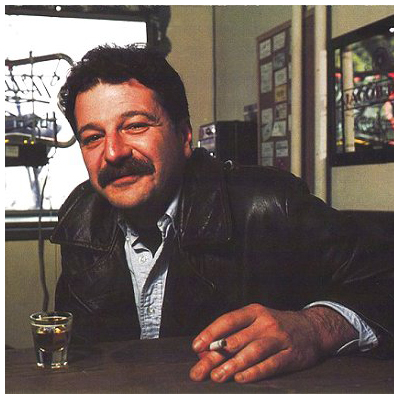
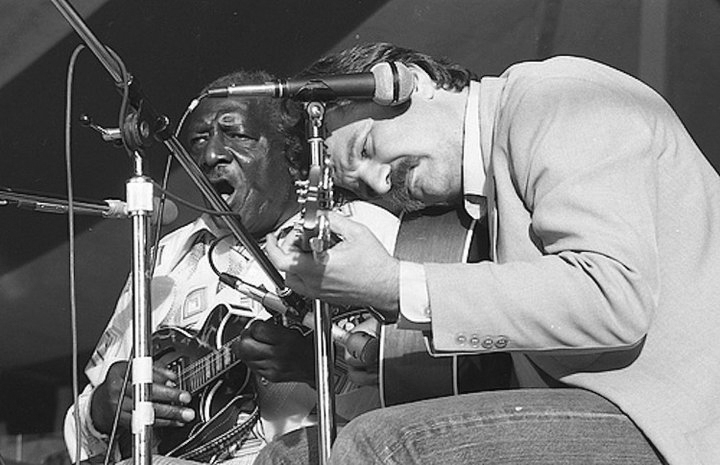
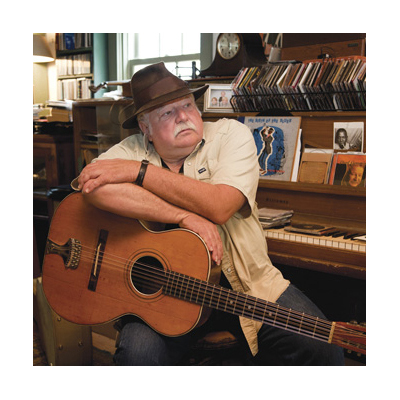
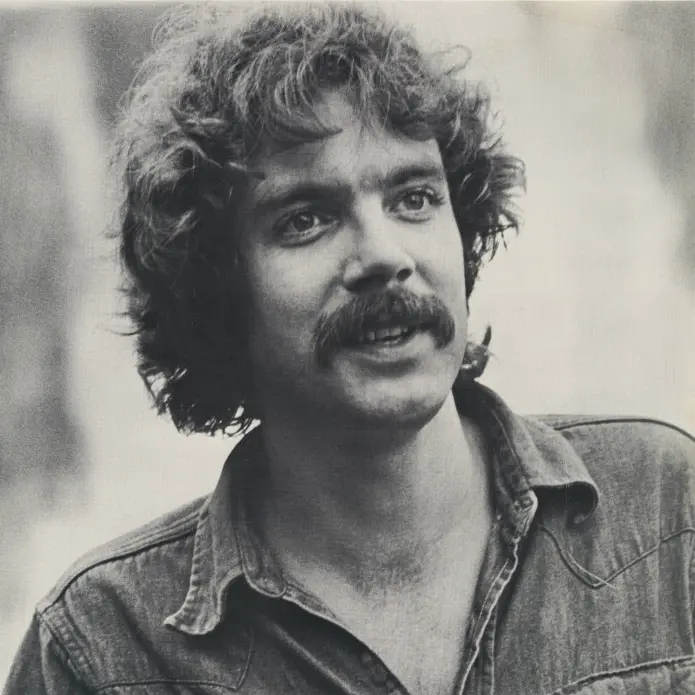
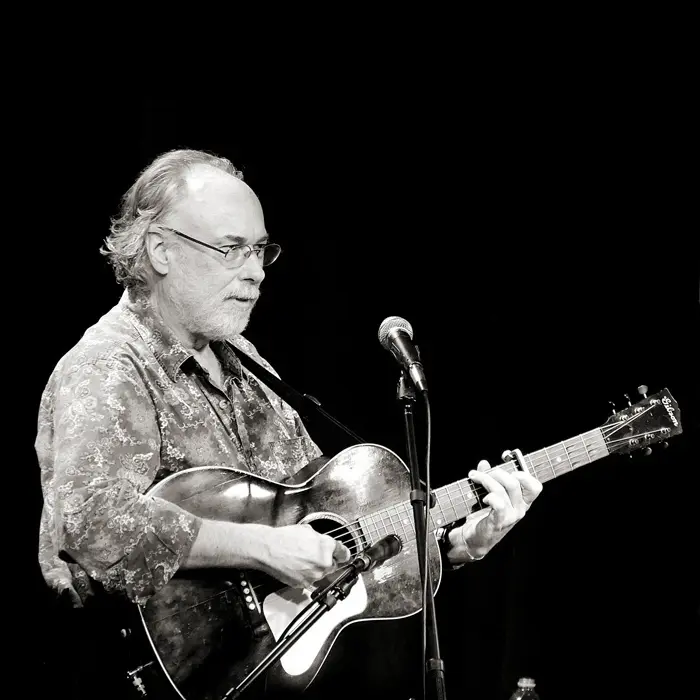
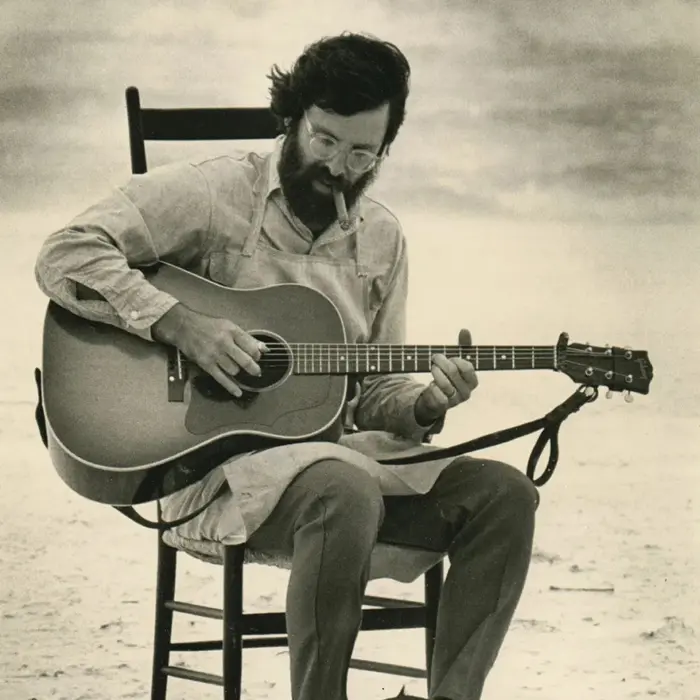
Paul Geremia - photo credit Dave Peabody
The word “troubadour” has morphed in meaning since it first entered the English language (around 1741, according to Merriam-Webster), originally referring to lyric poets between the 11th and 13th centuries but used most often today to describe traveling singer-songwriters, particularly those of the folk genre. And when it comes to folk blues, Rhode Island native Paul Geremia was widely known and revered as the quintessential example of its modern meaning. In fact, if the New England Historical Society ever offers a series of commemorative coins celebrating the six-state region’s most widely respected folk-blues artists, Geremia’s image should be embossed on one of the first ones minted.
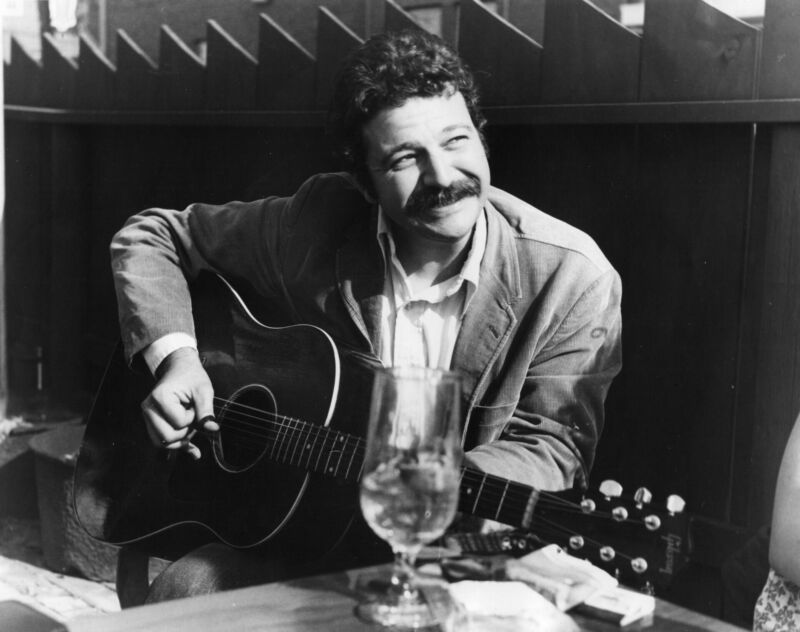
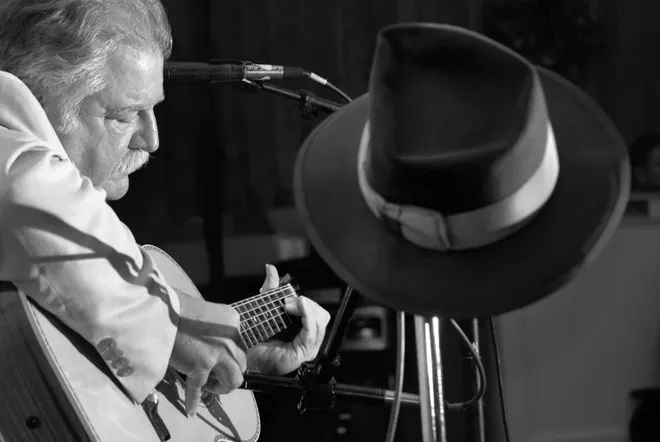
Like fellow New England-rooted troubadours Tom Rush, Geoff Bartley and Taj Mahal, Geremia cooked up a savory sonic stew all his own using a combination of ingredients provided by the legendary bluesmen who came before him, particularly Blind Lemon Jefferson, Robert Johnson, Blind Blake, Scrapper Blackwell and Blind Willie McTell, each of whose songs he covered on albums and in live shows, most often McTell’s “Statesboro Blues.” A scholar of pre-World War I blues in the same intense way as Canned Heat co-founder Alan “Blind Owl” Wilson was, Geremia recorded 11 LPs over 55 years – never playing an electric guitar on any of them – and Acoustic Guitar magazine once referred to him as “possibly the greatest living performer of the East Coast and Texas fingerpicking and slide styles.” Known almost as much for his onstage humor and stories about the iconic bluesmen he’d met as for his six-string prowess and husky, soulful voice, he was inducted into the Rhode Island Music Hall of Fame in 2013.
MUSICAL BEGINNINGS, INFLUENCES
Born on April 21, 1944 in Providence, Geremia used to joke that his musical roots were “in the Providence River Delta” as opposed to the Mississippi Delta, though you’d never know it from the authenticity he exuded in virtually every musical move he made. A third-generation Italian-American, he spent his earliest years living in Silver Lake, then a predominantly Italian district of Providence, and his father’s job led to the family moving from Rhode Island to California and back twice before he turned six. Geremia’s family settled in the town of Johnston, about nine miles outside Providence, shortly before he started first grade.
Geremia used to say that his earliest musical memory was listening to opera on his grandfather’s wind-up record player at around age four. Though there was a piano in his family’s living room, he never had any interest in playing it, he said, but he picked up the harmonica at age 12, wanting to emulate harmonica-playing movie cowboys and be able to hit the highest note Louis Armstrong played on his 1930 rendition of “St. Louis Blues.” He started teaching himself how to play guitar at age 15 using a Stella acoustic his mother had given his father as a gift – and that his dad showed absolutely no interest in playing – and eventually worked his way up to a Harmony, a Framus, a Gibson Hummingbird and a Gibson J-200.
As a student at Providence’s Mount Pleasant High School from 1958 to 1962, when the tidal wave called “rock ‘n’ roll” crashed down so hard that many radio stations changed from classical/jazz formats to a rock/pop ones, Geremia said he had no particular interest in the noisy new genre except for some songs by Chuck Berry, Elvis Presley and Les Paul and Mary Ford. Even in 1960, when his schoolmates Vini Poncia and Peter Andreoli’s group The Videls had a hit with “Mister Lonely,” which went to #73 in the Billboard Hot 100, Geremia had no desire to “rock around the clock” with Bill Haley or “do the twist” with Fats Domino. Instead, he found most of his early inspiration in old-time blues artists and steel guitarist Tony Poccia of Eddie Zack & The Hayloft Jamboree, a group that starred on a national radio show on NBC that originated from Providence’s WJAR and are credited with popularizing country music in New England.
His lifelong passion for folk blues ignited in 1959 when he heard the seminal album The Country Blues, released that year by Folkways Records, and read the accompanying book. A 14-track collection of 78-rpm recordings compiled by music historian Samuel Charters, the LP had an immeasurable influence on the teenage Geremia – as it did on countless others of his generation including Bob Dylan and Dave Van Ronk – and prompted him to search for the original 78s, virtually all of which were out of print. After discovering that the best places for such rare discs were Salvation Army outlets, thrift stores and junk shops, he became a regular at Piedmont Furniture, a junk shop across the street from Classical and Central High Schools in Providence.
In 1963, a year after he enrolled at the University of Rhode Island (majoring in agriculture and playing in a folk trio), two events threw fuel on the fire that The Country Blues had sparked in him four years earlier: first, seeing up-and-coming singer-songwriter Tim Hardin at Club 47 in Cambridge; second, seeing Mississippi John Hurt at the Newport Folk Festival. Also at Newport that year was Ramblin’ Jack Elliot, who Geremia has credited as major influence on his own guitar style. “I really learned to fingerpick more from listening to Jack Elliott do ‘Railroad Bill’ than from anything else,” he once said. In 1965, Geremia dropped out of college to pursue music full time.
MOVE TO CAMBRIDGE, FOLKWAYS SIGNING, JUST ENOUGH, SIRE SIGNING
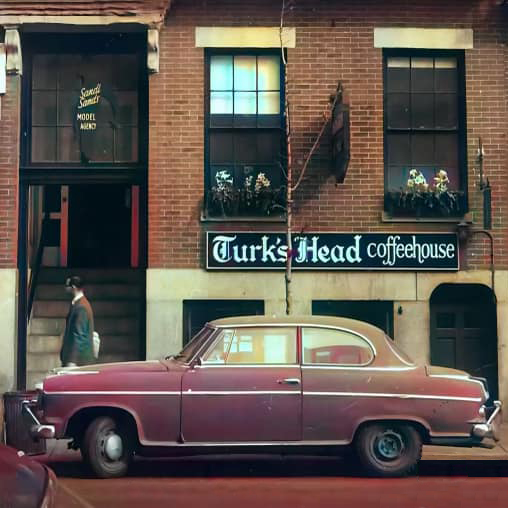
In 1966, at age 22, he put himself in the dead center of the folk map by moving to Cambridge, Massachusetts, often traveling to Greenwich Village in New York City to play open-mic nights at the Folklore Center (owned by Izzy Young, who would be a pivotal figure in his future). He played his first paid gig at Tete a Tete Coffeehouse in Providence and was soon playing at well-known Boston venues including The Loft, Turk’s Head Coffeehouse, The Sword In The Stone and Unicorn Coffee House. He made his first studio recordings in 1967, and three of them appeared on Cracks in the Ceiling, an anthology of Rhode Island-based folk singers released on the Folk Arts label.
Geremia landed a deal with Folkways Records in 1968, after the label’s founder, Moses “Moe” Asch, who had recorded Woody Guthrie and Lead Belly, heard a tape WNYU had made of a Geremia performance, which Folklore Center owner Izz Young had given him. The result was Geremia’s debut album, Just Enough, a 12-track collection of six originals and six covers that received widespread acclaim. Decades later, in a glowing review for AllMusic, critic Bruce Eder noted Geremia’s enormous talent and potential: “If more people had heard this record – and it had been done about three years earlier – he might have given Bob Dylan a run for his money as a serious acoustic folkie,” he wrote.
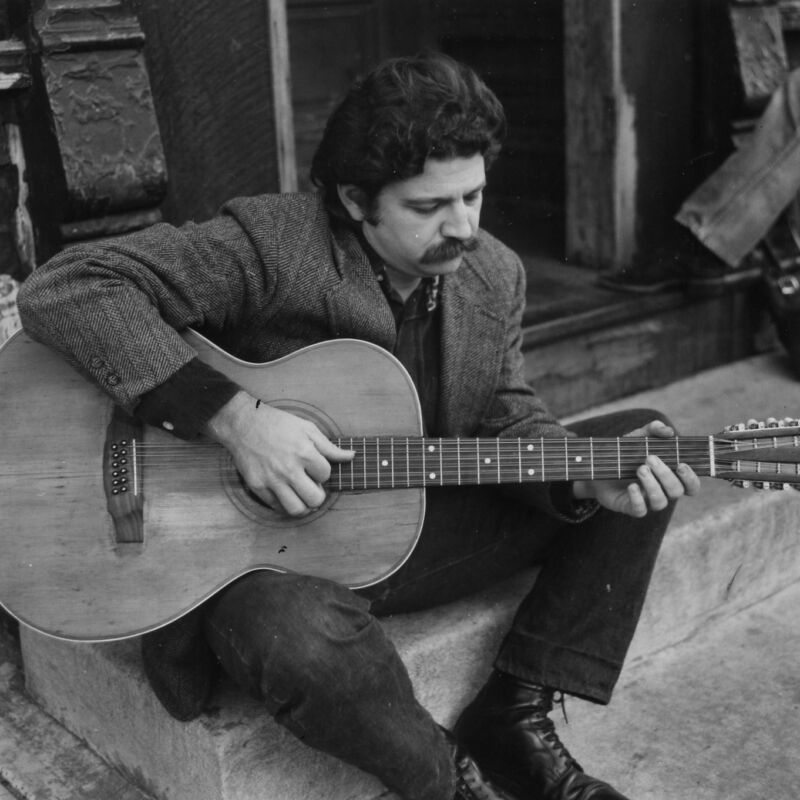
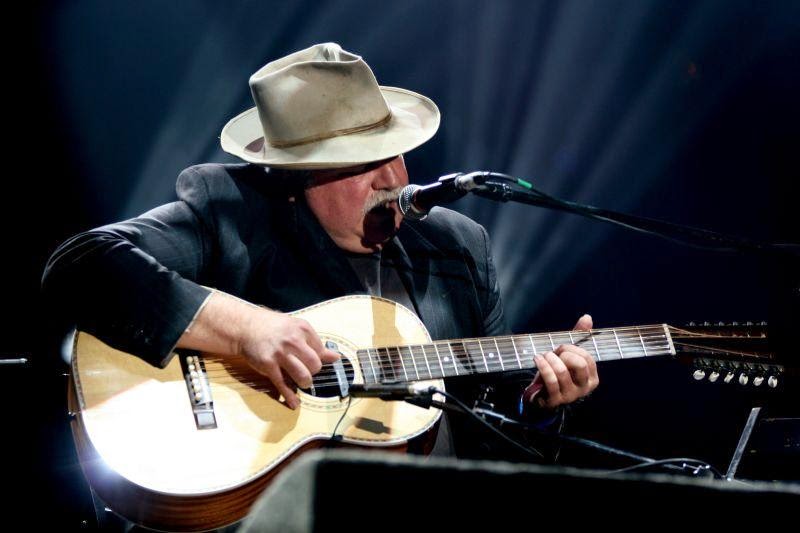
In 1969, he signed with Sire Records, which issued his sophomore album, a self-titled LP featuring 10 originals and just one cover which sold reasonably well, particularly in New England, but not enough for Sire to continue his contract. By Thanksgiving that year, Geremia’s days as a guitar-slingin’, harp-wailin’ troubadour had begun in earnest, and he went on to tour relentlessly over the next 45 years, switching back and forth during shows between a six-string Gibson J-35 and a converted 12-string Regal.
HELPING PINK ANDERSON, 1970S, ’80S ALBUMS
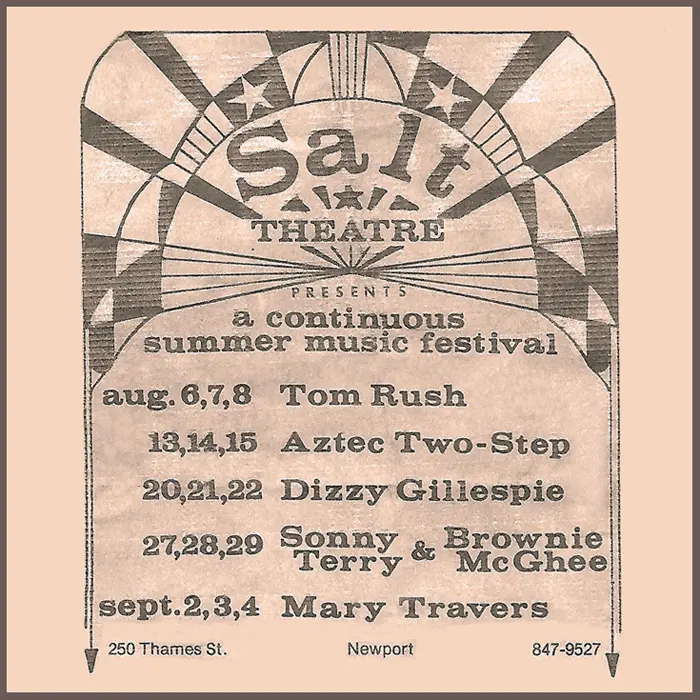
In 1973, Geremia helped resurrect the career of one of his musical heroes, Pink Anderson. In a meeting arranged by singer-songwriter Roy Book Binder, he visited the bluesman at his home in South Carolina and, after Anderson mentioned that he’d like to play “way up north” one day,” arranged a four-night stand for the 73-year old at the Salt Theatre in Newport. Anderson, who had never played in a nightclub before – nor to a white audience – went on to appear at Yale University, Harper College and the Folklore Center and died less than a year after his appearances at Salt.
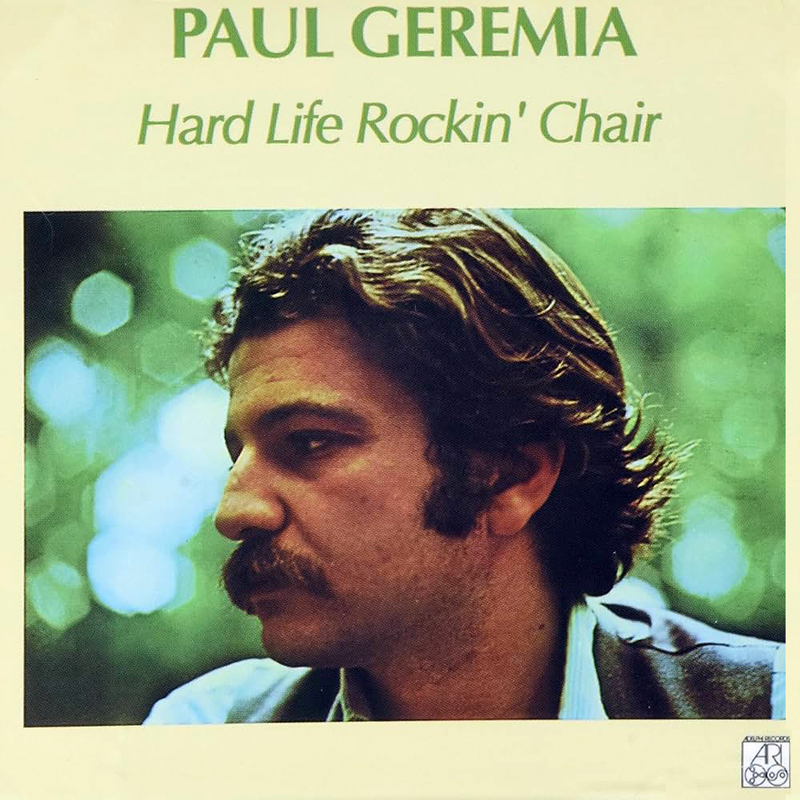
Also in 1973, after signing with Adelphi Records, Geremia recorded Hard Life Rockin’ Chair. Five of its 14 songs were originals and the album sold better than his first two albums, but after recording a second LP for the label – still unreleased today, over 50 years later – he left over disagreements about the promotional activities Adelphi demanded. After nine years without a label, he signed with Flying Fish Records in 1982 and recorded I Really Don’t Mind Living, followed by My Kinda Place in 1986.
LATER ALBUMS, GRAMMY NOMINATION, DVD TUTORIAL
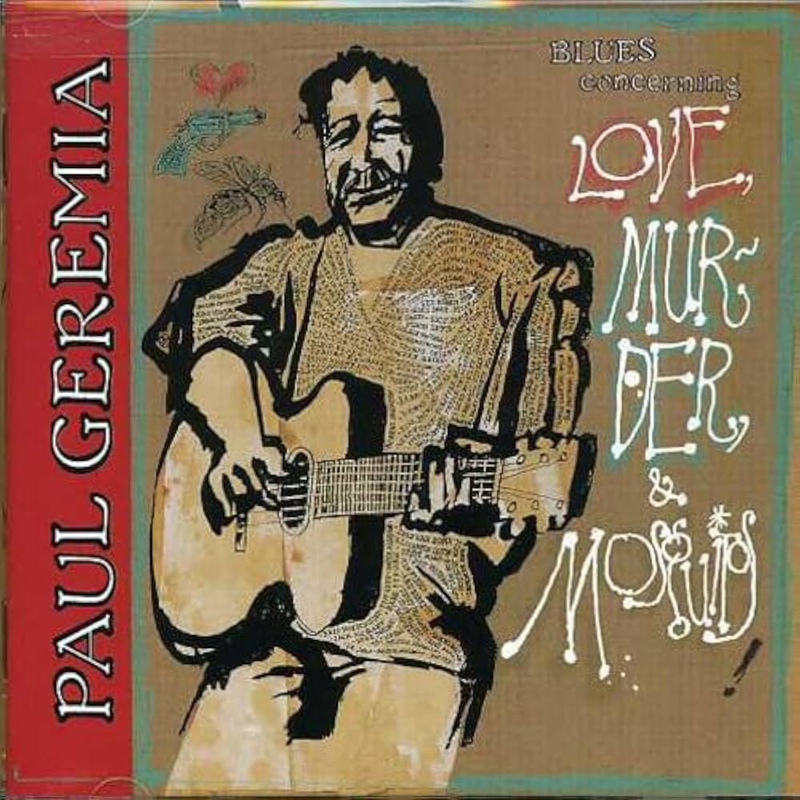
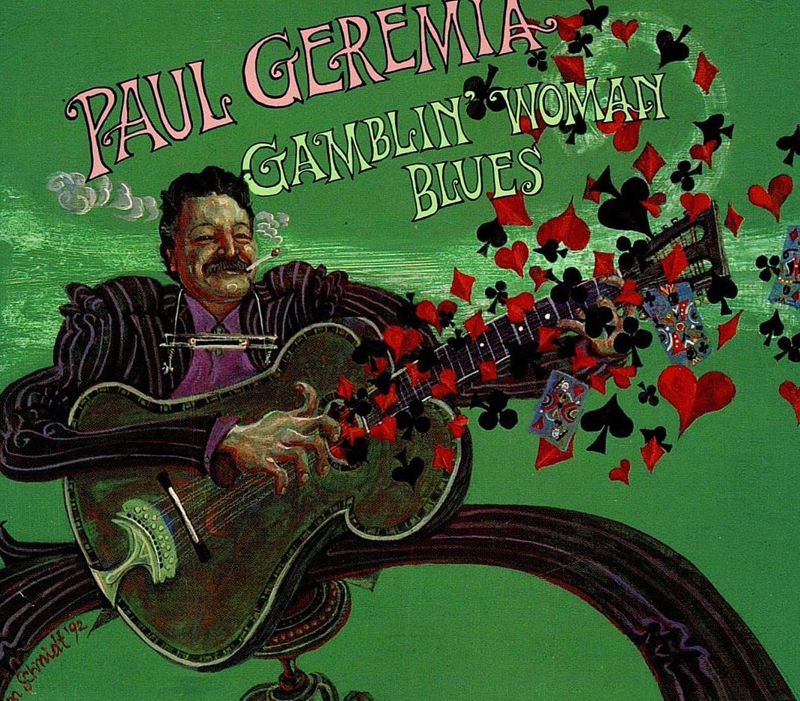
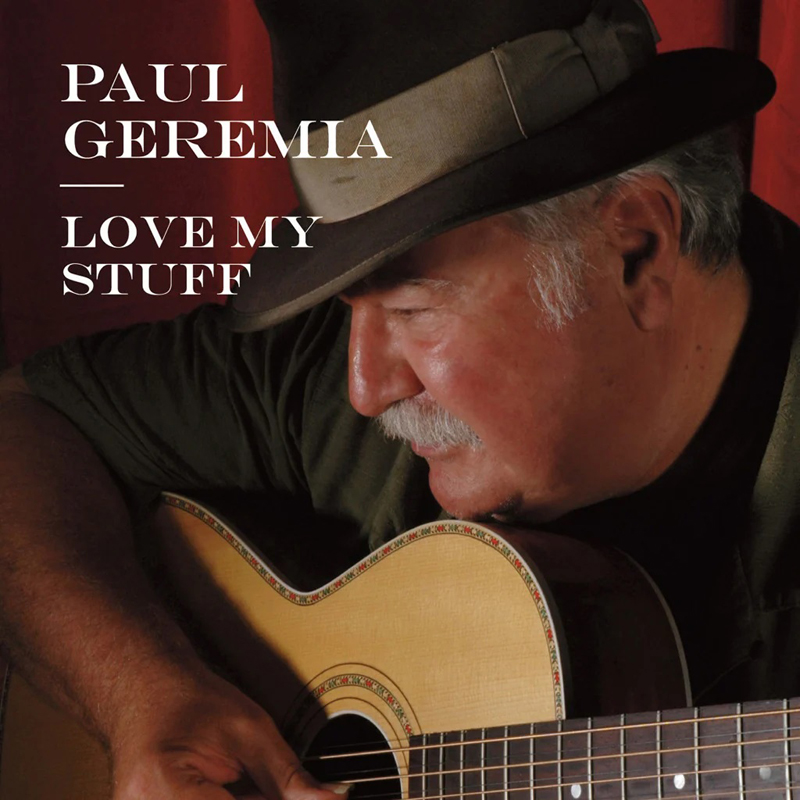
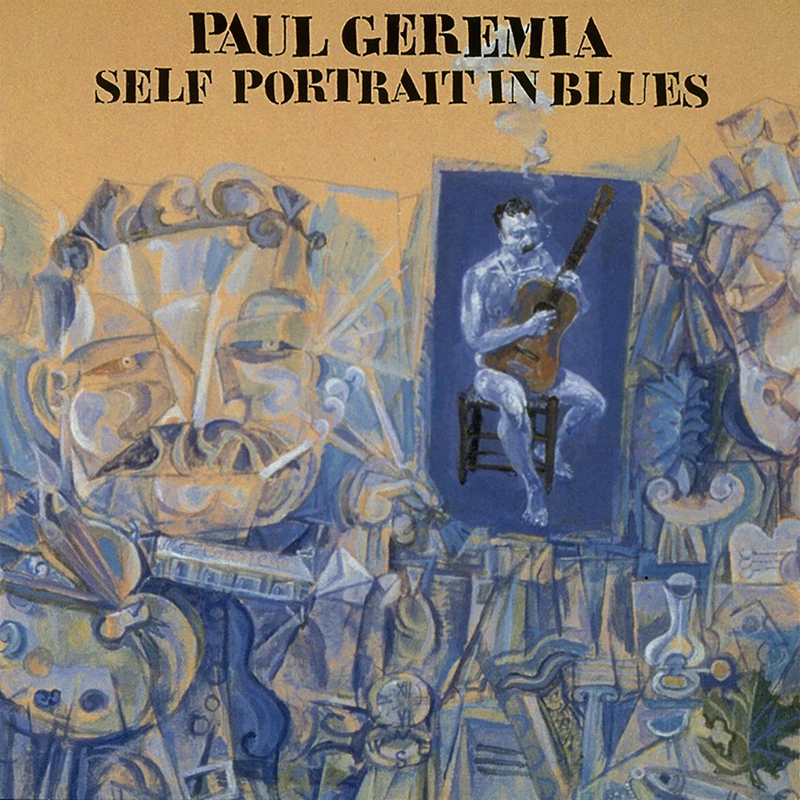
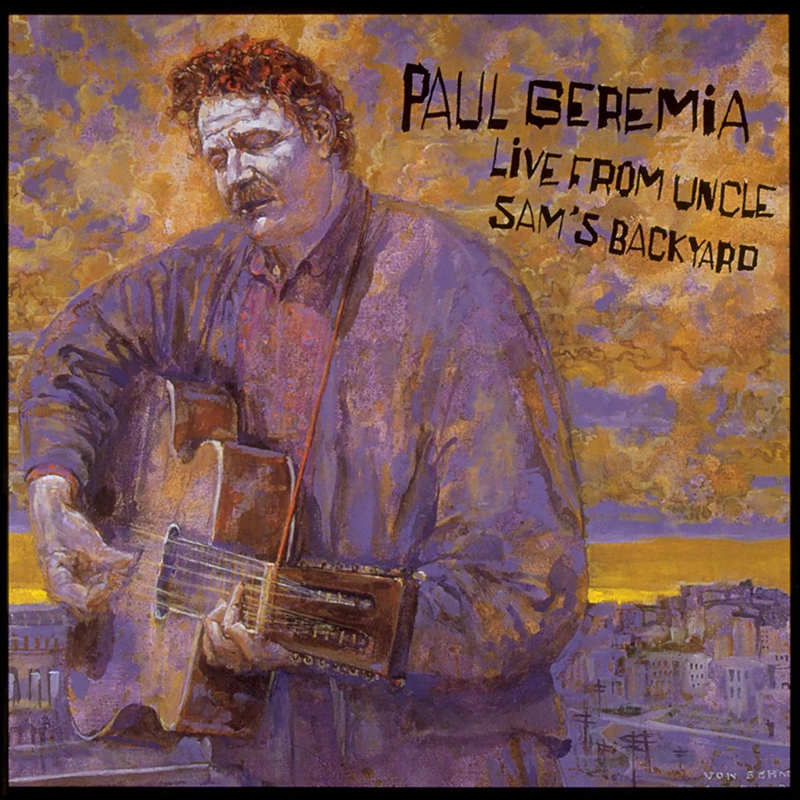
Geremia played his first shows in Europe in 1989 and continued to perform there regularly for the next 25 years. He signed a two-album deal with Austrian folk-blues label Shamrock Records in the early ‘90s, and his first Shamrock LP, Gamblin’ Woman Blues (1992), featured a painting by singer-songwriter Eric von Schmidt on its cover, as did three of Geremia’s later albums. In 1995, after Shamrock issued the second album of his contract, Self Portrait in the Blues, he signed with Red House Records, which released his final four albums, the last being 2011’s Love My Stuff, a 21-track LP featuring previously unreleased live performances cut between 1983 and 2007.
In 2002, Geremia’s rendition of the gospel standard “Get Right Church” from the Telarc-issued album Preachin’ the Blues: The Music of Mississippi Fred McDowell was nominated for a Grammy. In 2008, the Stefan Grossman Guitar Workshop series produced the DVD Guitar Artistry of Paul Geremia: Six & Twelve String Blues in which Geremia gives tutorials on his own songs and his interpretations of others written by the bluesmen he admires most.
HEALTH PROBLEMS, DEATH, LEGACY
Geremia suffered a serious stroke in June 2014 at age 70, ending his decades as the definition of a “troubadour” in the modern sense. He lived at Steere House Nursing & Rehabilitation Center in Providence until his death on March 14, 2026 at age 81, with fellow musicians and friends contributing financial support to help defray expenses.
When asked in 2001 to comment on Geremia’s musical legacy, singer-songwriter John P. Hammond – son of John H. Hammond, the famed Columbia Records exec and producer who signed Pete Seeger and Bob Dylan, among others – spoke for countless thousands of musicians and music lovers with the simplicity of his reply. “I’d drive a thousand miles to see Paul play,” he said.
(by D.S. Monahan)