Martin Sexton
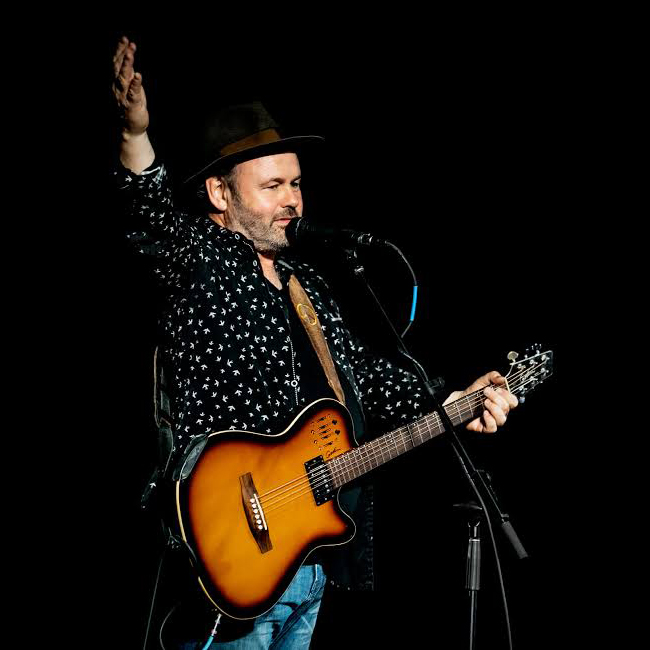
Martin Sexton
Ask the average Joe what they associate with Syracuse, New York and you’ll likely get one of two answers, neither of which has anything to do with music: “snow,” because the city’s known for its abundance of the stuff, and “students,” because it’s home to Syracuse University, which draws enrollees and faculty from across the planet. Given that, you might logically assume that native son Martin Sexton grew up wanting to be an Olympic skier or a college professor, but you’d be wrong. Actually, as he’s said in a number of interviews, he believed he was destined to be a professional singer from age nine, when harmonizing in the bathtub served as a sort of prepubescent vocal training.
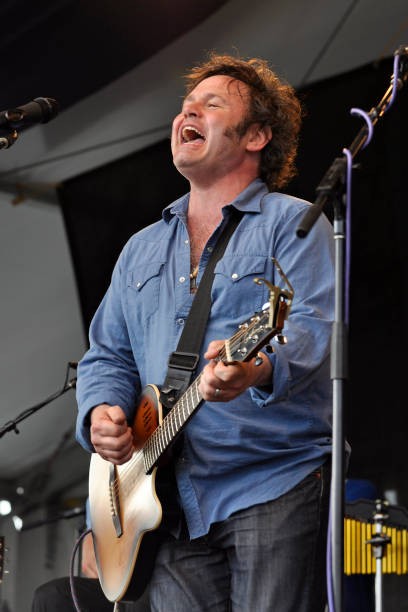
Now, some five decades since he started soaking himself in ‘70s rock and about 40 years since relocating to Boston, he’s among Gen X’s most critically acclaimed singer-songwriters, known for his vocal versatility, self-developed fingerpicking technique and eclectic blend of rock, folk, soul, gospel, blues and R&B. “My shows jump from boogie-woogie to a ballad, from a cowboy tune to a folk song. Blues, rock, boogie – I’m not about any one particular genre,” he told The San Jose Mercury News. He’s cut seven studio albums, four live LPs and two EPs, won multiple Boston Music Awards, and seven-time Grammy winner John Mayer, who first met Saxton in the late ‘80s when Syracusan was busking in Havard Square, has called him “one of the most treasured singer-songwriters I’ve ever heard in my life.”
MUSICAL BEGINNINGS
The tenth of his parents’ twelve children, Sexton was born on March 2, 1966. His father, a Navy vet who sold office equipment, and his mother, a homemaker and the daughter of former Syracuse Mayor Thomas Corcoran, were devout Catholics who required their kids to say a decade of the rosary after dinner before they could have dessert. Sexton’s said that his early years were shaped by the close-knit, southwest Syracuse neighborhood in which his family lived, Strathmore
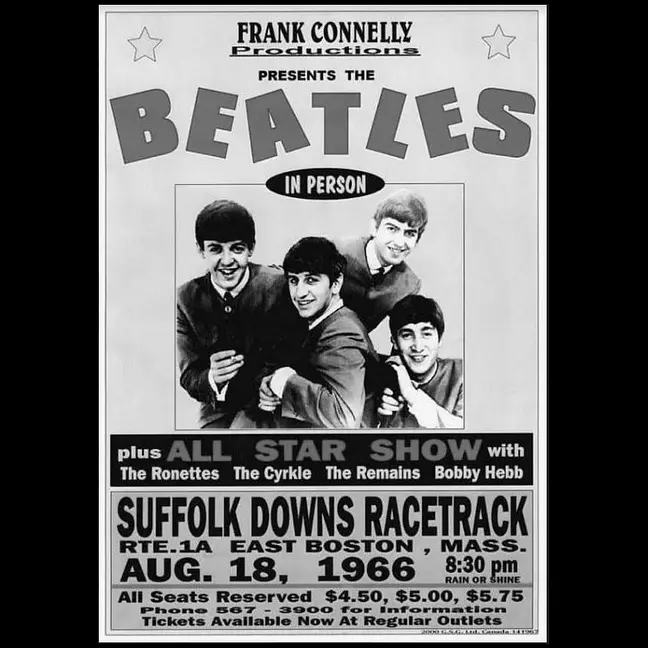
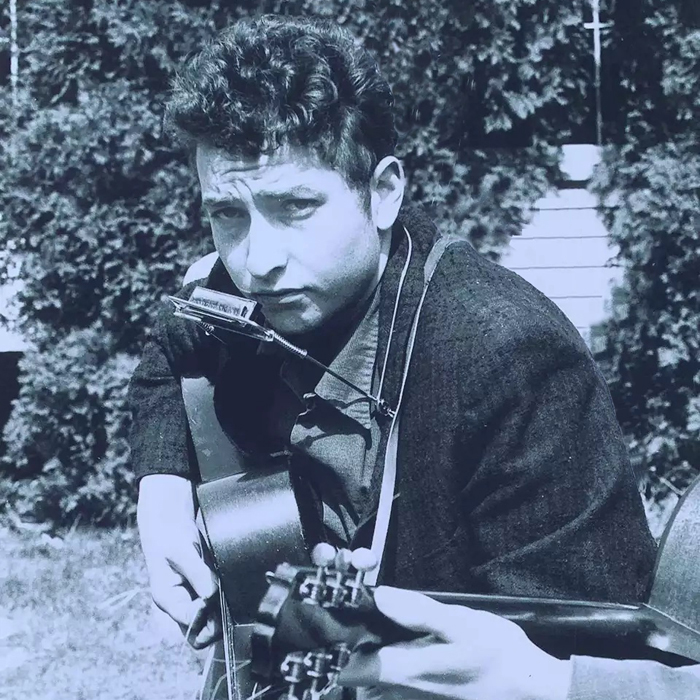
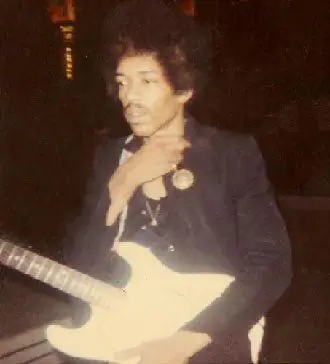
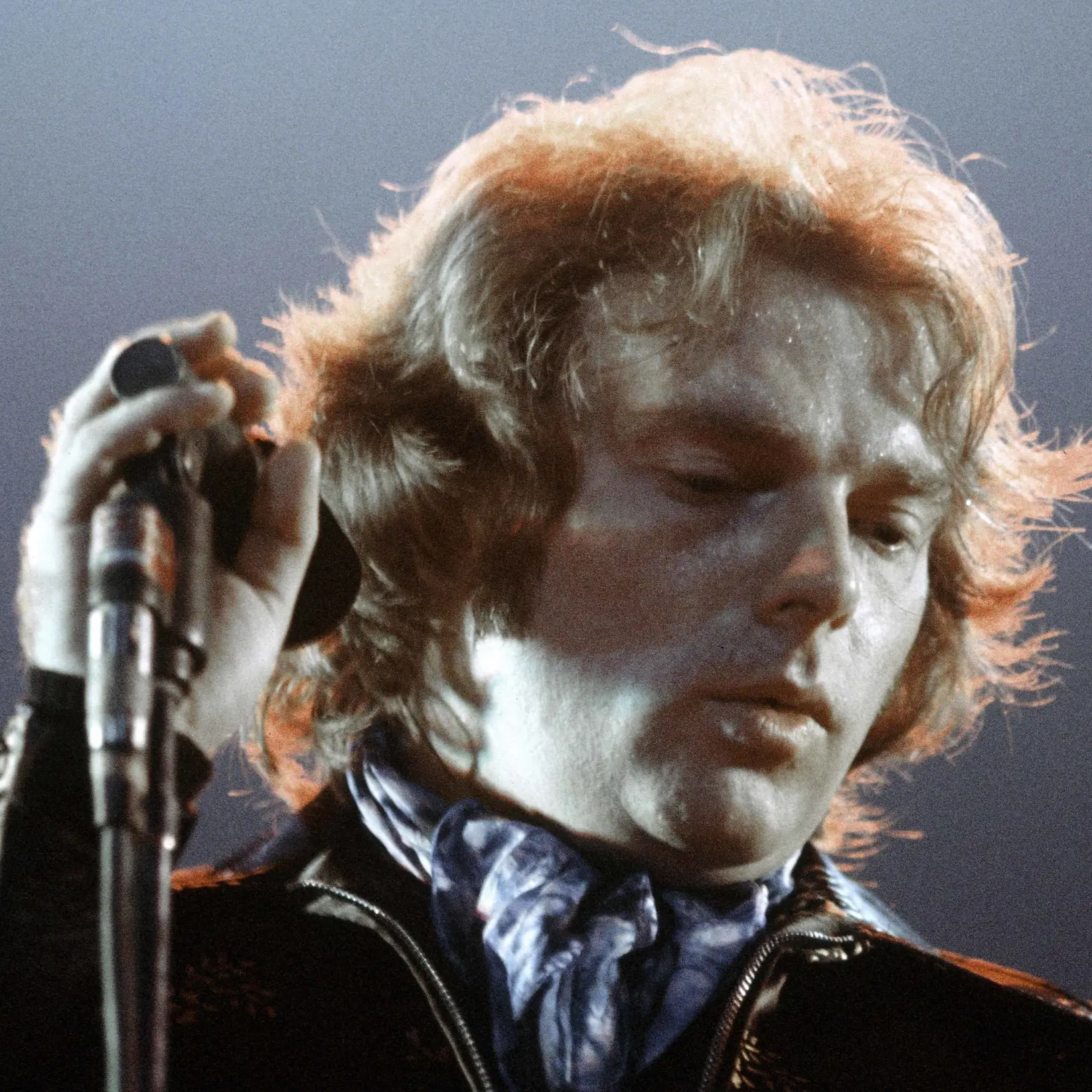
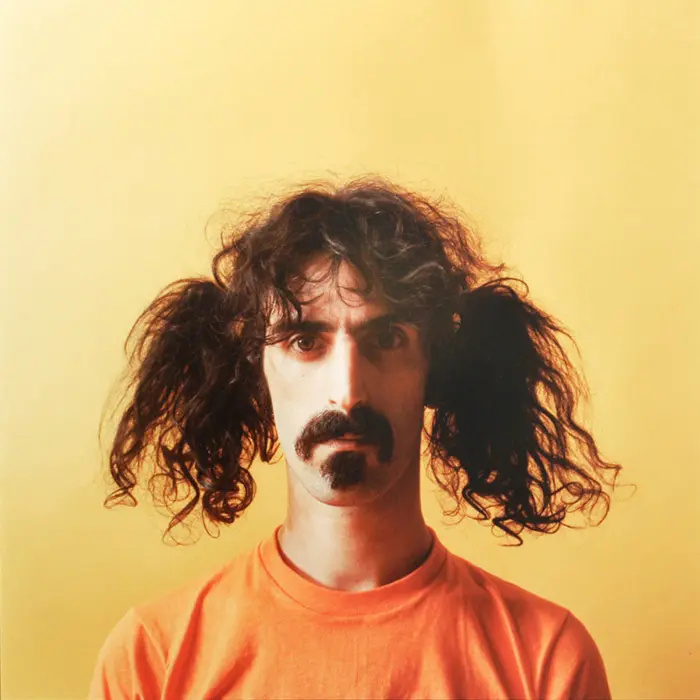
He began writing songs around age 13, and his parents bought him his first guitar, a Sears & Roebuck acoustic, when he was 14. After teaching himself the basics of both singing and playing through trial and error, often using records and the radio as his de facto teachers, he formed his first band at 15 and played in several groups while going to Thomas J. Corcoran High School (named after his maternal grandfather). Unsurprisingly given the year of his birth, Sexton cites his earliest influences as the rock, R&B and soul artists that he heard most often on AM and FM radio in the ‘70s, among them The Beatles, Bob Dylan, Van Morrison, Stevie Wonder, Jimi Hendrix and Frank Zappa. “My life’s dream at that point was to be like The Beatles or Peter Frampton. Frampton Comes Alive [1976] was an important record for me,” he told the online site Weekly Wire.
MOVE TO BOSTON, BUSKING YEARS, OPEN-MIC NIGHTS, IN THE JOURNEY
In 1988, following one of his older brothers, 22-year-old Sexton moved to Boston, determined to make a name for himself on the Boston/Cambridge scene. To pay the rent, he landed a job waiting tables at Café de Paris on Arlington Street in Boston but – in what he now considers a very positive turning point in his life – was fired shortly after starting. With no job and very little cash, he began what became several years of busking in subways, on the street corners and anywhere else where people might toss him some coins or even a bill. The experience proved to be an excellent training ground, he’s said, because it forced him to develop his own singing and playing style, expand his songwriting range and learn how to engage listeners most effectively.
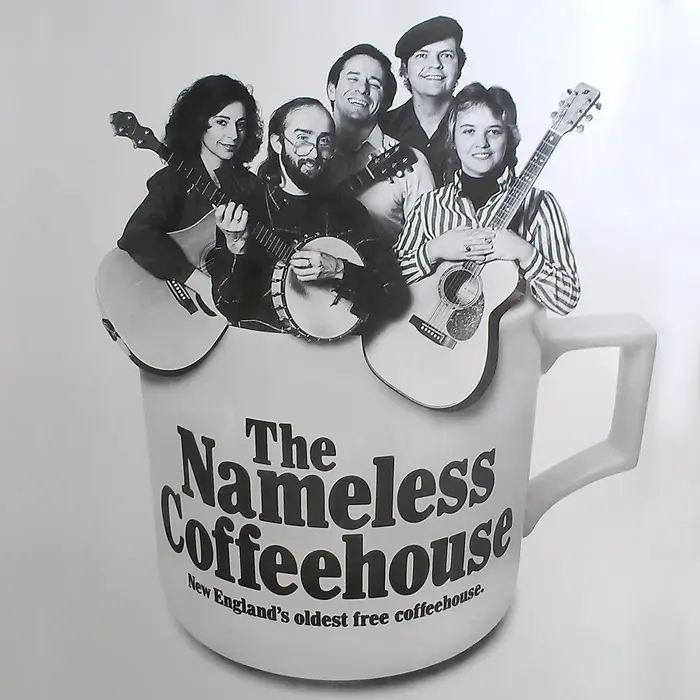
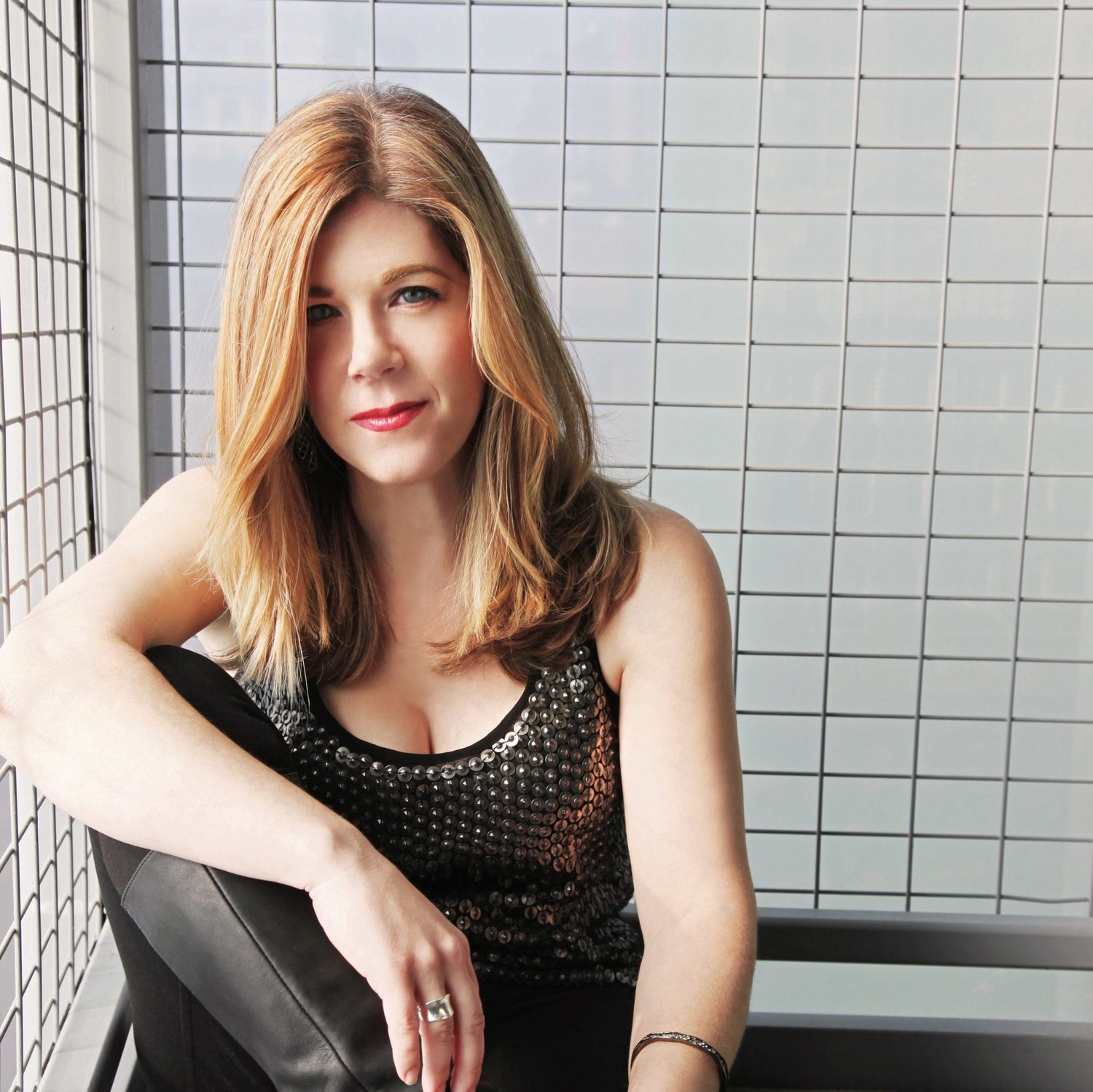
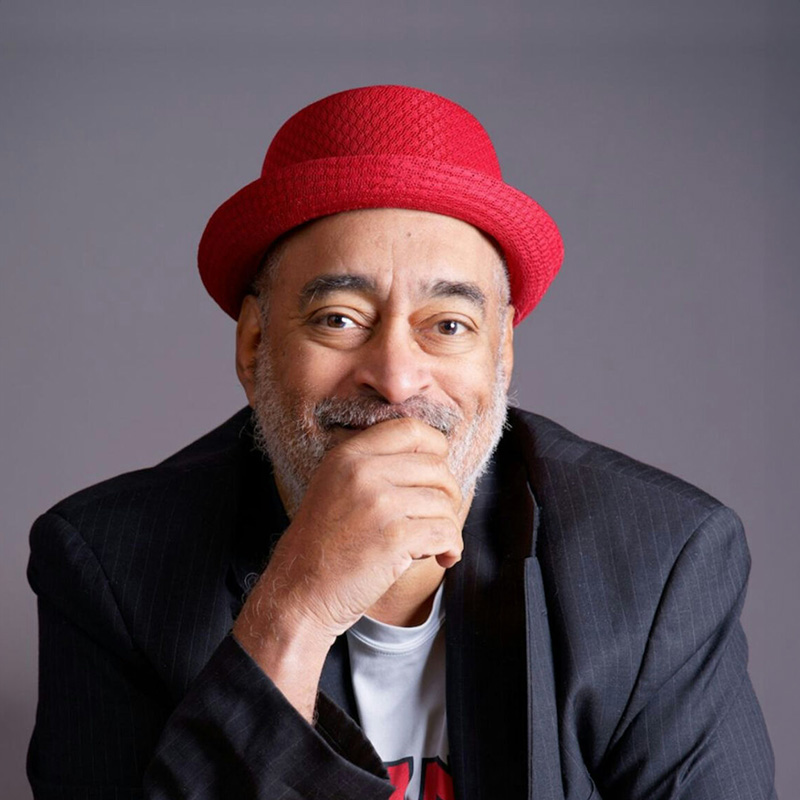
“I was sort of pushed over the edge, because I had been meaning to go to the street, but it wasn’t until I was canned from my job that I actually did it,” he told Weekly Wire. “I had to go. I didn’t really have a choice at that point. But the street was like a blender; it kind of forced me to take these ingredients and abilities and some talent and whip it all into a form of entertainment to try and draw people in.” Sexton also began playing open-mic nights regularly at venues like The Nameless Coffeehouse and the Old Vienna Kaffeehaus, often alongside fellow up-and-comers Ellis Paul, Dar Williams, Patty Griffin and Vance Gilbert. By the dawn of the ‘90s, he’d gained enough of a local following that he was opening for well-established acts at popular spots including the Paradise Rock Club and Club Passim.
In 1991, Sexton self-released his first recorded output on the cassette In the Journey, a nine-track collection of demos he’d made in a friend’s attic. In a focused effort to drive sales, he began inviting listeners to actively participate in his street and open-mic performances, teaching them harmonies while encouraging audiences to clap to the rhythm. As a result, he sold 15,000 copies of In the Journey within a year, and his “total crowd involvement” strategy became a fundamental element of his style, as it remains to this day.
BLACK SHEEP, ATLANTIC SIGNING, THE AMERICAN, WONDER BAR
Sexton won the National Academy of Songwriters’ Artist of the Year Award in 1994, which increased his profile exponentially, and spent much of the next two years on the road, performing at venues and festivals across the US and opening for singer-songwriter greats including John Hiatt, Jackson Browne and Art Garfunkel. Medfield, Massachusetts-based Eastern Front Records released his first album, Black Sheep, in 1996, and in August 1997 he debuted at the Newport Jazz Festival, a gig that firmly established him as a significant new presence on the national scene.
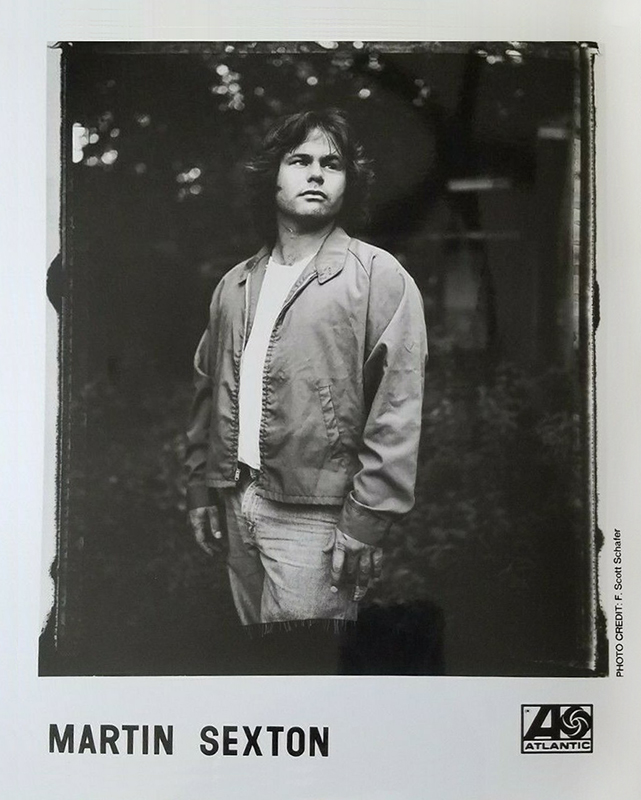
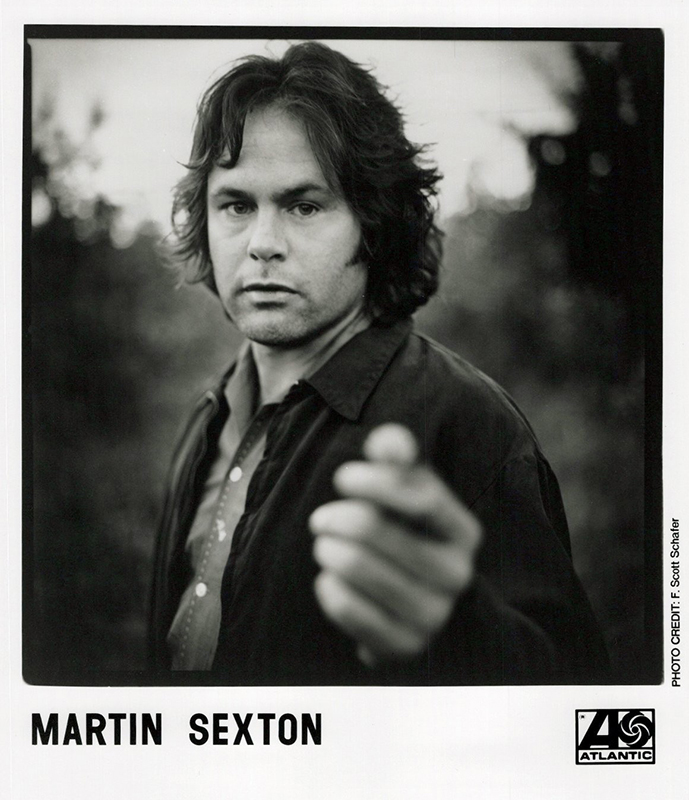
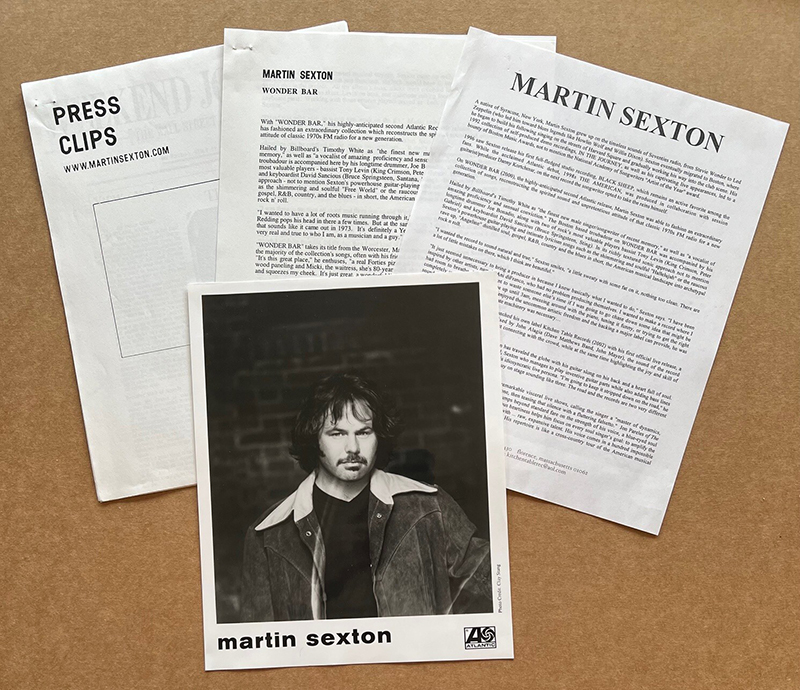
That exposure led to a two-album, $100,000 deal with a label famous for its roster of R&B/soul legends, Atlantic, which issued Sexton’s second LP, The American, in 1998. A Billboard review referred to him as the “finest new male singer-songwriter of recent memory,” noting his remarkable falsetto-to-baritone range and superb songwriting skills. Sexton debuted at the Newport Folk Festival in August 1999, played his first gigs in Australia in November that year, and Atlantic released this third disc, Wonder Bar, in 2000.
Interestingly, the label gave him a great deal of control over the LP’s final sound, as Sexton insisted that the tunes come across as honest to the point of including a few mistakes, such as what Sexton has called “all kinds of little vocal imperfections” on the song “Real Man.” “We rehearsed it all day and by the time we got it on tape, my voice was a bit shot,” he said in an interview with the website Hip Online. “I initially thought I’d fix it, but then I just kind of dug it. It’s a tired voice, a guy that’s a little worn down.”
KITCHEN TABLE RECORDS, RECENT ALBUMS, “ABBEY ROAD SHOW”
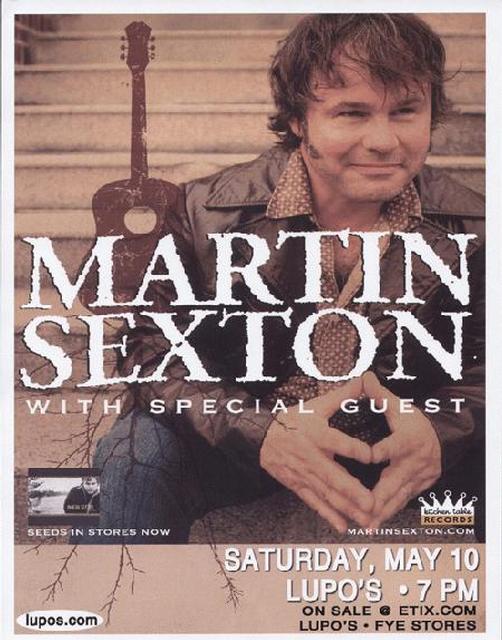
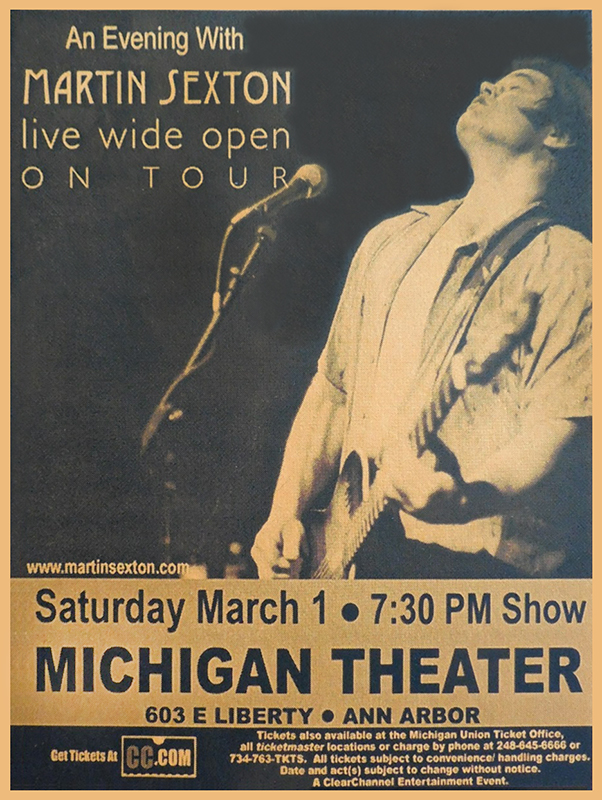
Sexton and Atlantic parted ways in 2000 since, according to Sexton, he noticed that the bulk of his albums were selling at his live performances, not as a direct result of support from the label. Deciding to remain independent, he founded Kitchen Table Records, which issued his first live album, the double-CD Live Wide Open, in January 2002. “Owning your own record is worth the effort,” he told The Wall Street Journal a few weeks after the LP’s release. “It’s like real estate; it keeps earning the rent.”
He cut four more discs over the next decade, releasing each on Kitchen Table: Camp Holiday (2005), Seeds (2007), Solo (2009) and Sugarcoating (2010), the last of which he recorded without any rehearsals or pre-production using vintage gear at the former Rounder Records studio in Cambridge. In 2003 and 2007, his song “Diner” (from 1996‘s Black Sheep LP) was used in episodes of the Emmy-winning NBC series Scrubs, introducing his voice, songwriting and guitar-playing prowess to millions of potential new fans.
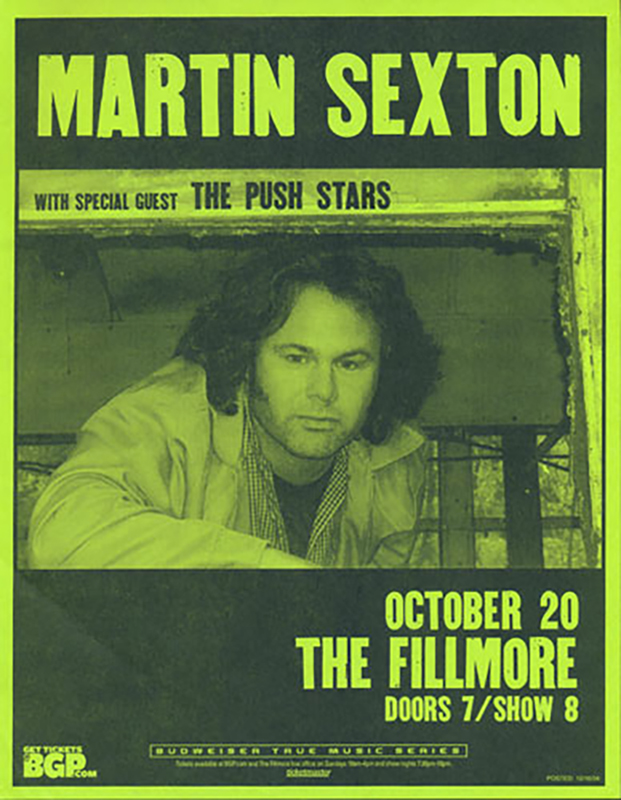
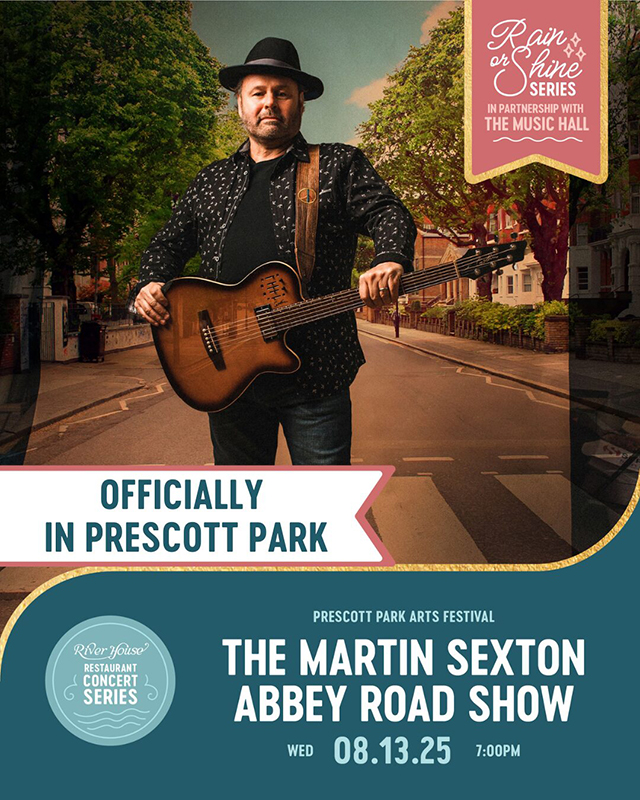
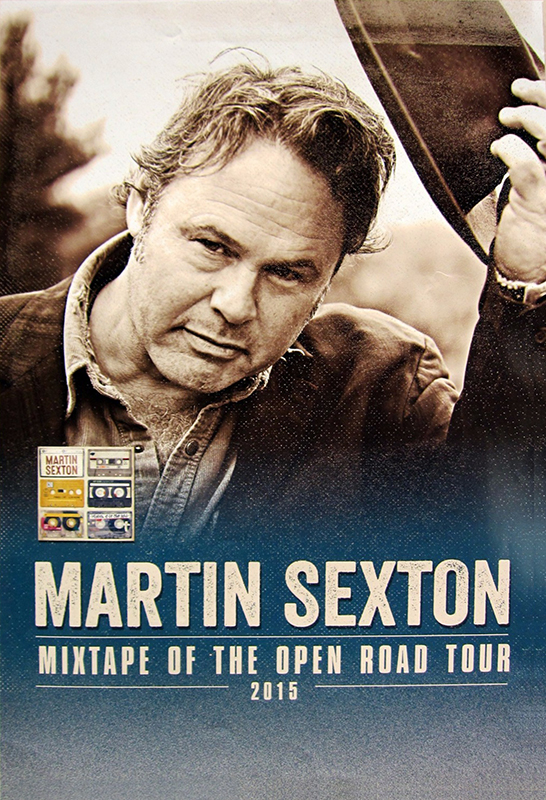
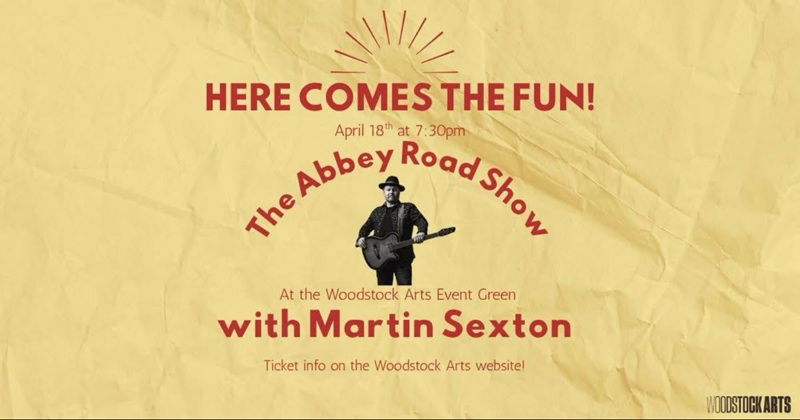
Sexton recorded the EP Fall Like Rain in 2012, followed by his seventh studio album, Mixtape of the Open Road (2015), which he produced by himself and includes two of his best-known originals, “Do It Daily” and “Remember That Ride.” His most recent releases, all on Kitchen Table, are Live the Filmore (2016), which includes covers of Prince’s “Purple Rain” and The Beatles’ “A Day in the Life”; Live at the Belly Up (2017); and the EP Vision (2021), which was recorded in a home-studio setting during Covid shutdowns and produced by Grammy nominee John Alagia. In 2024, he launched “The Martin Sexton Abbey Road Show,” a touring production that reinterprets The Beatles’ 1969 classic Abbey Road in its entirety and also includes Sexton’s originals.
REFLECTIONS ON EARLY BOSTON YEARS
Asked why he chose Boston as the place to start his career, Sexton said it looked a bit less intimidating than other options. “Boston seemed a little more achievable for me,” he told Scott Hudson of the Argus Leader in 2014. “I had a brother there, and it wasn’t as scary as New York or as far away as Los Angeles. Also, it seemed to have a history of music and a heartbeat, which was very alluring. It was a good place to start, though I had no idea that I’d be singing in the subways and Harvard Square.”
Asked about his biggest takeaways from his early years in the city, he mentioned two. “First, I learned as a busker straightaway that you have to get the audience’s attention,” he told Hudson. “The second thing I learned is that you have to keep that attention for more than just a minute. Necessity was the mother of invention, and I just had to figure out how to do that. It was a wonderful way to make a living and grow as a performer and songwriter, actually, kind of like a school for performance, only that I didn’t have to pay to do it. I got paid to do it, which was awesome. I didn’t have to have a day job.”
(by D.S. Monahan)