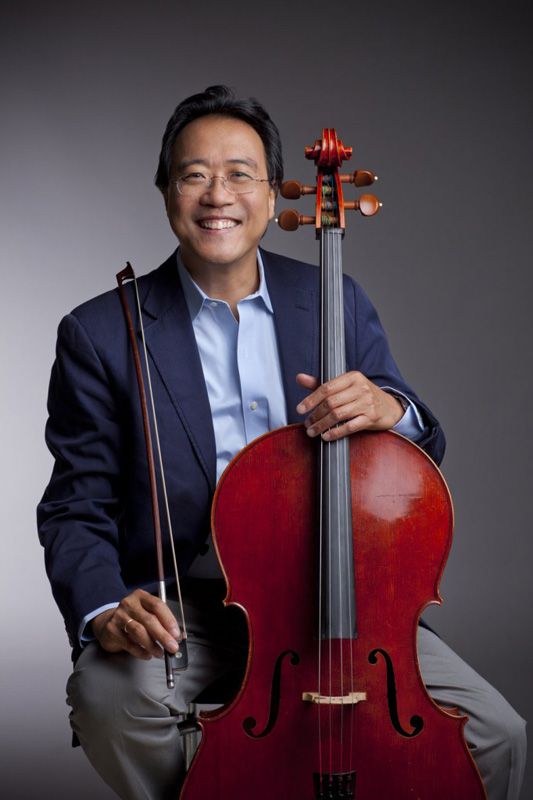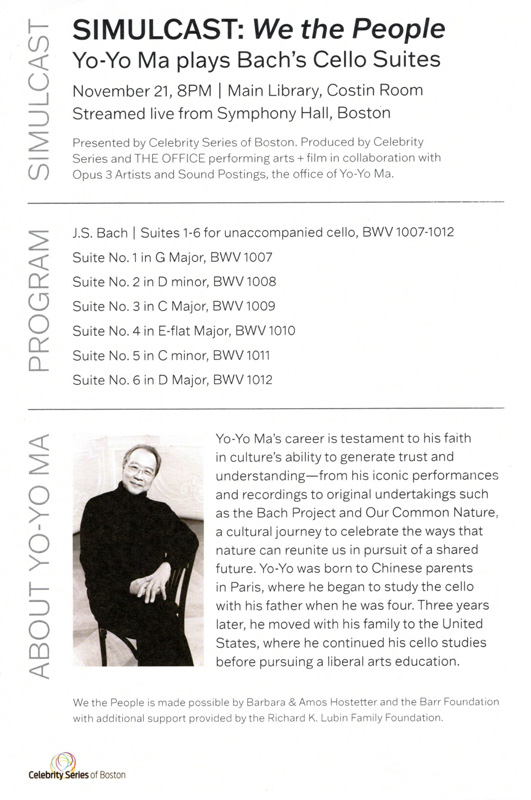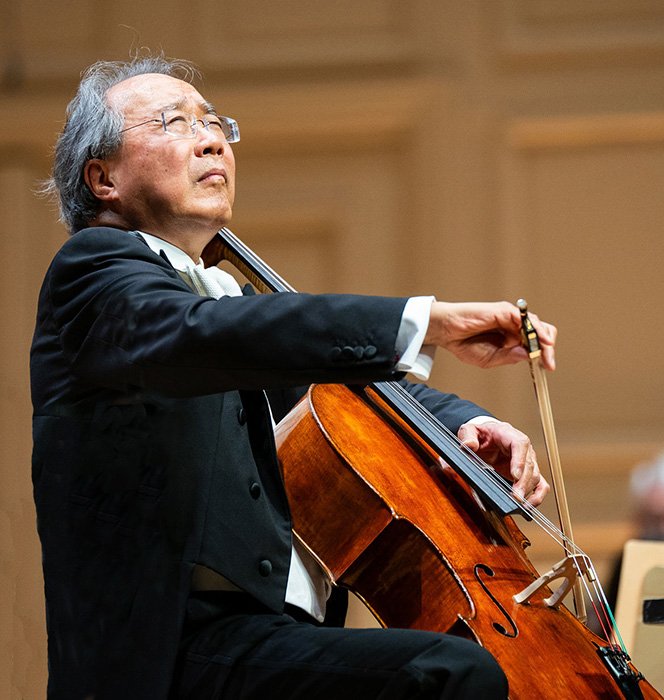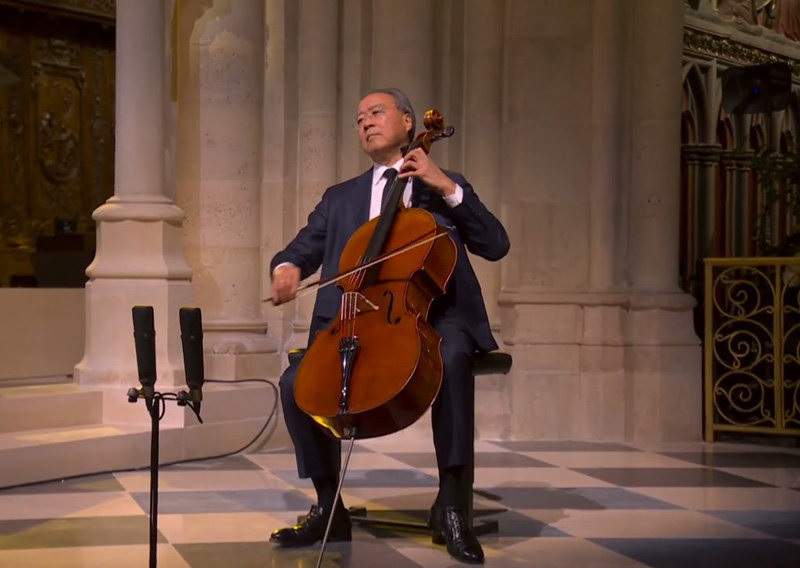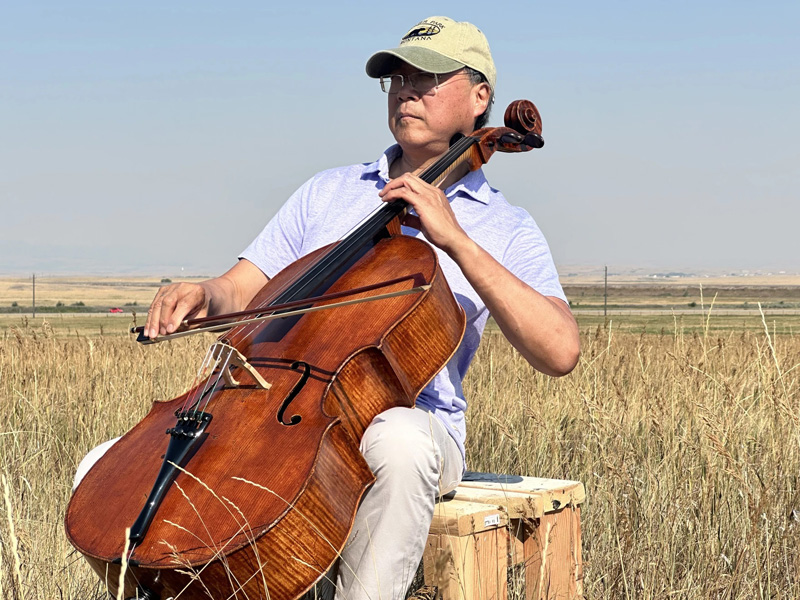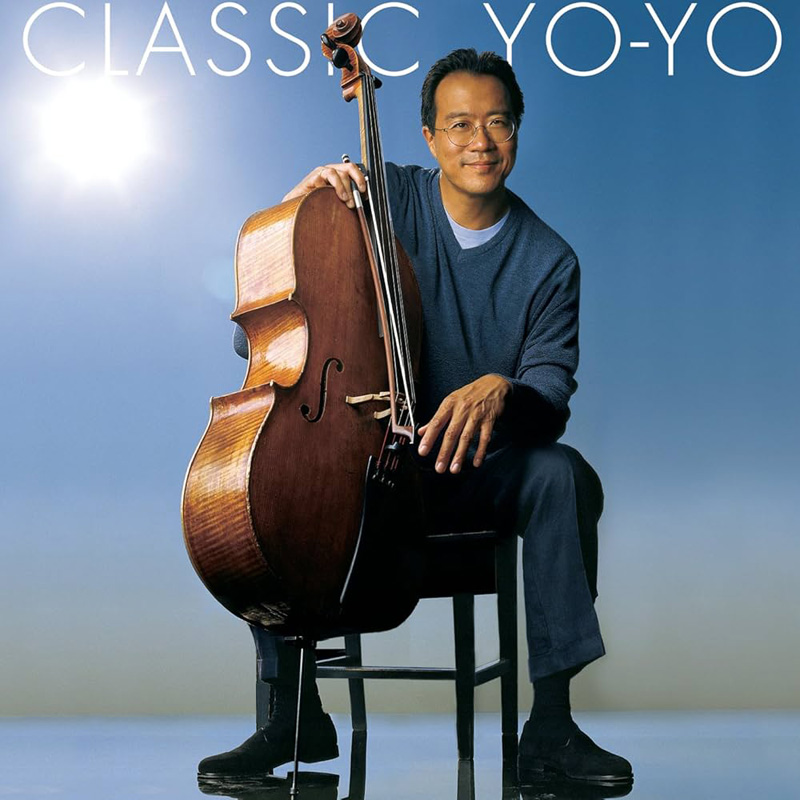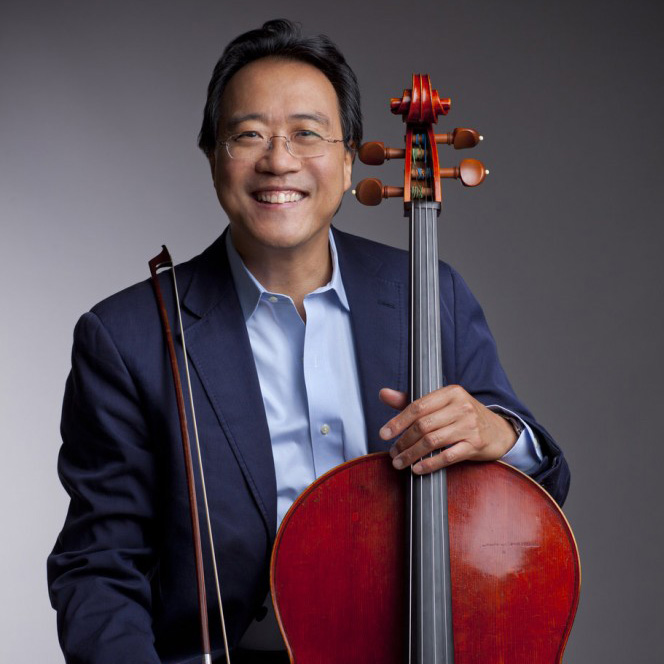
When Yo-Yo Ma hosted a master class at Longy School of Music in Cambridge, Massachusetts in early 2000, Longy Director Victor Rosenbaum introduced him in a way that would surprise very few given Ma’s household-name status: “one of the most celebrated musicians of all time.” He also referred to him as “the most famous cellist of our time,” which might surprise less musically inclined folks who know that Ma’s a musician, but don’t know that he’s a cellist. Lastly, he referred to him as “our Cambridge neighbor,” which would likely surprise the bulk of people from outside the area, most of whom would guess that Ma lives in an internationally renowned bastion of classical music like New York City, London, Vienna or Hong Kong.
In fact, Ma’s made Cambridge his home since enrolling at Harvard in the early ‘70s and the city and its surroundings have played an outsized role in both his musical and personal development. He spent several summers playing with an orchestra in Vermont in his teens, has a summer home in the teensy Western Massachusetts town of Tyringham and has been performing throughout New England for over 50 years. Though Ma’s the quintessential “citizen of the world” by virtue of his cross-cultural background, kaleidoscopic musical approach and decades of globetrotting, he’s a bona fide Cantabrigian in every way but birth and as rooted in New England as any non-native of the region has ever been.
OVERVIEW
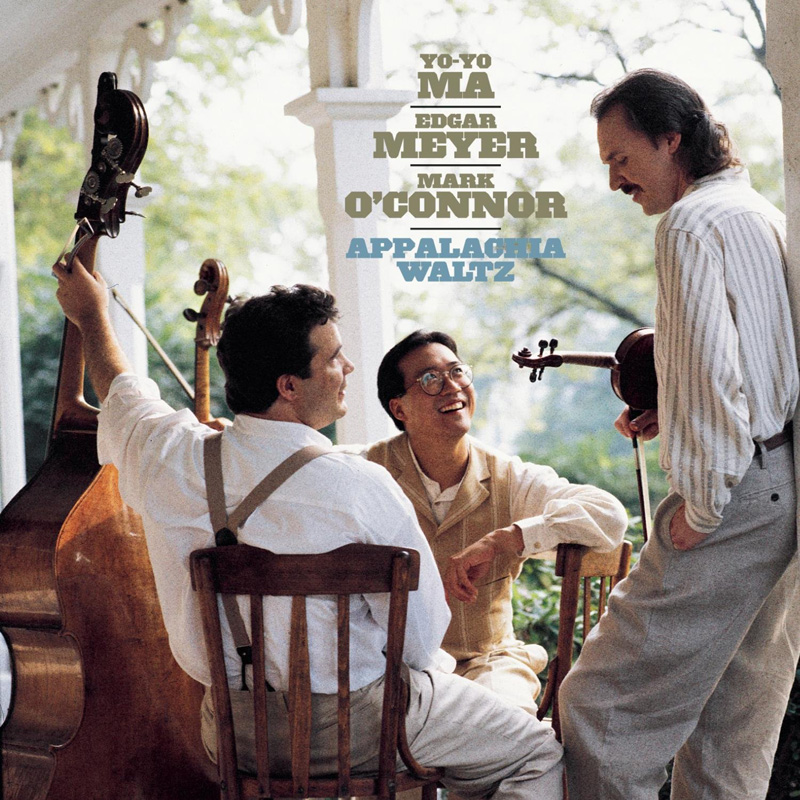
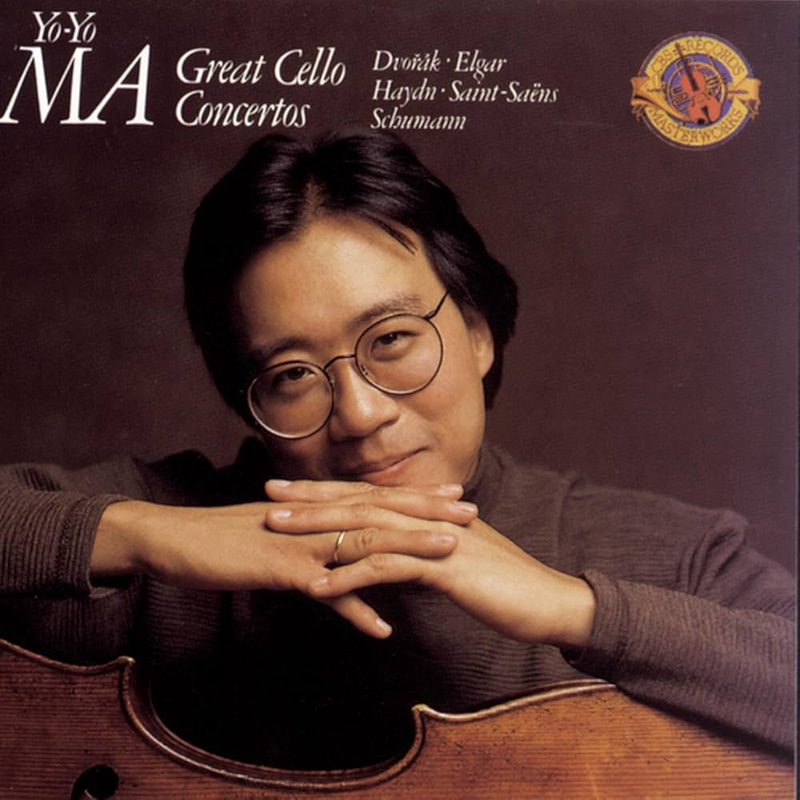
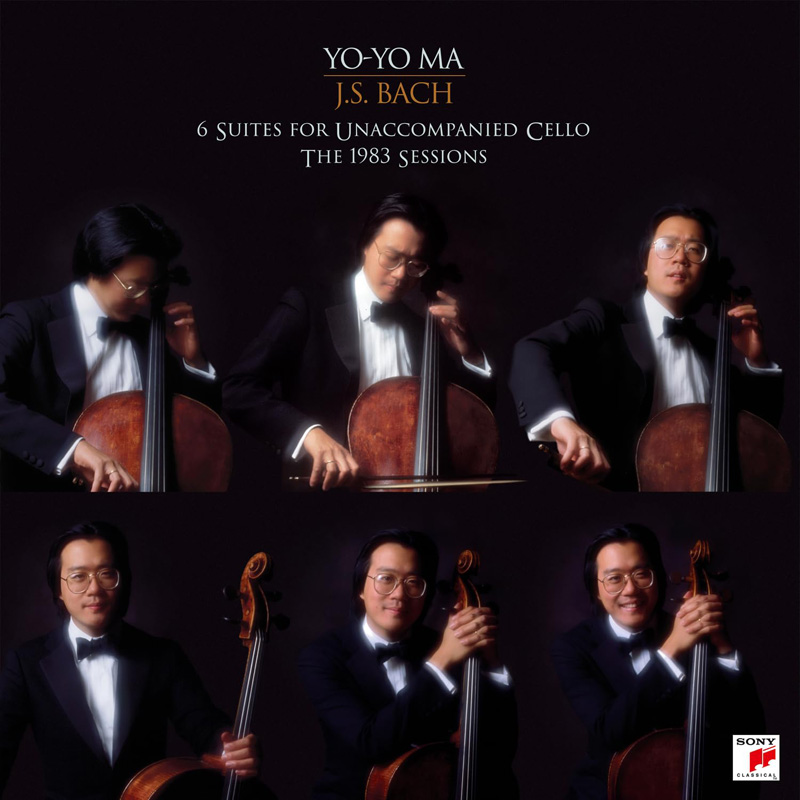
A child prodigy whose innate musicality was obvious years before he started kindergarten, Ma’s been performing in public since he was five. His recording output is vast and varied – 90 albums that range from concertos, sonatas and fugues to jazz, tango, bluegrass and traditional Chinese, Japanese, Brazilian and Appalachian folk – and he’s won 19 Grammys, among them ones for Best Instrumental Soloist Performance, Best Chamber Music Performance, Best Classical Crossover Album, Best World Music Album and Best Folk Album. “I’m seeking to connect things that were not previously joined together: from Bach to the Kalahari to music along the Silk Road, to country fiddling and the tango,” he told Janet Tassel of Harvard Magazine in 2000.
Ma’s performed and/or recorded a wide swath of non-classical artists over the years, among them vocalist Bobby McFerrin, pianist-vocalist Diane Krall, tabla player Zakir Hussain, trumpeter Chris Botti, tango composer Astor Piazzolla, Sting, Carlos Santana and James Taylor. A United Nations Messenger of Peace since 2006, he’s received a parade of prestigious awards including the National Medal of Arts, the Presidential Medal of Freedom and a Kennedy Center Honor. His primary performance instrument is more than 300 years old: the Davidov Stradivarius cello made by Antonio Stadivari in in 1712.
Known almost as much for his stamina as for his musical gifts, Ma maintains a performing, recording, teaching and traveling schedule that would exhaust even the most driven Type A personalities. According to conductor David Zinman, one of Ma’s frequent collaborators, he has something of a secret weapon: “Yo-Yo’s one of those people who can sleep on a dime,” he told Tassel. “If he has ten minutes before a concert, he can just zzzzzzz out, then throw some water on his face and be radiant.”
MUSICAL BEGINNINGS, FIRST PERFORMANCE
Yo-Yo Ma was born in Paris on October 7, 1955. His father, Hiao-Tsiun Ma, was a violinist, conductor and musicologist who taught at Nanjing University until leaving China for France in 1936; his mother, Marina, was a singer from Hong Kong (and former student of Hiao-Tsiun’s) who emigrated to Paris in 1949. As for his rather showbizzy first name, Ma’s parents chose the Chinese word for “friendship” (“yo”) as the generational character for him and his sister Yeou-Cheng, simply doubling it when he came along four years after her birth. “With me, they seem to have gotten lazy and been unable to think of anything else, so they added another ‘Yo,’” he said in a 1989 interview with David Blum published in The Strad.
Hiao-Tsiun tutored his children in calligraphy, French and Chinese history and music, requiring them to memorize two measures of Bach every day, and Ma could play drums, piano and violin by the age of three. At age four, by which time he could perform a Bach suite on piano and violin, he told his father that he wanted to try playing a larger instrument and the elder Ma arranged for renowned luthier Étienne Vatelot to lend him a 1/16th cello. Realizing that his precocious son needed a highly skilled cello teacher to help him develop his obvious passion for the instrument, Hiao-Tsiun started sending him to lessons with acclaimed cellist Michèle Lepinte.
In late 1960, five-year-old Ma performed in public for the very first time at the University of Paris, playing piano and cello. The following year, at the urging of Vatelot, legendary violist Isaac Stern went to see him play, instantly realizing the scope of Ma’s natural abilities. “I went to listen to him, six years old, and the cello was larger than he was. It was extraordinary,” Stern told Tassel.
MOVE TO NEW YORK, FIRST TV APPEARANCES, MEADOWMOUNT SCHOOL
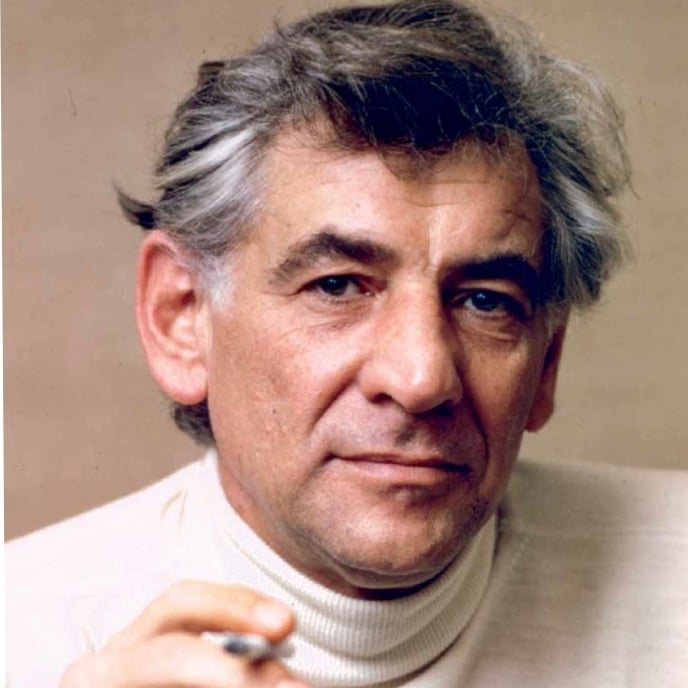
In 1962, the Ma family moved to New York City, where Ma studied at several schools, among them Trinity, L’Ecole Française (where his father taught music) and Professional Children’s School. He began taking lessons with Janos Scholz but was soon under the tutelage of cellist Leonard Rose as part of The Juilliard School’s precollege program, thanks in large part to Stern. “I said, ‘Lenny, you have to teach this boy,’ and Yo-Yo played for him, and of course he instantly took him,” he told Tassel. Seven-year-old Ma and his 11-year-old sister became known to the American public at large in November ‘62, when they played at a nationally televised fundraiser for the National Culture Center attended by Presidents John F. Kennedy and Dwight D. Eisenhower and hosted by Leonard Bernstein. Their popularity soared after they performed on The Tonight Show Starring Johnny Carson in 1964.
After finishing Julliard’s precollege program in the spring of 1971 at age 15, Ma completed a seven-week summer program at Meadowmount School of Music in Upstate New York; the experience was formative since it allowed him to start expressing himself outside the confines of his strict upbringing, he told David Blum in 1989. “Suddenly I was free,” he said. “I had always kept my emotions bottled up, but at Meadowmount I just ran wild, as if I’d been let out of a ghetto. The whole structure of discipline collapsed.” Most of all, he told Blum, it taught him that he had to forge his own path personally and professionally. “My family, like many Asian families, was not very big on dialogue,” he said. “I didn’t know what my opinion was on most things, but I knew enough to say to my father, ‘Listen, it’s a clear choice: I can be a really obedient son or I can try to be a really good musician, but I can’t be both.’ If you want to be a musician, you have to identify what your own voice is.”
VERMONT SUMMERS, HARVARD YEARS
Though he’d been accepted at Harvard and planned to start there in the fall of 1971, Ma’s newfound independence led him to change his mind. Instead, he decided to enroll at Columbia University in New York City, keep living at home and continue his cello studies with Leonard Rose. He dropped out of Columbia after one semester, however, moving to Cambridge as a 16-year-old Harvard freshman in the fall of 1972. He spent the summer of ‘72 in Marlboro, Vermont playing in the Marlboro Festival Orchestra under the direction of his boyhood hero, cellist-conductor Pablo Casals. During that time, he met Mount Holyoke College sophomore Jill Horner, a former violinist in the Greater Boston Youth Symphony Orchestra; they’ve been married since 1977.
Ma spent the next three summers in Vermont with the orchestra and in 1976 he graduated from Harvard with a bachelor’s degree in anthropology; in 1991, the school presented him with an honorary doctorate. He told Tassel that his college years were “totally lazy and undisciplined” but said he’s happy he didn’t do what many assumed he would: go to music school. “Harvard was the first community where I lived with people who were not specialized music people,” he said. “On the musical, intellectual and social level, I lived with and was the audience. I played everything and everywhere: in the Holmes Hall living room, the Currier House senior common room, Eliot House, Lowell House, the HRO, the Bach Society. Someone in class would say, ‘I’ve written a piece. Do you want to play in it?’ or ‘So-and-so needs someone to play in that musical or in the orchestra’ and I’d say, ‘Sure, why not?’ It was a real community. I am so glad I didn’t opt for a music school.”
As a freshman with a full academic schedule, Ma still managed to play about 30 concerts all over the world, but he limited his out-of-town performances to one a month for the following three years. “Yo-Yo made a conscious decision not to concertize as extensively, so he got completely woven into the musical and social life of Harvard,” pianist/psychiatrist Richard Kogan, one of Ma’s former roommates, told Tassel. “No one ever knew when he practiced; he was always available. Even then, he felt it was his mission to bring music to everybody. We played a lot in Sanders Theatre, and word was out about this phenomenon, so there were never enough seats.”
While Ma’s partying, cursing and tendency to skip classes firmly established him as the stereotypical “rebellious teen” (and brought no small amount of shame to his rather traditional parents on multiple occasions), his expanding sense of self produced a new level of freedom and abandon in his playing, according to Leonard Rose and others. Ma’s primary mentor at Harvard was composer-conductor Leon Kirchner, who told Tassel he was “the boulder in Yo-Yo’s road,” consistently pressing him to look more deeply into himself. “I was a severe critic, but only because even then I was in awe of him,” he said. “I was always telling Yo-Yo that he didn’t have the true center of his tone yet, meaning there was something more spiritual, the center of his person, of his being, that was not coming through yet. Needless to say, Yo-Yo has long since found that center.”
SILKROAD, EDUCATIONAL ACTIVITIES, “GO WITH THE ENERGY AROUND YOU”
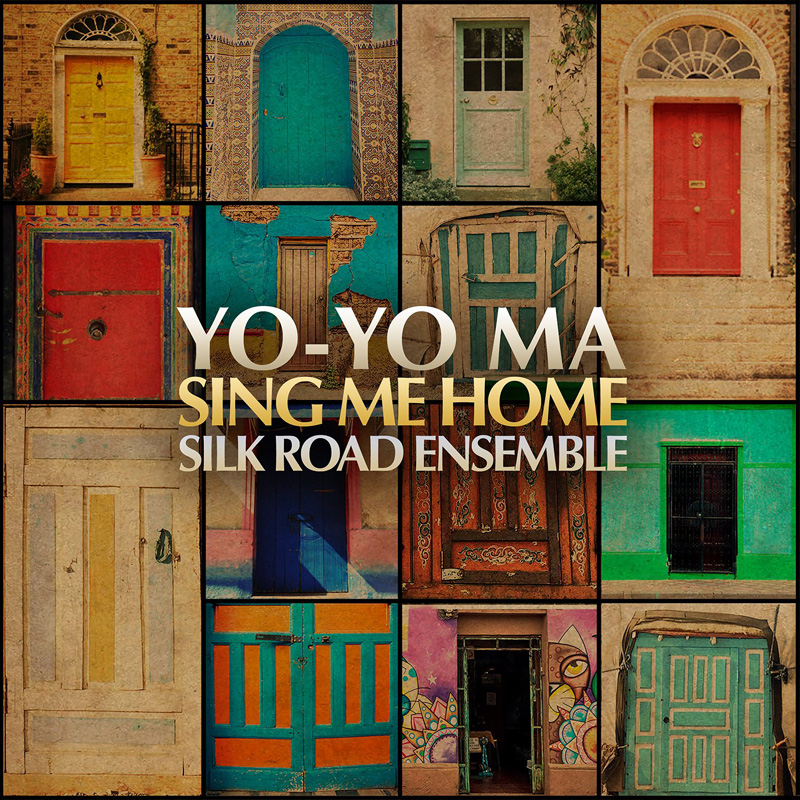
In 1998, Ma established Silkroad, a collective of globally renowned artists who create music that reflects their unique cultural backgrounds and traditions. In addition to performing at prestigious venues including Suntory Hall in Tokyo and the Hollywood Bowl, the group has commissioned over 100 works from celebrated composers and arrangers, recorded eight albums and collaborated
Actually, Ma made education a significant part of his schedule years before forming Silkroad, hosting classes at Tanglewood and other venues/schools across the globe. He’s appeared on children’s shows including Sesame Street, Mister Rogers’ Neighborhood and Arthur and says the pedagogical part of his life is among the things he enjoys most. “I love being invited into the world of children,” he told Tassel, since they “lack cynicism.”
And his students appreciate him at least as much as he appreciates them, as seen at the master class at Longy School of Music in 2000. “Is this awesome or what?” exclaimed an attendee named Lauren before walking to the classroom. Utterly exhausted after playing Édouard Lalo’s “Cello Concerto in D Minor” in class, she asked Ma how she could build endurance for such a draining piece. His reply echoed exactly what he’s been doing since his musical and personal self-discovery began at Meadowmount School of Music in ’71 and blossomed at Harvard. “Go with the energy around you,” he told her. “Use the power of the orchestra to help you, that’s the secret. Save a little so you can give a little more.”
(by D.S. Monahan)