Lady Day in Lowell: Billie Holiday’s Long Goodbye
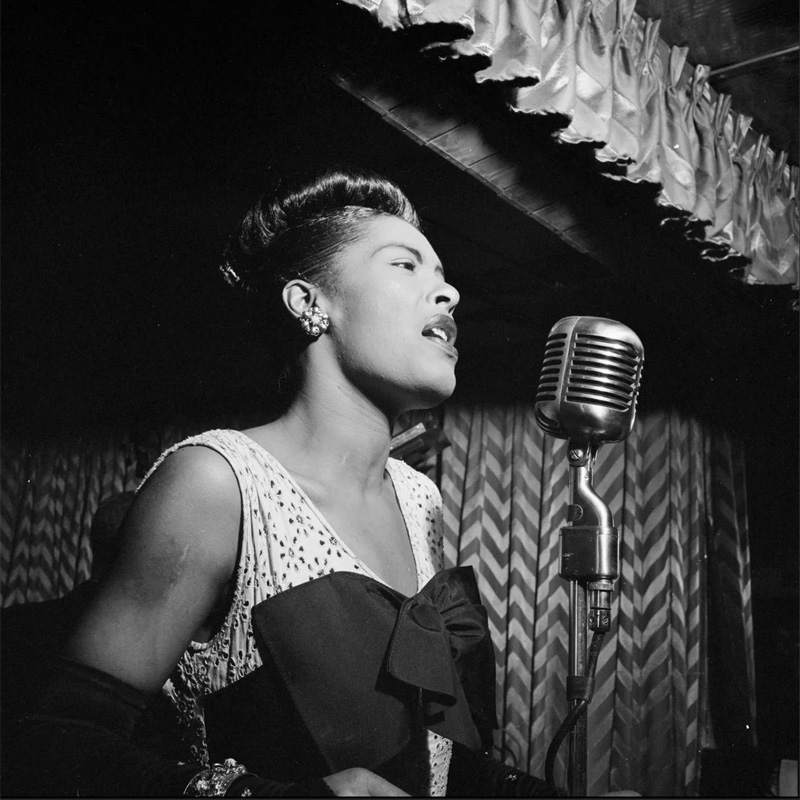
Billie Holiday 1947
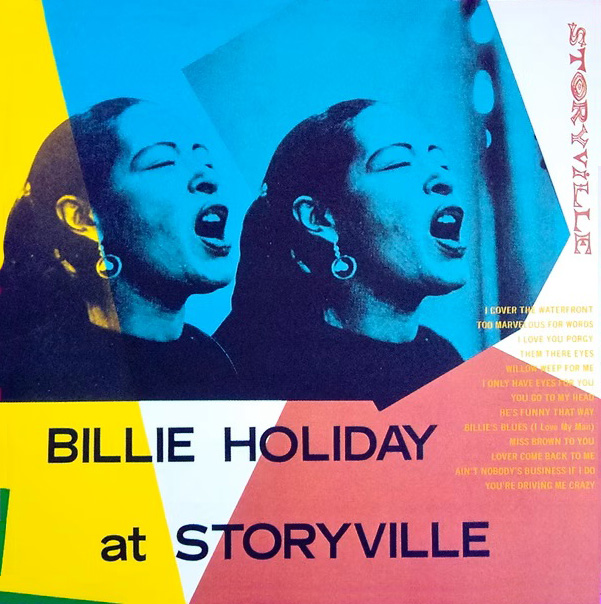
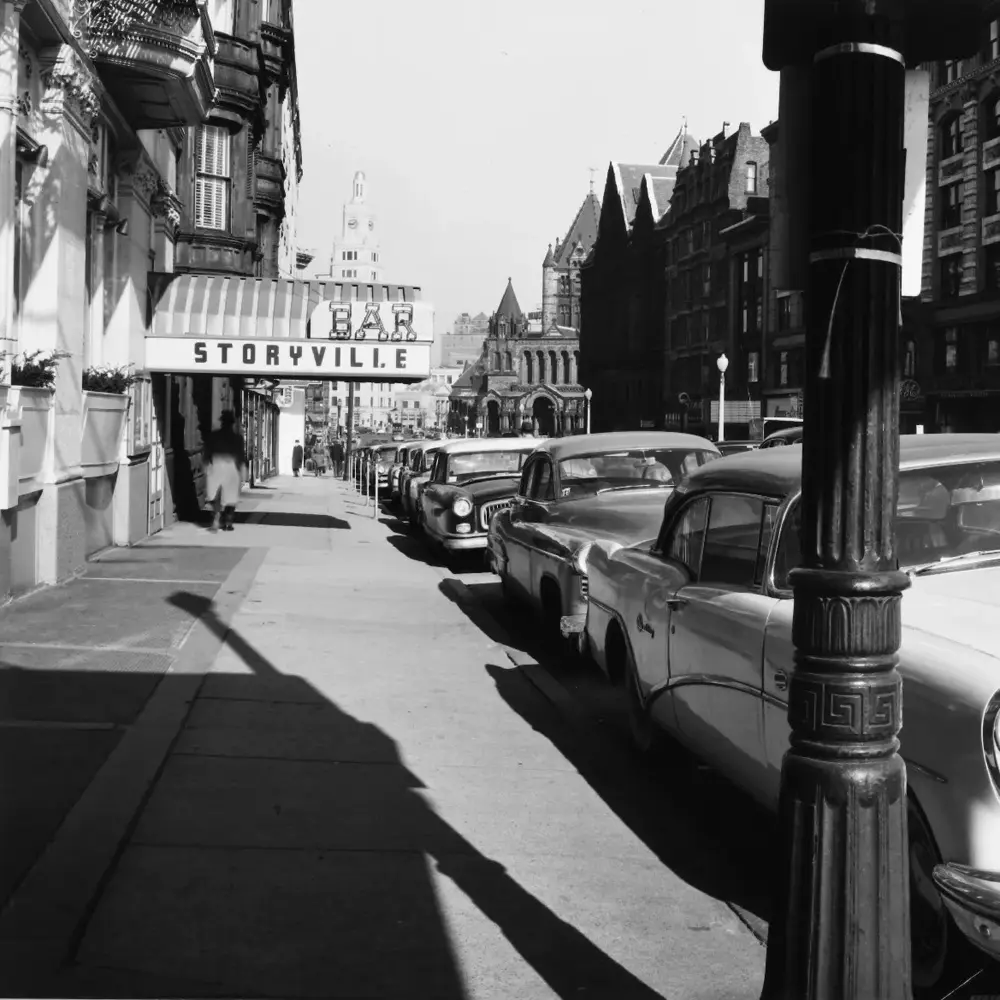
History likes to tell us that Billie Holiday made her last appearances at some famous venue in Boston or New York City, but history is wrong. Biographers have said Lady Day played her final shows at Storyville in Boston, where she reigned in 1951, 1953, and early 1959, but that’s simply not true. In fact, her last performance was at an off-Broadway theatre in Greenwich Village and the seven before that were at a tiny club in Lowell, Massachusetts that’s as forgotten as the shows themselves.
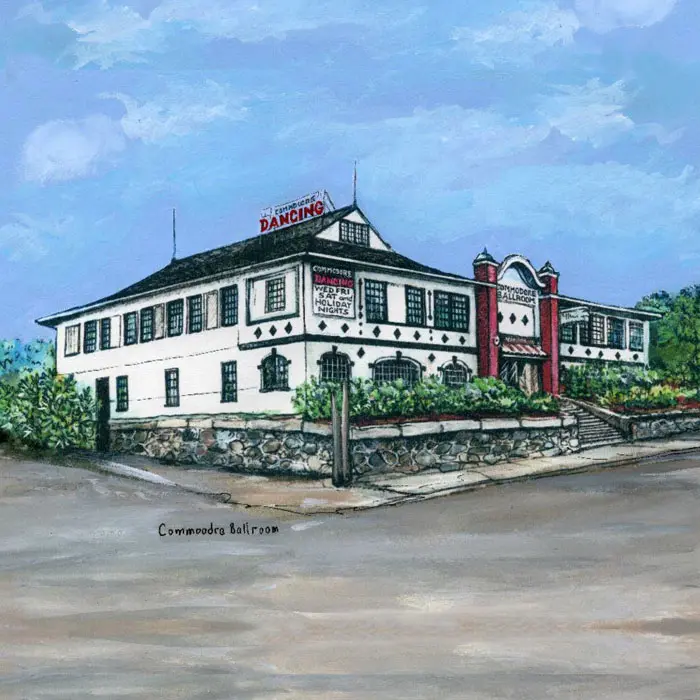
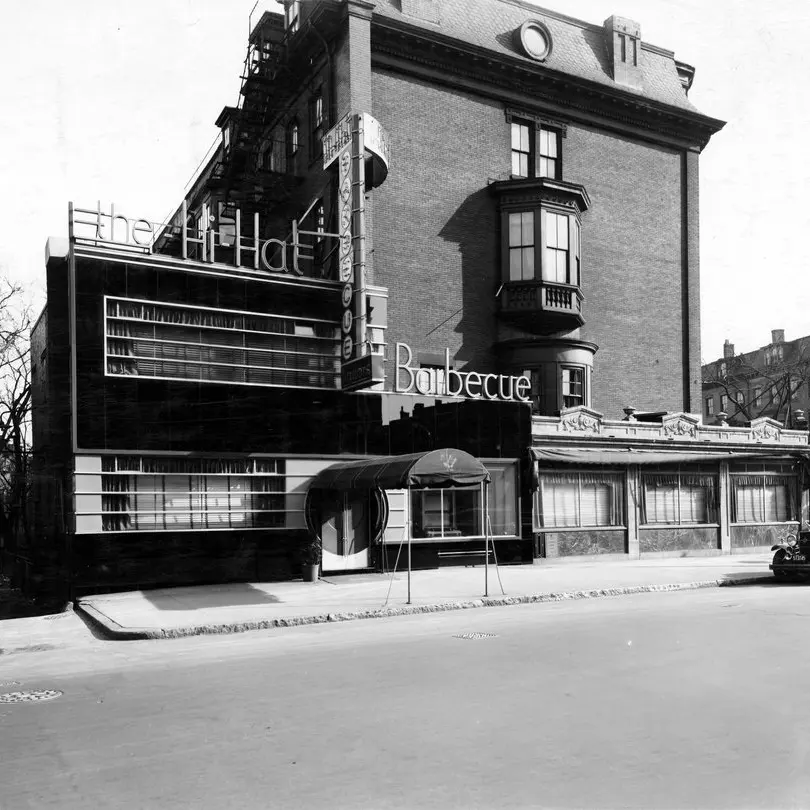
Philadelphia-born, Baltimore-raised Holiday was no stranger to New England. She appeared at The Commodore Ballroom in Lowell as far back as 1938 and took the stage at popular Boston venues including Storyville, The Hi-Hat, Wally’s Paradise, and Boston Arena as well as Music Inn in Lenox, The Celebrity Club in Providence, and the Newport Jazz Festival. By May 1959, however, the glamour was gone. Following her 1947 conviction for narcotics possession, for which she spent ten months in federal prison (May ’47 to March ’48), New York City officials refused to issue her a Cabaret Identification Card, which performers were required to have to work in venues that sold alcohol. Barred from playing clubs in her adoptive home, she went on the road as a matter of economic necessity.
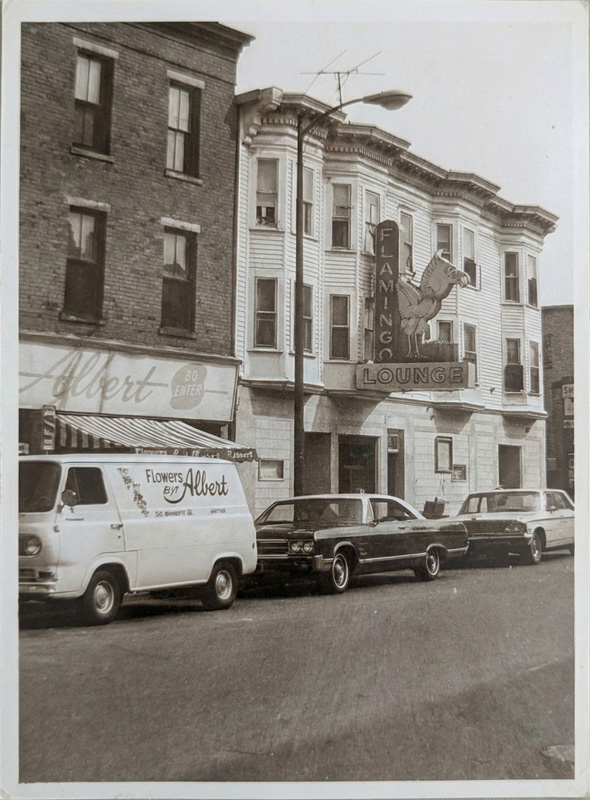
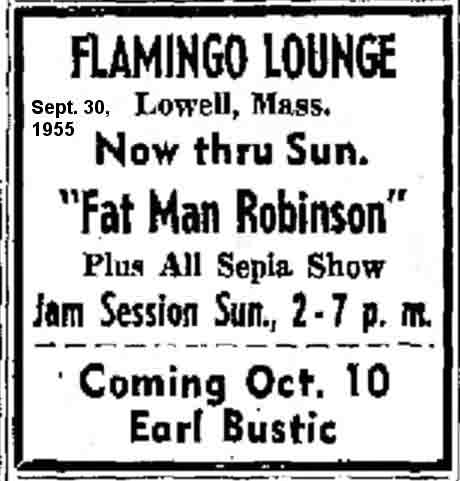
Holiday’s penultimate appearance was at The Flamingo Lounge in Lowell on May 11, 1959, part of a week-long engagement that began on May 5. This is a crucial “lost” fact. Most historians incorrectly cite her April ’59 appearances at Storyville as her final club run, but records show that she drifted northwest to the Mill City one last time – just nine weeks before her death at age 44. She was in severe physical decline, with her liver failing from untreated cirrhosis. Her doctor warned her that she was too sick to perform, but she needed the money. According to hospital records at the time of her death, the genre-defining singer’s life savings amounted to just $0.70 in the bank and $750 in cash (about $8,350 in 2026).
The Flamingo’s managing director, Jimmy Makris, saw her struggling before shows and offered to pay her the full contract amount if she’d just go home and rest, but Holiday flatly refused. She insisted that she “absolutely did not want to cut short” her engagement and would do “whatever it took to carry on,” according to a May 1959 piece in The Lowell Sun by Mary Sampas. Sampas noted that Holiday was “walking like a dreamer over a carpet of eggshells” when she took the stage, obviously depleted from years of self-abuse. But then she transformed, she wrote: “Before the microphone, as the celebrated voice lifts and pours, she is alive again, as though all the long, long road leads always and only to this moment in the lights.”
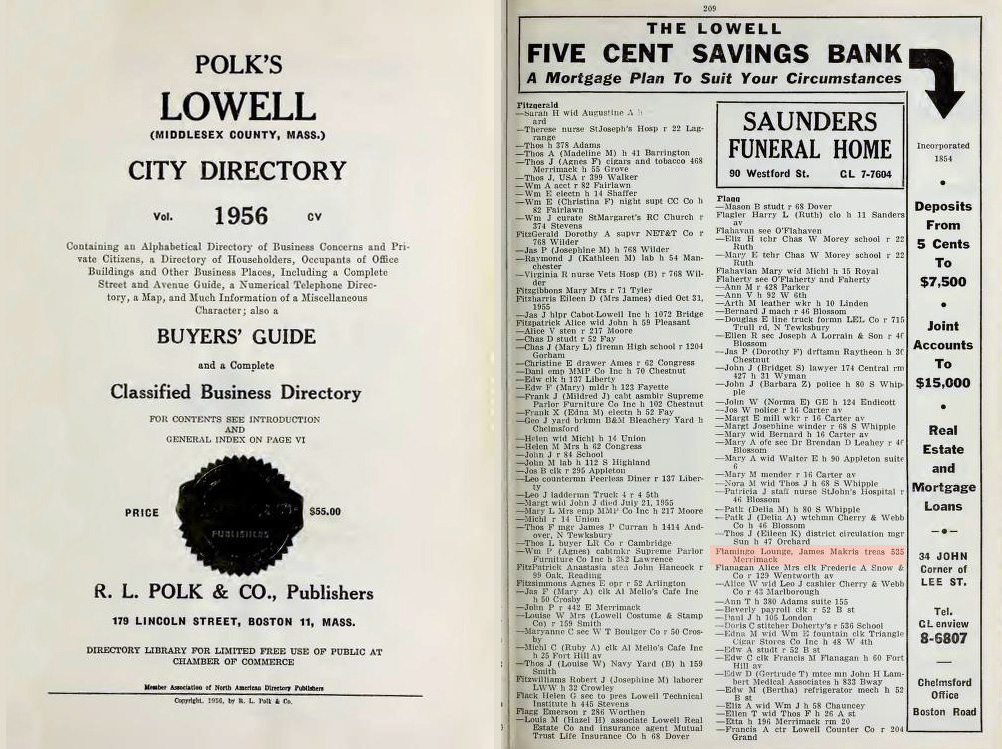
The Flamingo connection was nothing more than a rumor for decades, like a name without a place. Local historians said it had been on “upper Merrimack Street,” but the building had long since faded into the architecture of dust. I went digging for the truth, using a 1956 copy of Polk’s City of Lowell Directory (as no 1959 copies survive), and tracked down the address that history forgot: The Flamingo Lounge, James Makris, 535 Merrimack Street. The place was a dive; the directory didn’t even include a phone number. That means Lady Day wasn’t just singing in a small room in a small city; she was totally off the map, operating outside the safety network that guided Black travelers through segregated America. This is where her legend ended, not in a prestigious club or concert hall, but in an unassuming space on Merrimack Street in the Mill City.
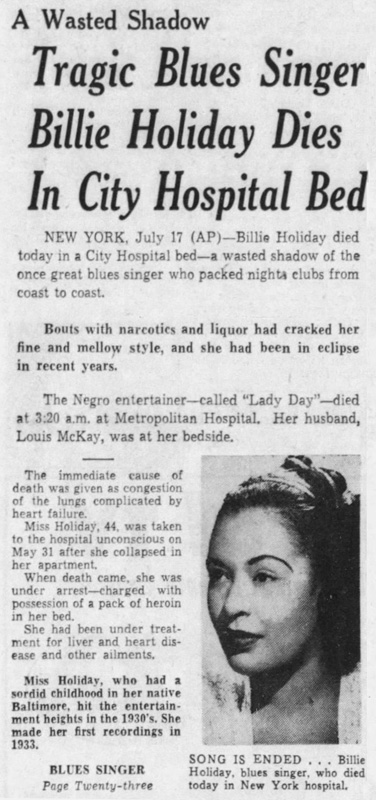
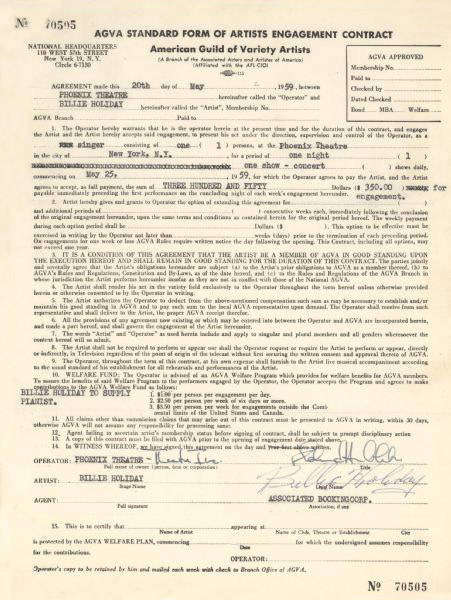
After a charity performance at the 1,000-seat Phoenix Theatre in Greenwich Village on May 25, Holiday never sang in public again. Her next engagement was scheduled for Montreal, at the swanky 700-seat Chez Parée supper club in early June. It was a one-week run, with an option to extend to two weeks if ticket sales were strong. For her, this wasn’t just a gig; it was a financial lifeline. However, she never made the trip; on May 31, just before she was due to leave for Canada, she collapsed in her New York City apartment. She was taken to Metropolitan Hospital Center, where she was placed under police guard for drug possession while on her deathbed, and died there less than seven weeks later, on July 17, 1959.
Today, the building that was once The Flamingo Lounge is also gone and – like some cruel joke at the expense of a woman who left this world with practically nothing – 535 Merrimack Street is a bank parking lot. The nearby florist is still in business. The gardenias survived. The stage, like Lady Day herself, did not.
(by Darryl Houston Smith)
Darryl Houston Smith is a Lowell-based poet and writer. He is currently working on Lost in the Labyrinth, a non-fiction exploration of The Doors, and the poetry collection The Fraud of Eternity.