Joe Chiccarelli
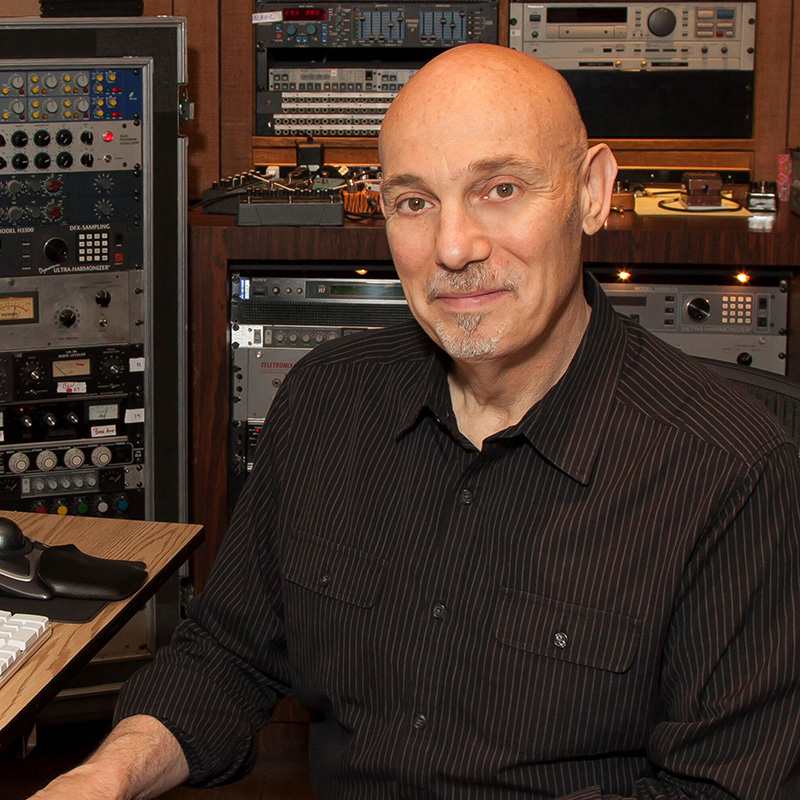
Joe Chiccarelli
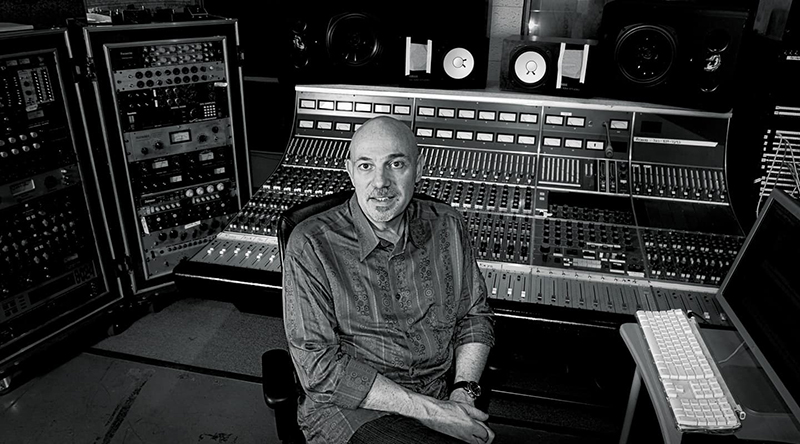
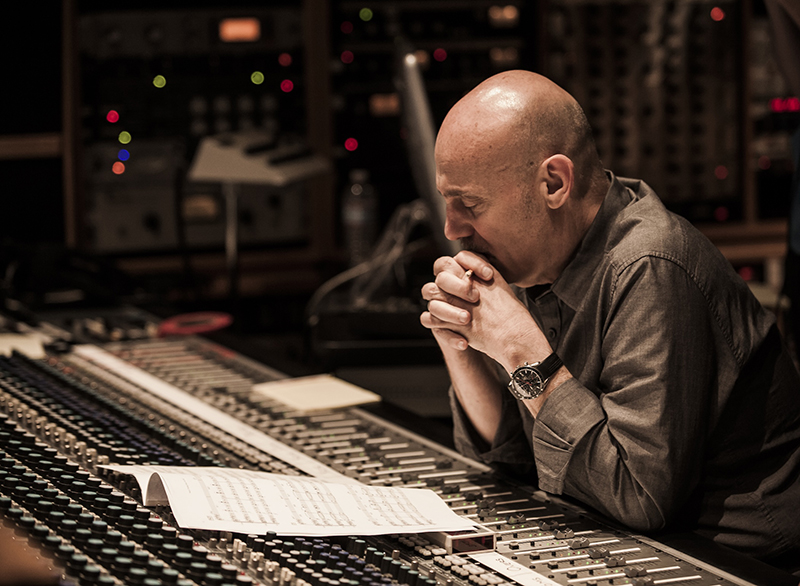
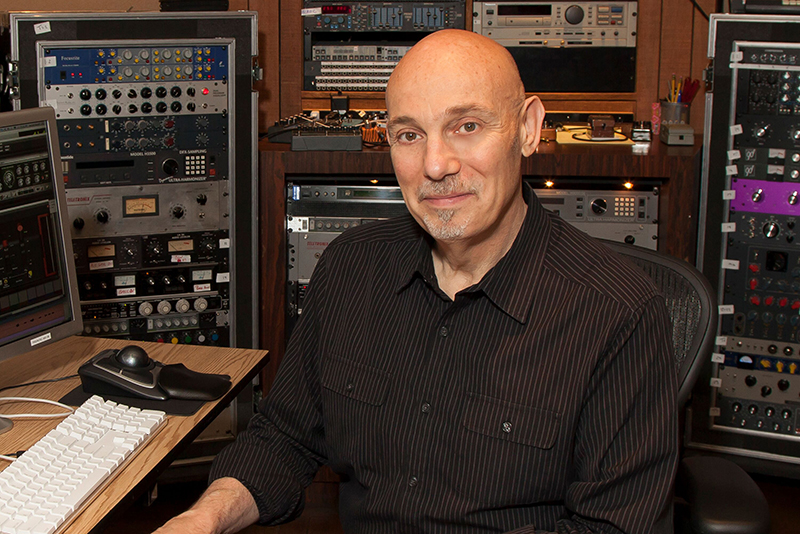
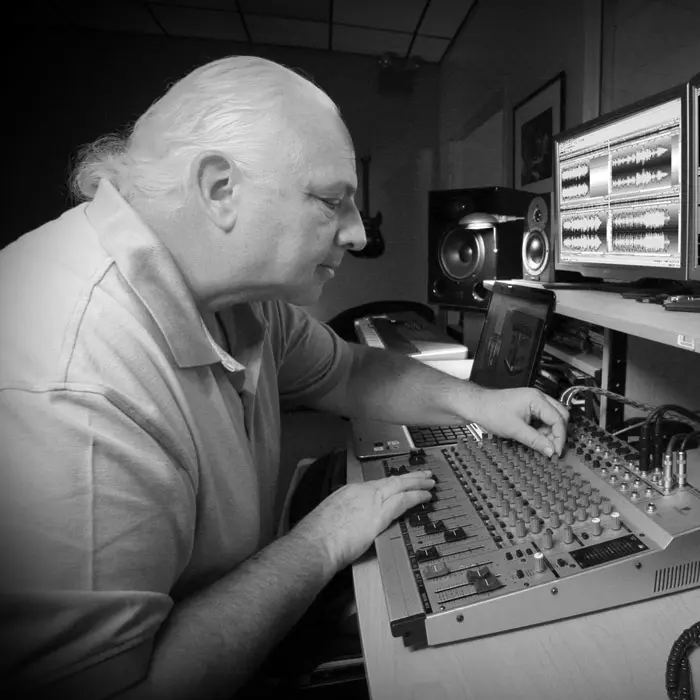
He’s been one of the most in-demand engineers, mixers and producers for over 40 years, so you might think that Joe Chiccarelli’s discovered some “ghost in the machine” that only the most tech-obsessed studio wizards can summon. Actually, though, his approach is less about technology than it is about eliciting a certain gut reaction in listeners, he says. The key to getting a track just right, according to Chiccarelli, is using the tools of the recording trade to generate emotion in those who hear it, even if the result is less than “perfect,” technically speaking.
“The more I do this, I find it’s like this deep emotional process of stripping myself of everything I know about [recording/mixing gear] and getting to the music,” he said in a 1999 interview with Tape Op magazine. “Thinking, ‘How can all this bring out the best in the song?’ Sometimes it’s a super hi-fi glossy recording and other times it’s a broken, cheap microphone and tons of distortion, compression and everything else. Basically, what’s going to really, emotionally, make people have some kind interaction with the song.” Asked how he goes about achieving that kind of connection, he said it’s essential to understand the nature of the tune before the recording process even begins. “The song tells you what to do,” he told Mix magazine’s Blair Jackson in 2012.
OVERVIEW
Using that very human approach – plus a few tech tricks that he keeps up his sleeve, no doubt – has allowed Chiccarelli to weather the fads and fluctuations of the recording industry with aplomb, and he’s won five Grammys and seven Latin Grammys in the process. He’s recorded and/or mixed and/or produced albums and/or singles by an eclectic assortment of acclaimed acts and more than a few iconic artists and bands, among them Elton John, U2, Morrissey, Tori Amos, The Strokes, Alanis Morrisette, Beck, Etta James and The White Stripes.
It’s impossible to pigeonhole him in terms of genre since he’s recorded and/or produced such a sweeping spectrum – from rock, pop, country and classical to Latin, folk, hip hop and jazz – but he’s collaborated with a variety of idiosyncratic acts including Frank Zappa, Oingo Boingo, Romeo Void, JEFF the Brotherhood and Minus the Bear, embracing the particular challenges that capturing their offbeat visions on tape provides. Being a behind-the-board chameleon of sorts, however, he’s also worked with artists as decidedly mainstream as Poco, Glen Frey, Journey, Al Stewart, Pat Benatar and Dwight Yoakam.
In addition to his projects with a laundry list of both well-established and up-and-coming acts, Chiccarelli’s left quite a footprint in Hollywood, having engineered the soundtrack for Saturday Night Fever (1977), produced the ones for Fast Times at Ridgemont High (1982) and Vision Quest (1985), engineered and mixed the one for Rocky IV (1985) and mixed the one for Field of Dreams (1989). Between 1993 and 1995, he was the music supervisor for the British TV series Cracker and in 1997 he was the music supervisor for the American series Gun and the films Suicide Kings and Men with Guns.
MUSICAL BEGINNINGS
Born in 1953, a few years before rock ‘n’ roll began replacing jazz as the AM-radio standard, Chiccarelli grew up in East Boston, going to St. Lazarus Grammar School (on Ashley Street) and graduating from St. Domenic Savio High School (on Byron Street) in 1971. Between then and the mid-’70s, he attended Boston University, was “a bass player in a bunch of failed bands,” as he told Musician’s Friend in 2019, took some classes at Berklee College of Music and – most significantly – started walking the professional path that’s made him a household name in the recording industry.
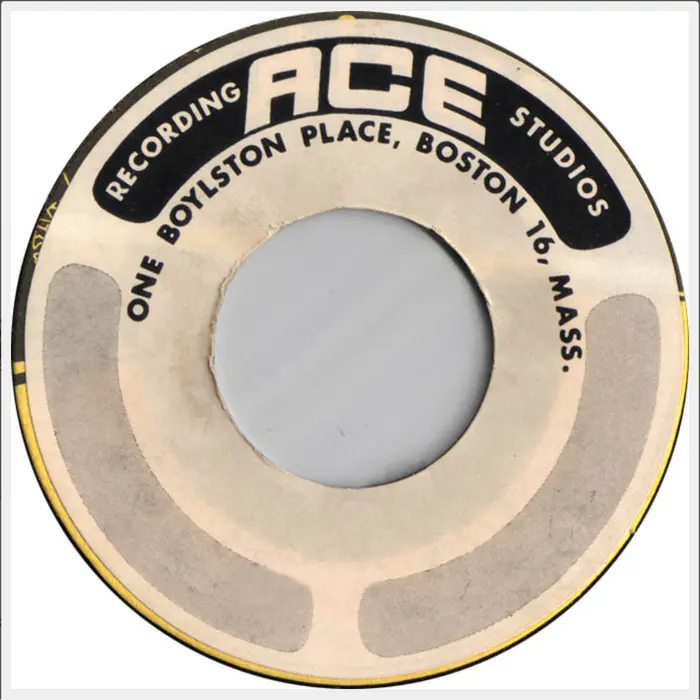
Like renowned engineer/mixer Shelly Yakus, whose father and uncle co-owned Ace Recording Studios in Boston, Chiccarelli began his audio-engineering career through a family connection; his cousin owned Fleetwood Recording Studio in the Revere (six miles north of Boston), and Chiccarelli started working there when he was in his early 20s. After learning the ins and outs of recording at Fleetwood, he landed a full-time engineering job at a studio on Boylston Street in Boston, Music Designers; he views both jobs as foundational to his later success. “Those years at Fleetwood and Music Designers really helped build my character,” he said in 2023. “I don’t think I would have been able to make it in New York City or Los Angeles if I didn’t have those great experiences working with local talent in Boston.”
Asked what inspired him to move from playing bass onstage to being behind the mixing board, Chiccarelli said he was drawn to the technical side of making music even when he was in bands. “I was always the guy in the group who was the techy geek who cared about the guitar player’s sound and had a vision for the concept of the band,” he told Musician’s Friend. “I was always the kid that read every liner note and followed the producers. I was always keen on the process, how records got made, the backstory.”
MOVE TO LOS ANGELES, CHEROKEE STUDIOS, FRANK ZAPPA
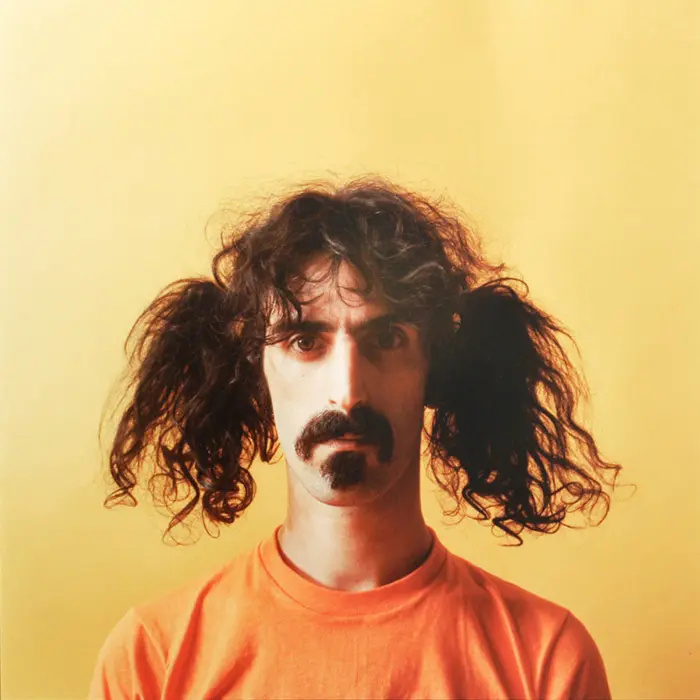
By 1976, Chiccarelli was confident enough in his technical skills that he relocated to the rock/pop recording capital of the planet, Los Angeles, and joined Cherokee Studios as an assistant engineer. He got his big break when the lead engineer for Frank Zappa’s 1978 LP Sheik Yerbouti was unable to make it to the studio one day, which resulted in Zappa promoting Chiccarelli from assistant to remix/overdub engineer on the disc. “The engineer couldn’t make the session and so he decided to take a chance on me,” he told HitQuarters magazine in 2017. “I’m so thankful ever since that day because [Zappa] gave me a career.” Chiccarelli worked as engineer and/or mixer on six more Zappa’s album: 1979’s Joe’s Garage Act I, Joe’s Garage Act II and Joe’s Garage Act III, 1981’s Tinsel Town Rebellion and Shut Up ‘n Play Yer Guitar and Shut Up ‘n Play Yer Guitar Some More and 1983’s Baby Snakes.
During his tenure at Cherokee, Chiccarelli also worked on albums by artists as diverse as Stephen Bishop (Bish, 1978), Journey (Infinity, 1978), Allen Toussaint (Motion, 1978) Poco (Legend, 1978), Etta James (Deep in the Night, 1978) and Hugh Cornwell (Nosferatu, 1979). In September ‘79, he engineered the triple album No Nukes: The Muse Concerts For a Non-Nuclear Future, recorded at Madison Square Garden and released by Asylum Records in November that year.
GOING FREELANCE, NOTABLE 1980S, ‘90S, ‘00S PROJECTS, GRAMMYS
Chiccarelli left Cherokee in the early ‘80s to become a freelance engineer, mixer and producer, and since then he’s continued to demonstrate his passion for virtually all varieties of rock and pop. In addition to his expansive range of in-studio activities, he’s worked as an A&R consultant for a number of major and independent labels.
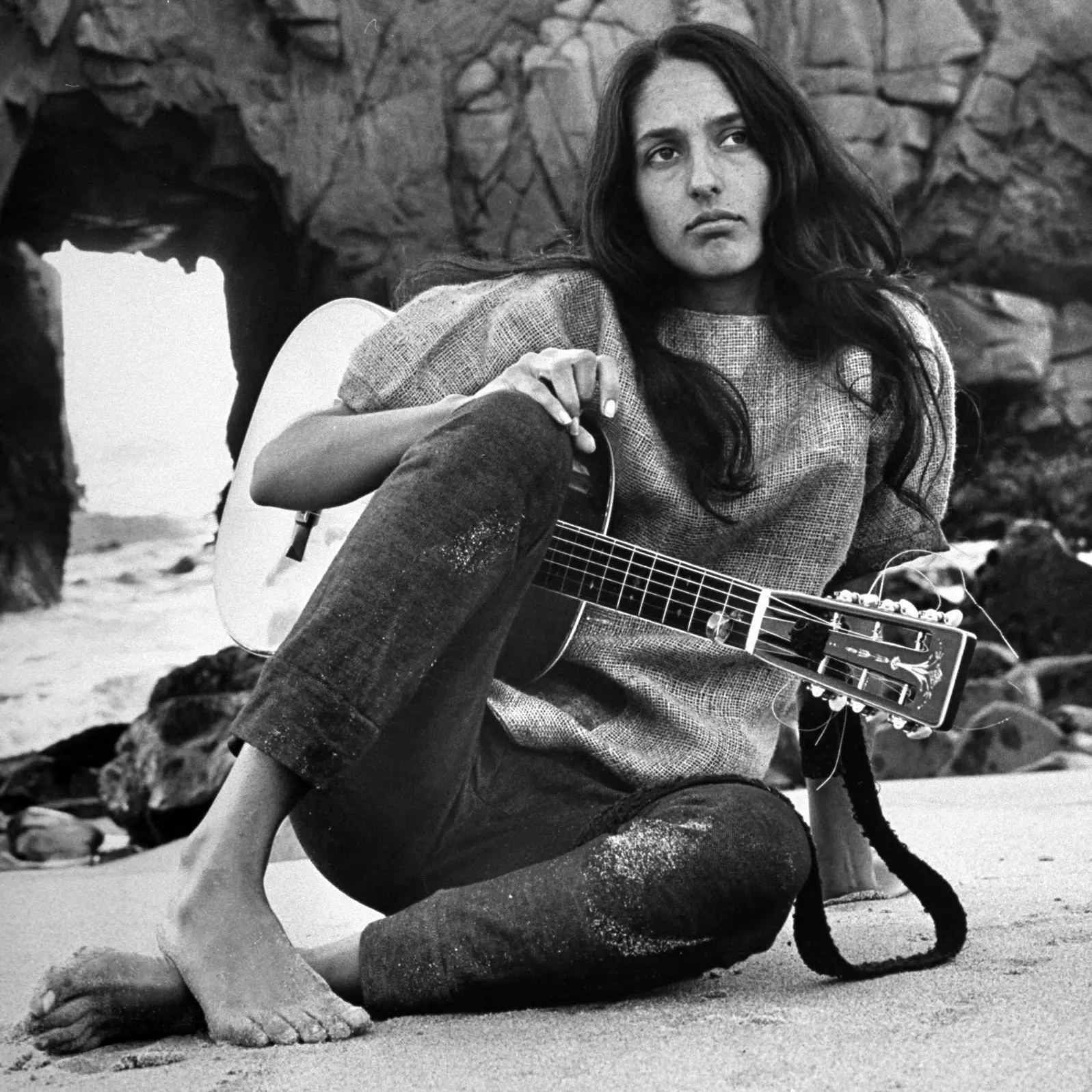
Among the hundreds of solo artists and bands he recorded and/or mixed and/or produced during the1980s and ‘90s were Del Shannon, Ray Manzarek, The Bangles, Stan Ridgway, Lone Justice, Alison Moyet, George Thorogood & The Destroyers, Juice Newton, Bob Geldof, The Dream Syndicate and Joan Baez, Between 2000 and 2010, Chiccarelli recorded and/or mixed and/or produced LPs by Rufus Wainwright, The Shins, Pink Martini, My Morning Jacket and Grace Potter & The Nocturnals, among dozens of others; since 2011. he’s recorded and/or mixed and/or produced albums by The Strokes, Morrissey, Jason Mraz, Michael Bublé, Weezer, The Front Bottoms, Manchester Orchestra and Dropkick Murphys, to name a mere fraction of the total.
Chiccarelli won his first Grammy in 2003 for Café Tacuba’s Cuatro Caminos (Best Latin Rock/Alt Album), followed by his second in 2007 for The White Stripes Icky Thump (Best Alternative Album); his third in 2009 for The Raconteurs’ Consolers of the Lonely (Best Engineered Album, Non-Classical); his fourth in 2023 for Michael Bublé’s Higher (Best Traditional Pop Album); and his fifth in 2025 for Robert Randolph’s Preacher Kids (Best Contemporary Blues Album). He took home his first Latin Grammy in 2000 for Café Tacuba’s Reves / Yo Soy (Best Rock Album) and he’s won six more since then: Juanes’ Fijate Bien (Best Rock Solo Vocal Album, 2001), Juanes’ Una Dia Normal (Best Rock Solo Album and Album of the Year, 2003), Café Tacuba’s Cuatro Caminos (Best Alternative Album, 2004), Ey Guerra’s Hombres Invisible (Best Alternative Album, 2004) and Bajofondo’s Presente (Best Instrumental Album, 2013).
CREATING “A WORLD THAT’S UNIQUE TO THE ARTIST”
Asked about the fundamental recording principles that have stayed with him over the decades while recording itself has moved from analog to digital, Chiccarelli said his main goal is the same as ever: to create acoustical landscapes that are innovative, exciting and accurately reflect the artist’s vision. “I’ve always thought of music and recordings as being cinematic, all-enveloping experiences, and I try very hard on each project to create a world that’s unique to the artist,” he told Evan Toth of Tracking Angle in May 2025. “I go back to my time as a teenage music listener, when I was transported into a new world with every new album I experienced. So, creating something that is dynamic, fresh, risk taking and pushing boundaries is the most important thing for me. I like to always look forward to the new possibilities.”
Asked how he creates “a world that’s unique to the artist” in the studio, Chiccarelli said the most important thing is to focus selflessly on what the artist is trying to achieve. “The key is I try not to have a ‘personal touch,’” he told Toth. “It’s about the artist and what they’re trying to create. I try to expand on that, perhaps open some new doors for them, enhance their strengths and build up any weakness, but I work very hard to not have ‘a sound’ of my own. Every album I did for Frank Zappa as a young engineer sounds very different from the previous one. Every album I’ve produced for Morrissey sounds unique because he’s trying some new direction for each album, just as Frank tried new methods, musicians and recording techniques every time he entered the studio.”
(by D.S. Monahan)