Don White
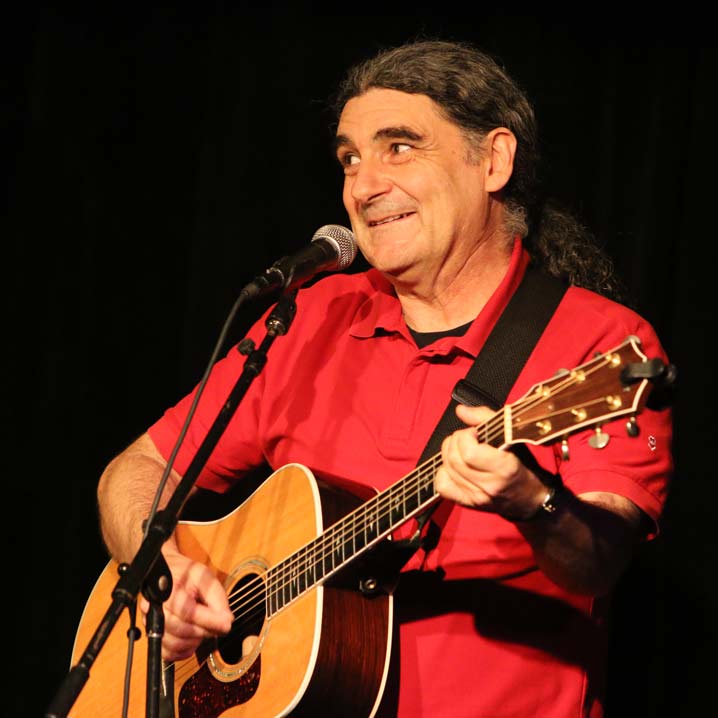
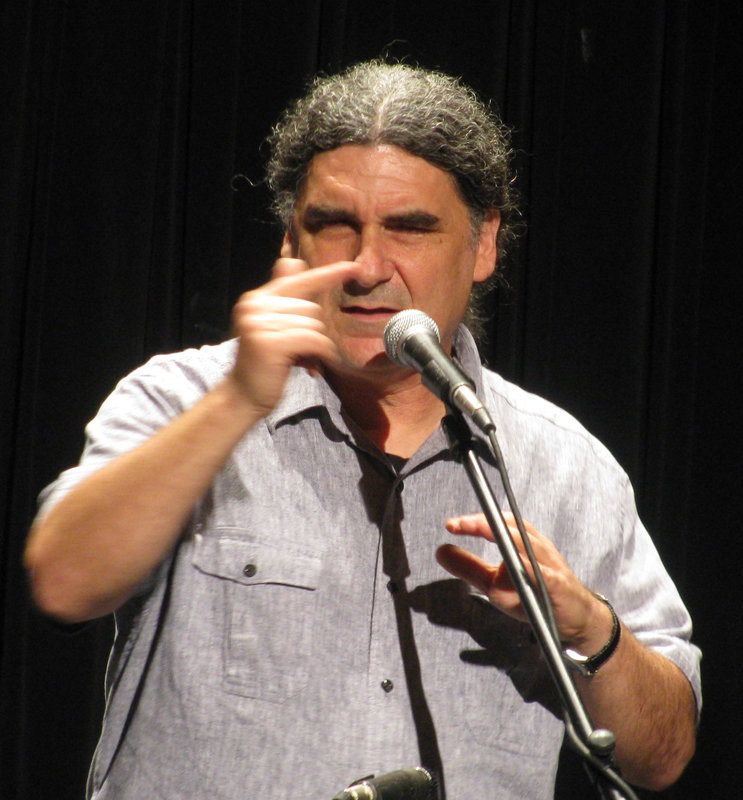
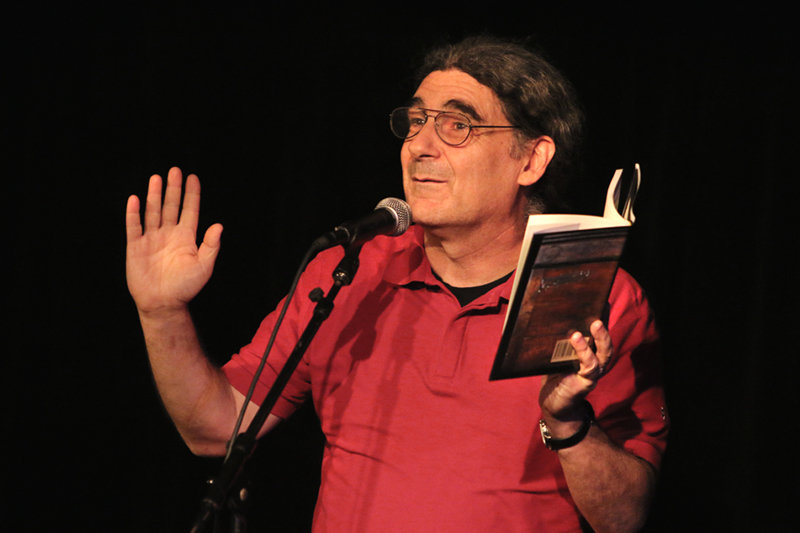
photo by Kirsten Manville
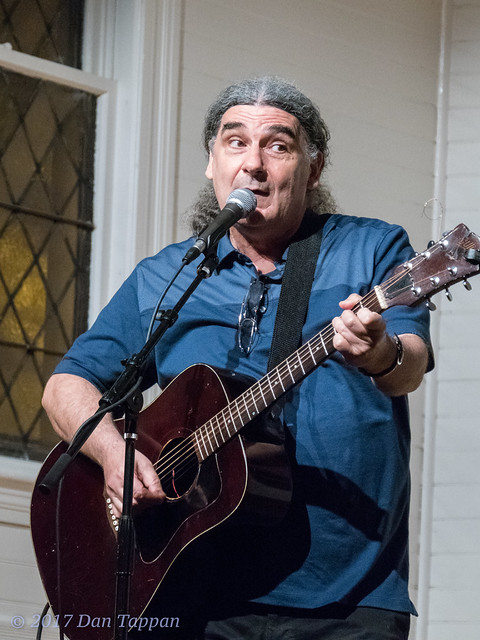
A number of acclaimed New England-based singer-songwriters are known for incorporating comedic wit into their songs and live shows, notably Tom Rush, Cheryl Wheeler, Arlo Guthrie and Patty Larkin, but few do so as frequently and famously as Don White. In fact, he’s made humor a central element of his act for the majority of his 35-plus-year career and most of his performances over the decades have been a combo platter of rib-tickling tunes, sober/reflective songs, comedy, poetry and storytelling. White’s live appearances, ten CDs and three live DVDs demonstrate how seamlessly he combines those ingredients into an hilarious/heartfelt concoction all his own and it’s impossible to label him in standard terms, but “tune-smithin’, song-singin’, guitar-strummin’, joke-crackin’, yarn-spinnin’, stanza-rhymin’ entertainer extraordinaire” pretty much covers it.
MUSICAL BEGINNINGS, INFLUENCES
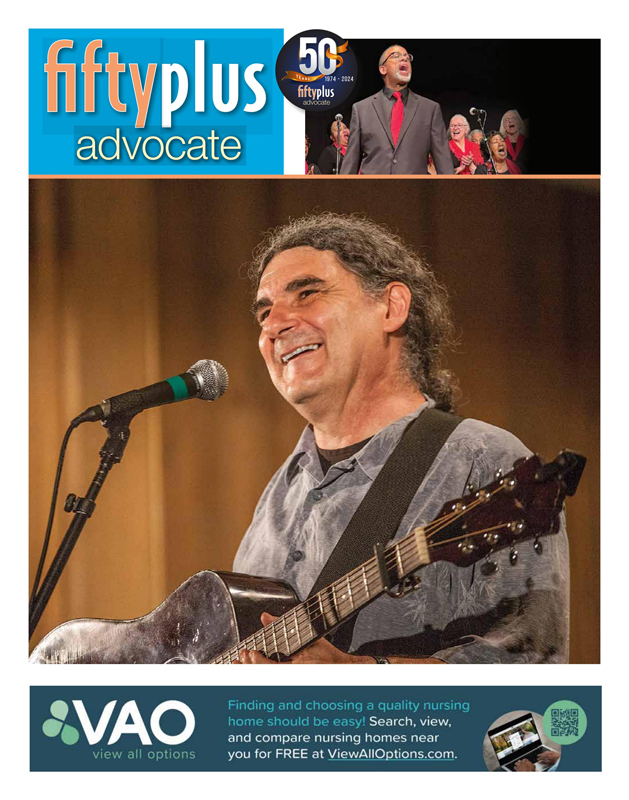
White was born in Lynn, Massachusetts on March 6, 1957, when rock ‘n’ roll was starting to replace jazz as the AM-radio standard and the folk revival was approaching full steam. His father worked at General Electric’s aircraft engine plant in the city and becoming a professional singer-songwriter was about as impractical an idea as there ever was, though it matched White’s introverted, artistic nature. “Growing up in Lynn, a working-class city, the career path I chose was unlikely as far as my bloodline was concerned,” he told Nance Ebert of Fifty Plus Advocate in 2025. “As a kid, I enjoyed being alone and I liked to read and write. I didn’t really have a path to follow that I could see.”
White wrote his first songs around age eight, humming or singing them in his head; he didn’t start playing guitar until his mid-teens. “I remember writing songs when I was a little, little kid, kneeling down to say my prayers and then jumping in bed and showing my mom a song I wrote,” he told Ebert. In later years, he skipped school sometimes so that he could spend those hours writing and took some journalism courses to improve his skills. His parents bought him his first guitar when he was 15, sending his passion for music to new heights.
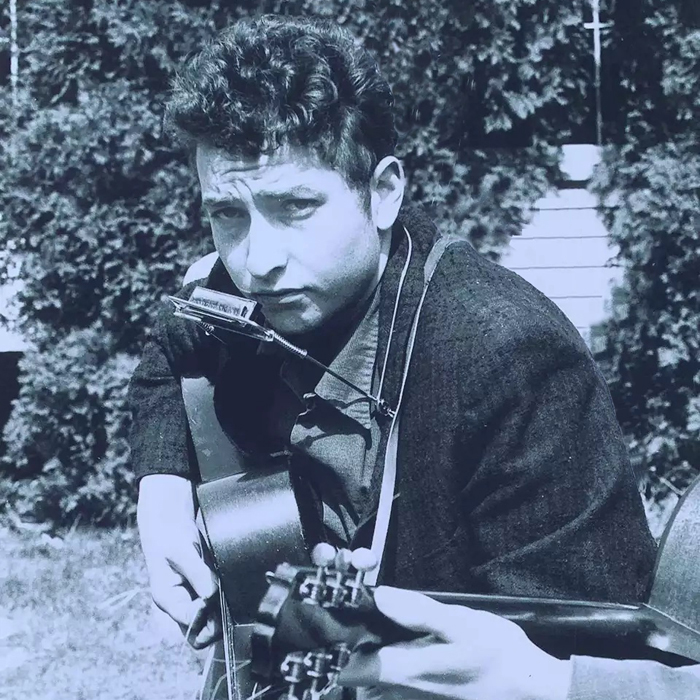
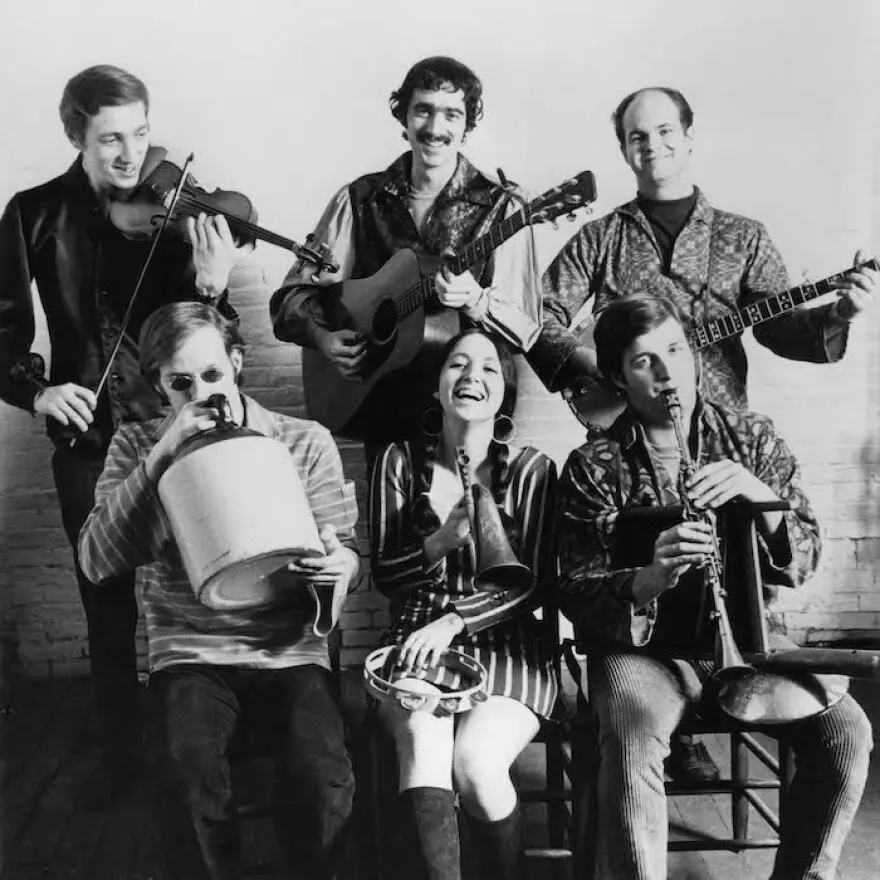
Like most kids his age, White had soaked up lots of music before learning his first chords, particularly the songs of John Prine, Arlo Guthrie, Frank Zappa, The Grateful Dead and Bob Dylan, which prompted him to take a deep dive into other artists’ catalogues. “I realized [Dylan] liked Woody Guthrie, so I went and bought Woody Guthrie albums,” he told Ebert. “Then I learned about Cisco Houston and the guys who were there before that [like] Pete Seeger. With the Dead, I realized that at one time they were a jug band, so I started looking up Jim Kweskin, asking ‘Where did they get their stuff?’ Anything I liked, I followed backwards from that.” By the time he graduated from high school, White had performed solo at coffeehouses and other small venues in and around Lynn.
In 1975, shortly after finishing high school, he and his then girlfriend Theresa embarked on what became a three-year, 60,000-plus-mile hitchhiking journey around North America, largely inspired by the many free-spirited people from other states he’d met at Dead concerts. “My world blew open exponentially,” he wrote about the experience, noting that it provided a solid foundation for his personality, his general outlook on life and his writing.
OPEN-MIC NIGHTS, OTHER EARLY APPEARANCES, MOVE INTO COMEDY
In the early ’80s, by which time White and Theresa were married, had resettled in Lynn and had two young kids, he began thinking about pursuing music as a career. To get things started, he became a regular audience member at spots like Club Passim in Cambridge, building his understanding of the music and the performers creating it. Many famed, even iconic folk and folk-blues artists from the ‘40s and ‘50s, including some who backed and/or hung around with the legendary Guthrie, were still on the road and he made every effort to see them live when they came through the area.
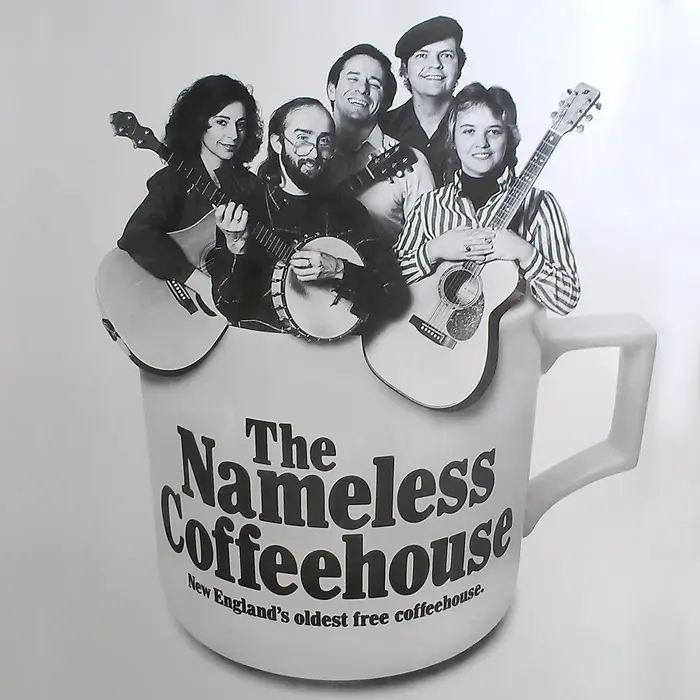
White played his first open-mic night in 1987 at the Old Vienna Kaffeehaus in Westborough and wound up opening for a variety of the well-known acts that appeared there, allowing him to build his fan base significantly. He performed his ever-expanding range of original songs at other open-mic nights at venues including The Nameless Coffeehouse in Cambridge (alongside fellow up-and-comers Ellis Paul, Vance Gilbert, Martin Sexton and Dar Williams) and by the dawn of the ‘90s he was appearing solo at popular spots like The Middle East and Club Passim. His act was about to change significantly, however, with the addition of the thing that’s fueled much of his career ever since: comedy.
White’s foray into being a guitar-wielding funnyman began in the early ‘90s, when he began hosting open-mic nights at one of the hottest comedy clubs in the country, Catch a Rising Star in Harvard Square. His quick wit soon caught the attention of Catch’s booker, who invited White to emcee shows, a role he played for two years (’92/’93). “I was still playing folks clubs, but I was living basically at Catch a Rising Star,” he told Ebert. The job gave him a chance to study the work of comedians including Lenny Clarke, Jimmy Tingle, Janeane Garofalo and Lewis Black (much as he’d studied the songs and performances of singer-songwriters in previous years), noting how they paced their shows, honed their material, worked their audiences and set up punchlines.
With Catch serving as a de facto classroom, White decided to make comedy a core part of his own shows, which instantly distinguished him from the scads of other singer-songwriters on the Boston, Cambridge and greater New England scenes. “After two years [working at Catch], I stepped earnestly into folk music, and I was bringing with me something that nobody else had,” he says. Though he considered himself what he calls “comedian funny,” not “folk funny,” he was confident that folk venues were the best outlet for his stuff, not comedy clubs, because he didn’t want to be comical all of the time. “I was bringing comedian sensibilities to a show, and then I had a couple of [serious] songs, so first they’re laughing their head off and then they’re crying. That is my niche,” he says. White introduced poetry into his sets around the same time that he injected comedy into them, and in later years he added storytelling to his on-stage arsenal.
ALBUMS, DVDS, BOOKS, NOTABLE APPEARANCES, AWARDS
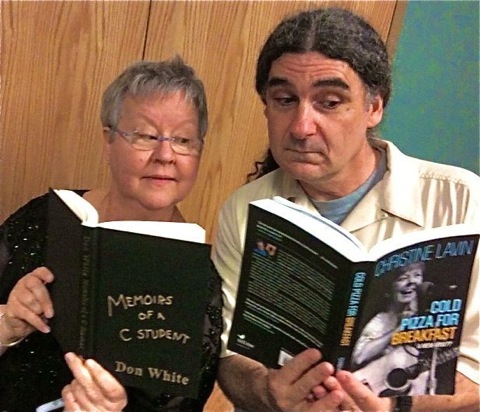
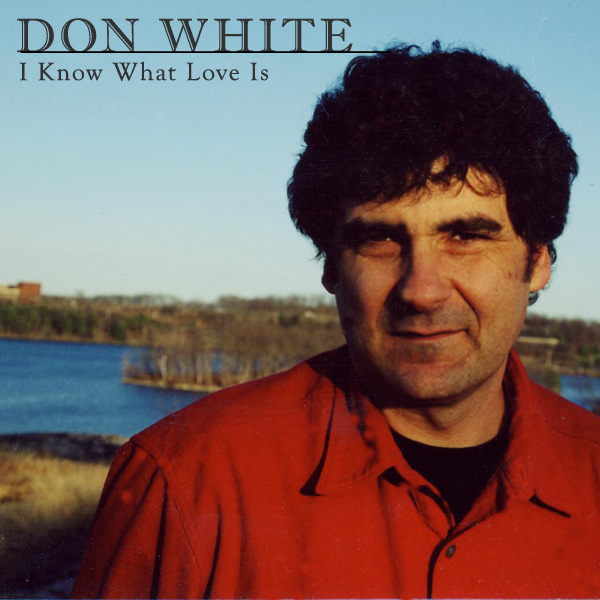
White has self-released the last seven of his ten CDs, giving him a creative freedom that’s often not possible when recording for a label. He’s also self-released three live DVDs, most recently Once More with Feeling (2013), and two books, Memoirs of a C Student (2006) and The Hitchhiking Years and 4 Other Stories (2021). Showing that comedy is only one part of his songwriting approach, albeit a major one, his debut disc, Two Vagabonds in Disguise (Melville Park, 1992), includes what many consider to be one of his most poignant tunes, “I Know What Love Is.” Unsurprisingly, given that White rarely remains serious for an extended length of time, the song is sandwiched between two of the album’s comedic tunes, “Project Girl” and “The Shameful Ballad of Lijah.”
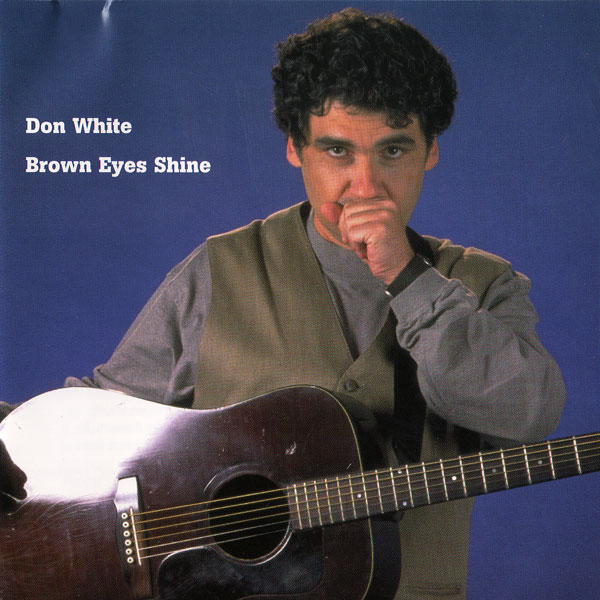
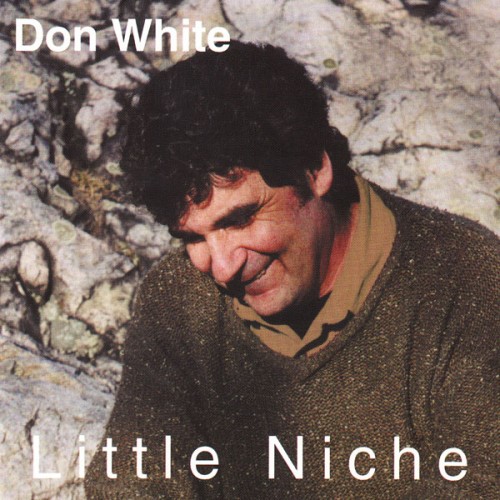
In 1995, Lyric Moon issued his second album, Live at the Somerville Theatre, a ten-track outing that includes two perennial crowd favorites, “I’m From Lynn, What Can I Say?” and “Charley & Maureen”; among others are “State of Maine Rant,” “Psycho Mom and Dad” and “Fun with Unitarians.” Lyric Moon released his third CD, Rascal, in 1996, and five self-released discs followed over the next 15 years: Brown Eyes Shine (1999), known as “the teenager album” since many songs are about dealing with adolescents; Little Niche (2001), which includes seven songs and four stories; Live in Michigan (2002); The Best of Don White: 1992-2008 (2008); and Winning Streak (2011), which includes eight songs and two comedy bits. White’s latest releases are More Alive (2016) and Live at the Guthrie Center (2019).
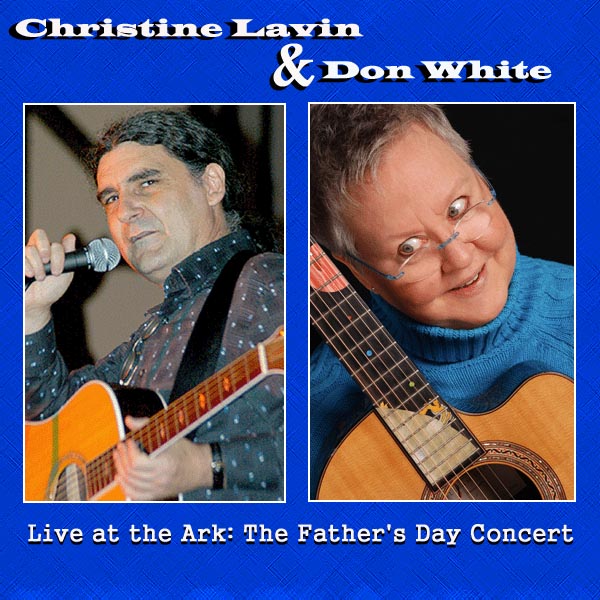
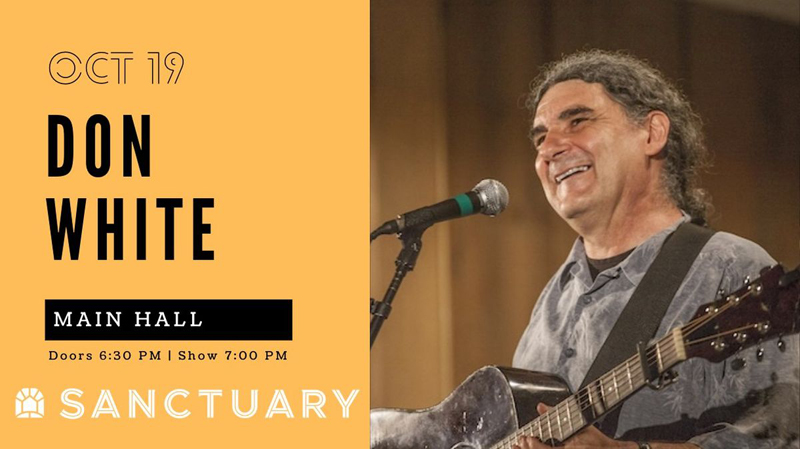
White has opened for artists including Arlo Guthrie, Ritchie Havens, Loudon Wainwright III, Bill Morrissey and Taj Mahal and shared a stage with David Bromberg, Janis Ian and Lyle Lovett. Since the start of the 21st century, he’s appeared at a variety of venues across New England including The Bull Run in Massachusetts and Tupelo Music Hall in New Hampshire, and between 2010 and 2018 he toured North America multiple times with fellow singer-songwriter Christine Lavin on a co-bill called “The Funny Side of The Street”; in 2016, the two released an album, Live at the Ark: The Father’s Day Concert. In 2011, White became one of only three people in the history of Lynn to be given a key to the city, and in 2012 he won the Boston Area Coffeehouse Association’s Jerri Christen Memorial Award for his charitable work within the community.
WORKSHOPS, CLASSES, COACHING, RECENT ACTIVITY, CAREER REFLECTIONS
In addition to his performing/recording activities, since the late ‘90s White has led workshops, taught classes and coached on topics including performance skills, songwriting and career development. Unsurprisingly, one workshop is called “Using Humor to Enhance Your Performance.” Since 2015, he’s been part of a three-man show with storytellers Bil Lep and Bill Harley called “Father’s Daze,” which gives a comedic take on fatherhood, and he remains involved with Lynn’s arts community through the weekly music and spoken word open-mic nights that he created in 2008 (and co-hosted until 2016), both of which are still held at Walnut Street Café.
In January 2026, White played his 36th annual show at Club Passim, where over four decades ago he often sat in the audience watching top singer-songwriters perform in order to develop his own craft; the show has sold out every year since the mid-‘90s. Asked for career reflections, he didn’t reply in a comedic, poetic or anecdotal way, talking instead about his heritage and how he hopes his unique artistic path and approach will inspire younger generations. “I’m descended from funny people who can tell a story in a way that will keep you engaged, but I’m the first one in the bloodline who believed that those natural talents could build a viable career,” he said. “I’m hoping that my descendants will be able to look at my life and know that the communication skills that we may take for granted have the potential to bring them to places beyond their dreams.”
(by D.S. Monahan)