Alloy Orchestra
Alloy Orchestra
For over three decades, the world’s most prestigious film festivals bore witness to a sonic revolution. As silent images flickered to life, a three-piece ensemble sat in the shadows beneath the screen, breathing modern vitality into century-old celluloid: Alloy Orchestra, a Cambridge, Massachusetts-based trio that fundamentally transformed the art of live silent film accompaniment. Using an idiosyncratic mix of state-of-the-art electronics and an industrial “rack of junk,” the Orchestra didn’t play simple “background music”; in fact, they rewrote the rulebook on how contemporary audiences interface with historical cinema.
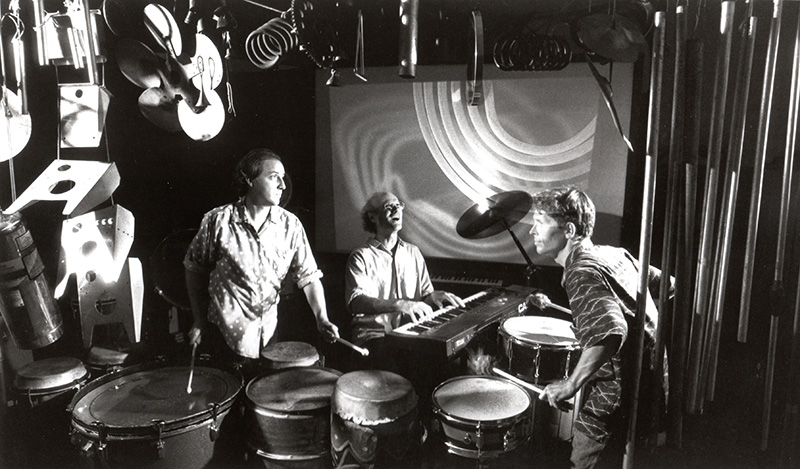
Alloy Orchestra’s story begins in 1985, when percussionist-composer Ken Winokur and keyboardist-composer Caleb Sampson accompanied the play “Marilyn Monroe vs. the Vampires” by playwright-filmmaker Rainer Werner Fassbinder. The show featured an enormous junk-metal stage set that the two played very quietly. After taking a hiatus for a number of years, the group reemerged for a performance in the gazebo on Boston Common for First Night in December 1990. Winokur and Sampson added two more percussionists, Terry Donahue and Michael Evans, for the show, and percussionists Rick Barry and Larry Dersch made guest appearances.
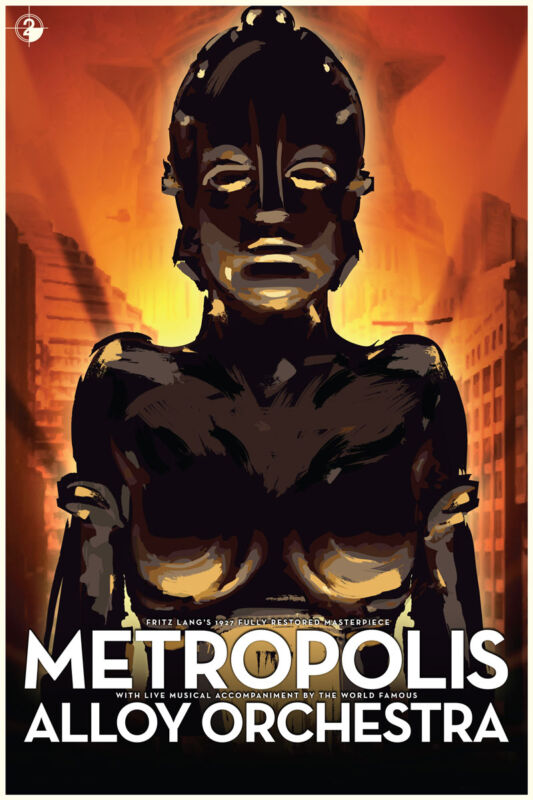
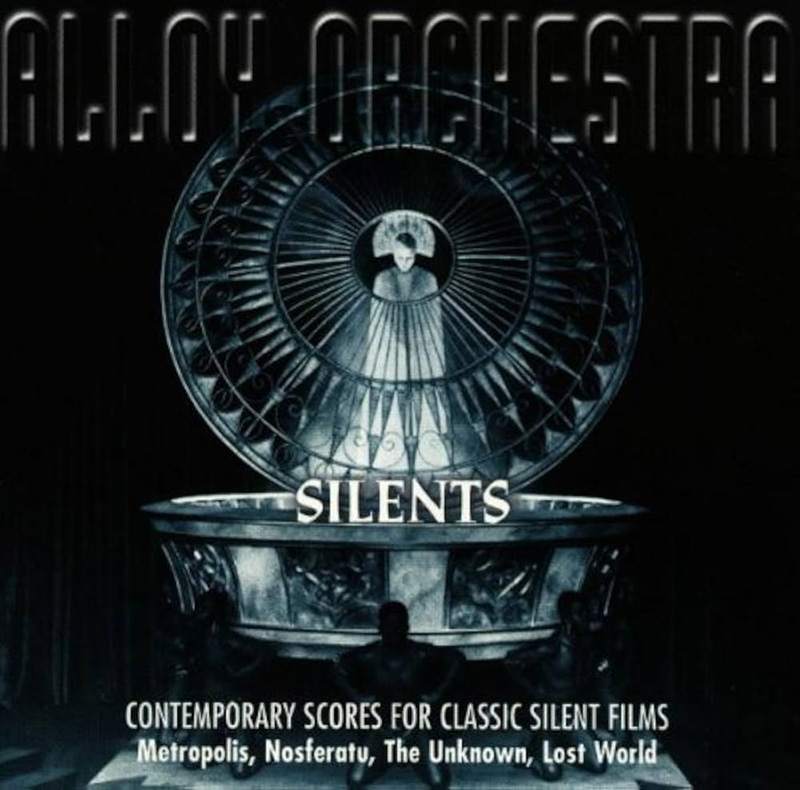
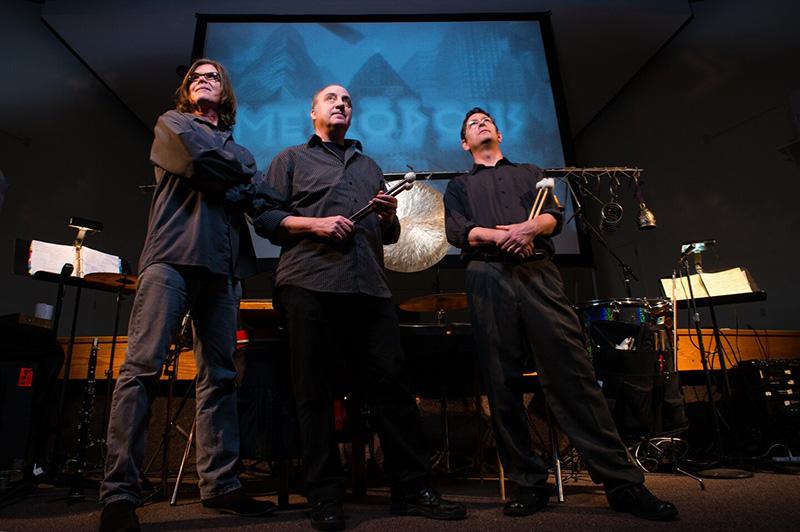
In early 1991, shortly after the First Night performance, Sampson and Winokur agreed to compose a live score for the sci-fi classic Metropolis by Fritz Lang, which was screening at Coolidge Corner Theater in Brookline, Massachusetts. They included percussionist Donahue to round out the performance and, bound together by a shared passion for experimental sounds and cinematic storytelling, the trio sought a musical identity that defied conventional categorization.
“RACK OF JUNK,” OTHER ELEMENTS, METROPOLIS PERFORMANCES
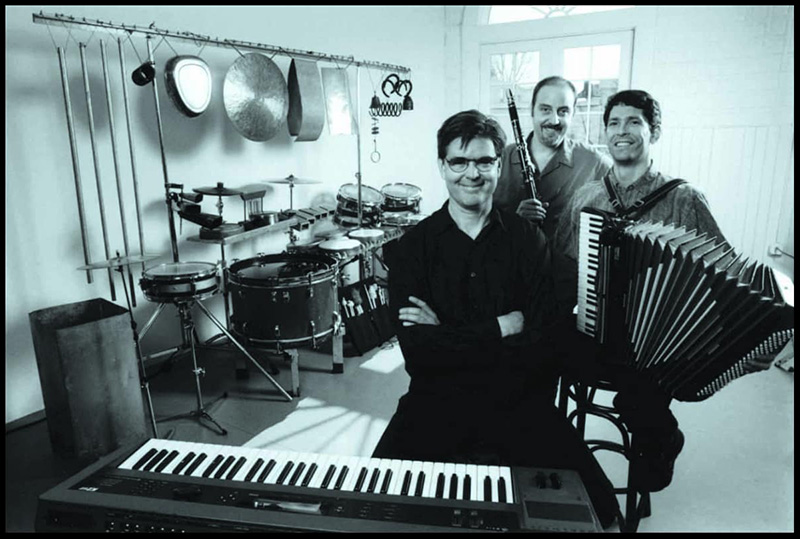
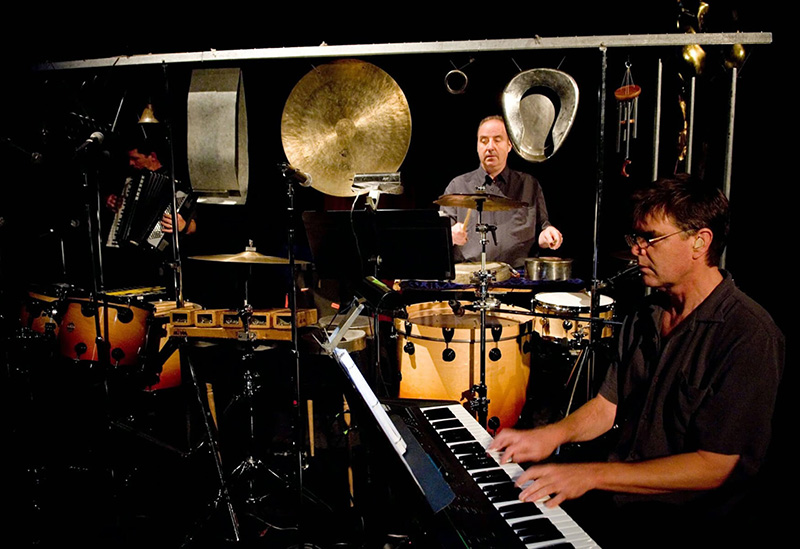
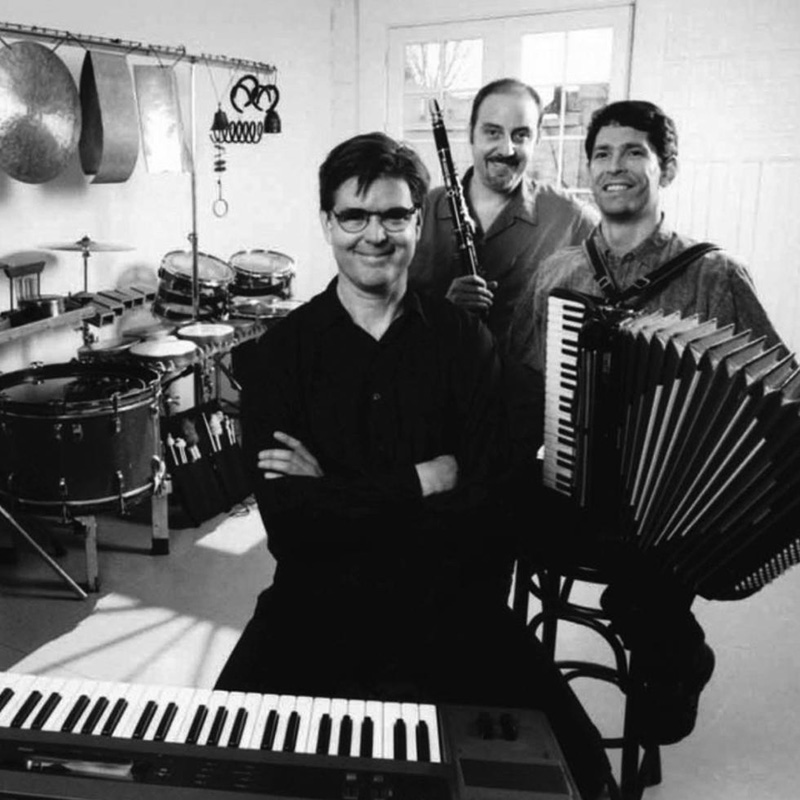
Central to their sound was the famous “rack of junk” that Winokur created. Eschewing traditional orchestral percussion, he and Donahue constructed a massive, custom-built metal frame. Suspended from this rig was an assortment of industrial salvage and found objects: plumbing pipes, steel truck springs, sheet metal, horseshoes, cooking pots, gongs, bells and a steel bedpan. When struck, scraped or bowed, the objects produced an astonishing array of textures ranging from deep, ominous industrial drones to delicate, ethereal chimes.
To ground the metallic chaos, the band juxtaposed the junk rack with traditional acoustic elements including Donahue’s accordion and musical saw and Winokur’s clarinet, alongside Caleb Sampson’s sweeping, cinematic synthesizer arrangements. The result was a symphonic wall of sound that felt simultaneously primitive, industrial and deeply emotional. Initially, the ensemble performed only at screenings of Metropolis at Coolidge Corner Theater and Boston’s Museum of Fine Arts. Lang’s vision of a mechanized, stratified future found its ideal sonic match in the band’s metallic clanging and driving electronic rhythms. The score brought a visceral, modern urgency to the film, proving to audiences and critics alike that silent movies were not museum pieces, but living, breathing works of art.
TELLURIDE FILM FESTIVAL, NATIONAL BREAKTHROUGH, GOING GLOBAL
Soon word got out of the group’s unique style of accompanying silent films, and in 1993 the Telluride Film Festival in Colorado invited the group to create and perform a new score for an obscure silent film, Sylvester – New Year’s Eve. Following their premiere at Telluride, the group was invited to perform at film festivals, cultural centers, museums and universities around the world, becoming the go-to ensemble for silent film scoring. Silent films were usually accompanied by piano, organ, jazz combos, small orchestras and occasionally a full-blown orchestra, but silent films’ expressive, exaggerated visual language harmonized perfectly with the Alloy’s dynamic, and sometimes avant-garde audio landscapes.
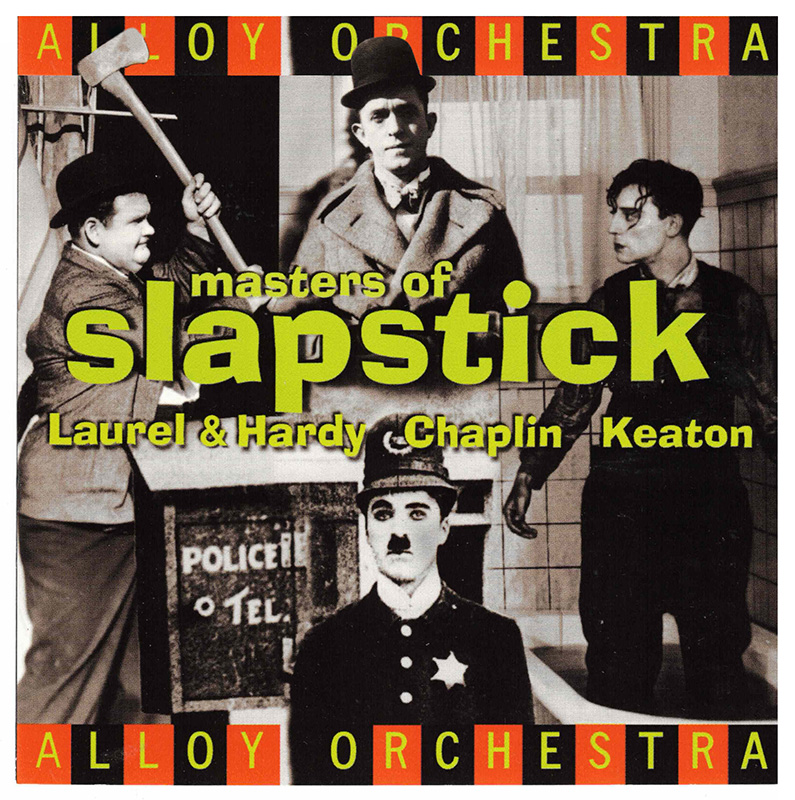
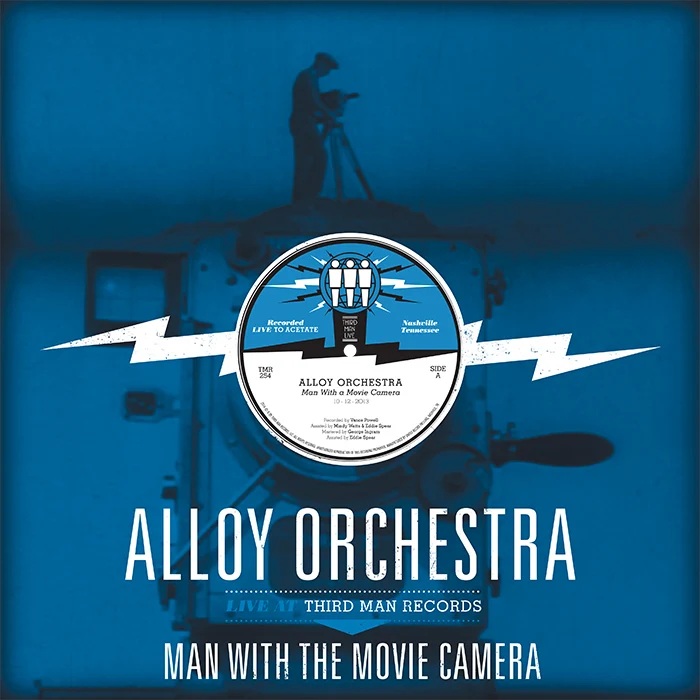
After the group’s success with Metropolis, Alloy expanded their repertoire to include a diverse array of classics, among them The General (1926), with the trio performing a propulsive, rhythmic score that mimicked the chugging of a steam engine in Buster Keaton’s comedic locomotive masterpiece; The Man with a Movie Camera (1929), with the trio playing a frantic, layered, jazz-inflected soundtrack that mirrored the frenetic editing of Dziga Vertov’s radical Soviet documentary; and Son of the Sheik (1926), in which Rudolph Valentino’s signature role solidified his reputation as the world’s greatest on-screen lover.
As the 1990s progressed, Alloy Orchestra transitioned from a regional novelty to an international cultural phenomenon. The ensemble was a fixture at the Telluride Film Festival, where they performed annually for decades, as well as the San Francisco Silent Film Festival, Lincoln Center, The National Gallery of Art, and even the Louvre in Paris. Film critics, including the legendary Roger Ebert, championed the group, noting that their performances introduced younger generations to the triumphs of early cinema.
TRAGEDY, TRANSITION, SCORING PHILOSOPHY, WRITING PROCESS
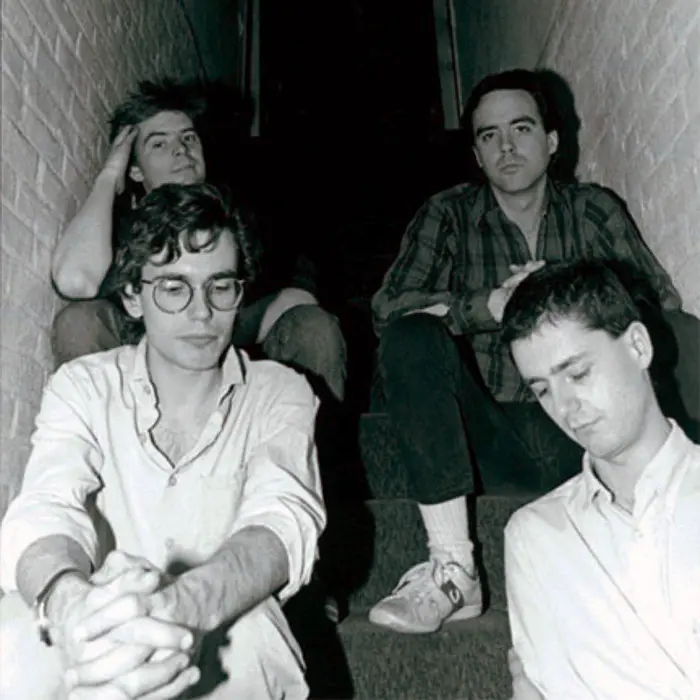
Tragedy struck in June 1998, however, when founding member, primary composer and keyboardist Caleb Sampson took his own life. The loss was devastating to Winokur and Donahue, leaving the future of the orchestra in limbo, as Sampson’s brilliant, melodic sensibilities had been a cornerstone of Alloy’s identity. After a period of mourning and reflection, the surviving members resolved to continue their mission, inviting Roger Miller, a highly respected, Boston-based avant-garde musician and cofounder of the influential postpunk band Mission of Burma, to join the ranks. While maintaining the cinematic spirit established by Sampson, Miller introduced a sharper, more experimental edge to keyboard/synthesizer arrangements; his background blended seamlessly with the industrial percussion, initiating a fertile second era for the band.
What set the Alloy Orchestra apart from other contemporary silent film accompanists, according to critics, was their rigorous philosophy toward scoring. They did not believe in improvising loosely over the images; instead, they composed meticulous, feature-length scores that were tightly synchronized to the film’s action, frame by frame. Their writing process was highly collaborative: The trio would watch a film repeatedly, charting its emotional beats, character arcs and pacing. Not wanting to strictly replicate the musical styles of the 1910s and 1920s, they asked themselves a fundamental question: What music best serves the emotional truth of this scene for a modern audience?
This approach allowed them to span genres effortlessly. A single film score might veer from classical romanticism and folk melodies to the avant-garde. By bridging the past and the present, Alloy was able to shatter the barrier of time, making films made nearly a century prior feel as immediate and dangerous as contemporary blockbusters. Over their career, they successfully scored more than 30 feature-length films and dozens of rare shorts.
DISBANDING, POST-ALLOY ACTIVITY, LEGACY
Alloy Orchestra maintained a relentless touring schedule for more than 30 years, hauling their “rack of junk” across continents to perform in opera houses, historic movie palaces and university lecture halls. By the dawn of the 2020s, the physical demands of touring and the natural passage of time led members to contemplate the ensemble’s conclusion. In July 2021, they announced their disbandment, marking the end of an extraordinary era in film exhibition and alternative music.
Following the split, Winokur founded The Psychedelic Cinema Orchestra; the group’s first score was for Ken Brown’s 1960s montage film of the same name. Since then, they’ve scored the 1927 film The Eleventh Year (by Dziga Vertov), the 1919 film South (about the Imperial Trans-Antarctic Expedition led by Ernest Shakelton) and a selection of short films. Terry Donahue and Roger Miller have performed some of Alloy’s signature scores, among them Man With a Movie Camera and Metropolis, with their new duo, The Anvil Orchestra.
Alloy Orchestra’s legacy remains vibrant to this day. As many critics have noted over the years, they single-handedly altered the landscape of silent film exhibition, proving that historic movies possess timeless vitality when paired with imaginative, uncompromising music. Though the trio has taken its final bow, the metallic clatter and cinematic sweep that they pioneered will forever echo through the history of alternative music and early cinema preservation.