Central Music
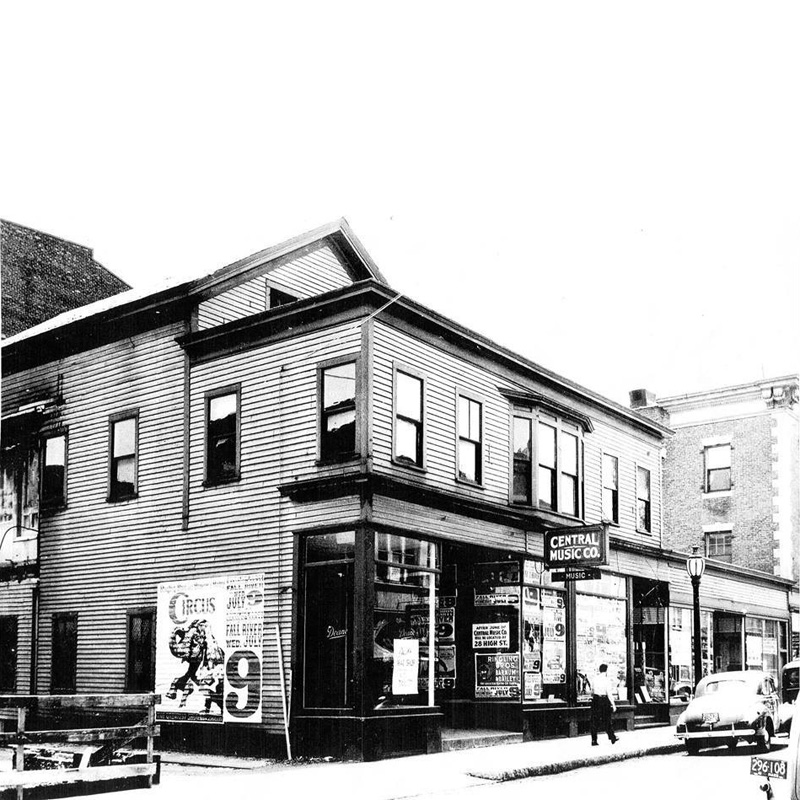
Central Music - High Street Location
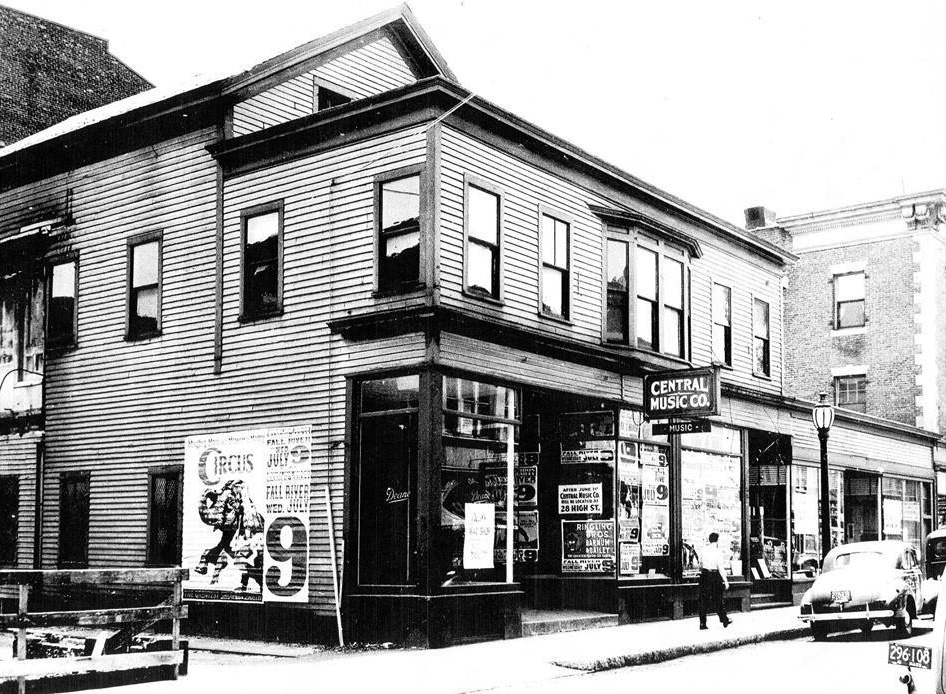
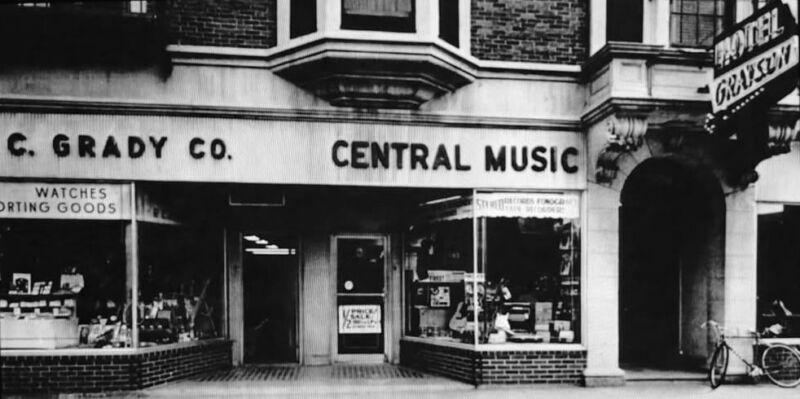
Founded in 1946 in downtown Brockton, Massachusetts, Central Music was much more than just another retail storefront. In fact, it was one of the most prominent music shops in Greater Boston for decades, a “music mecca,” as longtime residents describe it, that drew musicians, music students and music lovers in general from Brockton, surrounding towns, parts of the South Shore and elsewhere. Under the stewardship of the Kovner family, particularly brothers Robert (“Bob”) and Richard (“Dickie”), it built a reputation that extended well beyond city limits as one of the area’s few full-service music stores, offering instrument retail, rental, repair and structured instruction under one roof. Though it wasn’t the only store of its kind in the broader region, Central Music was widely regarded as the most complete and professionally operated.
According to former customers and students, two qualities distinguished the store from its competitors: standards and trust. Customers were never treated merely as buyers; instead, they were treated as developing musicians. Sometimes that meant encouragement; sometimes it meant correction; often it meant both. As a result of that unique approach, students from Brockton schools, members of the Brockton Symphony Orchestra, aspiring rockers, jazz hopefuls and weekend hobbyists alike passed through its doors, especially in the ‘50s and ‘60s, when downtown Brockton was a thriving commercial area.
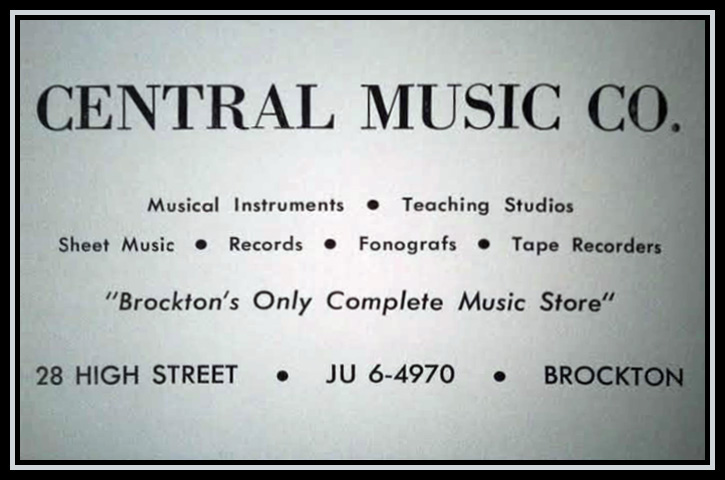
In addition to instrument retail, rental, repair and instruction, Central Music offered an extensive selection of sheet music, 45s and LPs and supplied recorded music to the Brockton Public Library, embedding itself into the city’s broader cultural fabric. After a fire damaged the store’s original location, it relocated to High Street, which further strengthened its identity as a go-to destination. Word of mouth carried its reputation to neighboring towns and more distant ones, reinforcing its status as a place for serious musical engagement.
INSTRUCTIONAL CULTURE, MUSIC-DISCOVERY CENTER
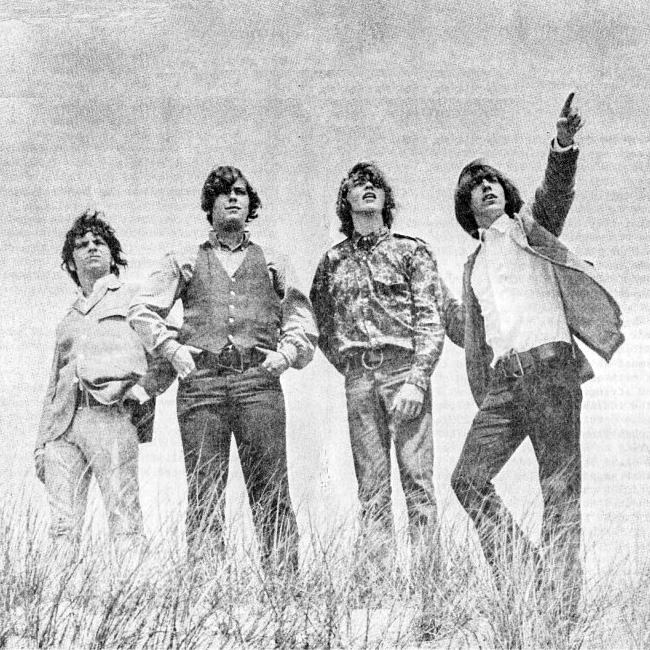
One of the store’s most defining features was its instructional culture, which helped solidify its regional draw. In a recorded oral-history interview, Belfast, Maine resident and former Avon, Massachusetts-based musician Eric Liljequist, former member of Orphan, recalled taking the bus to Brockton every Saturday from around age seven. The willingness of area families to send their children several miles away for music lessons speaks directly to the store’s standing within the region. Liljequist described Central Music as “a place to visit away from home that had more to do with your life than you thought,” noting that anticipation for each lesson began long before arrival.
His teacher, Phil Cooper, was known for being rigorous; even when young students wanted to jump ahead to popular songs, he insisted on focusing on fundamentals such as reading music, keeping time and mastering chord changes. According to Liljequist, Cooper “didn’t let [students] get away with anything.” That insistence on discipline became foundational for many and the upstairs lesson rooms created an environment where students absorbed more than their own instruction; horn exercises, scales and rhythmic drills filtered through the walls, reinforcing the sense that the building functioned as a shared conservatory. In this way, Central Music operated not merely as a Brockton storefront but as a respected training ground.
The store also played a vital role in music discovery. Many former customers recall waiting for new album releases, checking back weekly and building their personal collections from the shop’s racks of 45s and LPs. The store sold the recordings that inspired young musicians, then provided the instruments needed to pursue those sounds. Local bands were a regular presence in the store, further reinforcing its importance within the regional scene, and the visibility of working musicians within its walls made the path from student to performer tangible. In an era when access to Boston’s club circuit was not always practical for South Shore teens, Central Music provided a closer and more accessible center of gravity.
TRUSTWORTHY BUSINESS MODEL, BOB KOVNER’S MUSICAL ACTIVITY
What distinguished Central Music most clearly, according to many, was the trust extended to young players. Multiple former customers recall arrangements in which equipment could be taken home and paid for over time through informal passbook systems based largely on personal trust. Such practices reflected the Kovners’ belief that serious young musicians deserved opportunity as well as instruction. In today’s retail environment, such arrangements would be highly unlikely, but they were part of the culture at Central Music. Another “human” dimension of the store was equally memorable: The Kovner brothers were known for spirited disagreements that could carry from the back room to the front counter, with Bob’s wife Selma often acting as a level-headed mediator. The result was a family-run business that felt animated and personal rather than corporate and distant.
Bob actually embodied the store’s dual identity as business and artistry. A graduate of Brockton High School (Class of 1946) and New England Conservatory of Music (Class of 1950), he served in the US Army before returning to Brockton and joining the family enterprise in 1958. An accomplished trumpet player, he performed with big bands throughout New England and his own group, The Bob Kovner Orchestra, was a fixture at weddings, bar mitzvahs, anniversaries and corporate events. He served as music director at the South Shore Music Circus, performed alongside legends like Judy Garland, Tony Bennett and Debbie Reynolds, and his professional standing strengthened his store’s credibility. Thanks largely to him, Central Music was not isolated from the broader musical world; it was connected to it.
COMMUNITY LEGACY, NEW OWNERSHIP, CENTRAL MUSIC II
In terms of legacy, Central Music created a pathway that led from interest to access to instruction to confidence, which benefited the entire greater Brockton community. That resulted in it becoming one of the South Shore area’s most visible and reliable music stores decades before corporate chains and the internet transformed the business. The emotional imprint remains strong to this day among patrons from many years ago, even though the Brockton of the ‘60s is long gone and the retail landscape has changed dramatically.
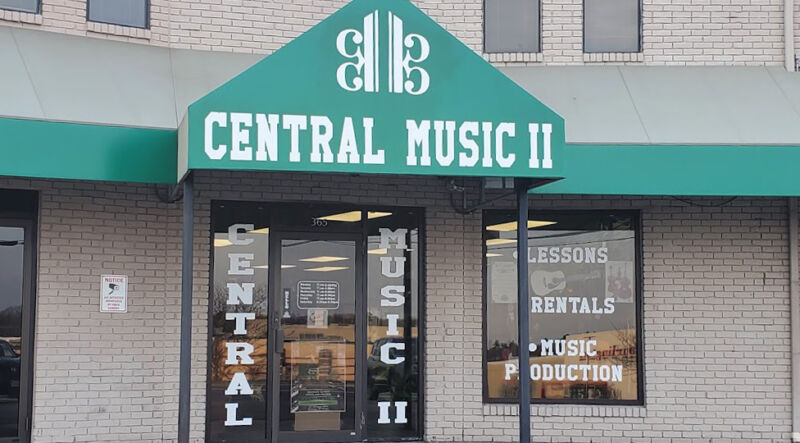
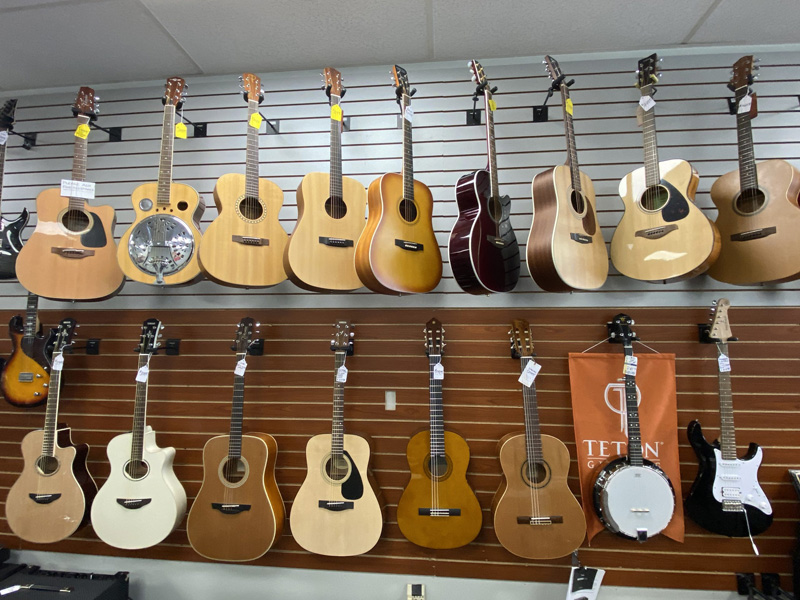
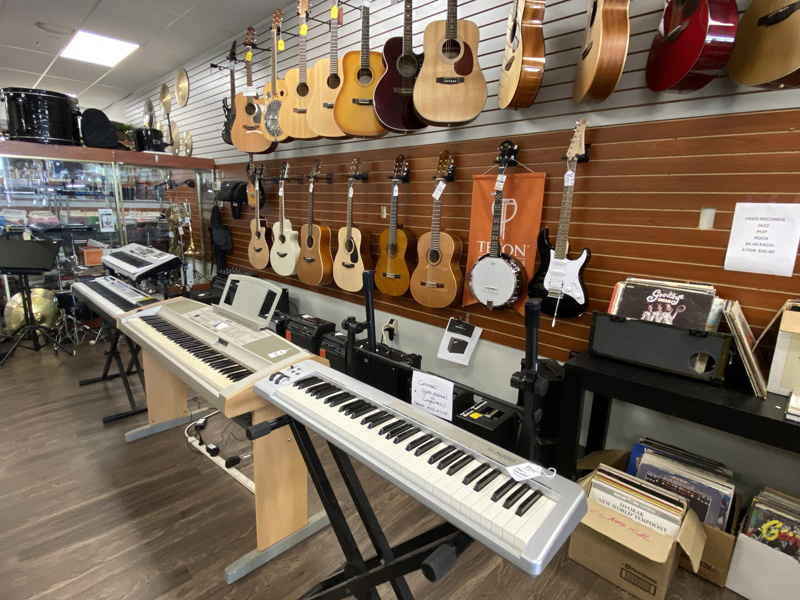
The business continues today as Central Music II, located at 595 Belmont Street in Brockton and owned by Carolyn Conrad, who bought the store in 2015 with her late husband. While it may no longer mirror the concentrated hub it was for much of the 20th century, its ongoing presence preserves something increasingly rare in an age of massive music chains and online marketplaces: a small, education-centered music store deeply rooted in personal guidance and continuity. The scale may differ. The downtown area may be different. But the spirit – mentorship, standards and belief in young musicians – endures. For countless Brockton and South Shore residents who began their musical journeys at Central Music, that original heartbeat still resonates.
(by Karl Sharicz)
Karl Sharicz is the author of Rock & Roll Underdogs: Hidden Gems Within the Shadows of Stardom (Palmetto Publishing, 2025).